
Understanding how humans reproduce is crucial for your biology exams... Daha fazla göster
 Science19 görüntüleme·Güncellendi Jun 6, 2026·6 sayfa
Understanding the Human Reproductive System

1 / 6
1
of 6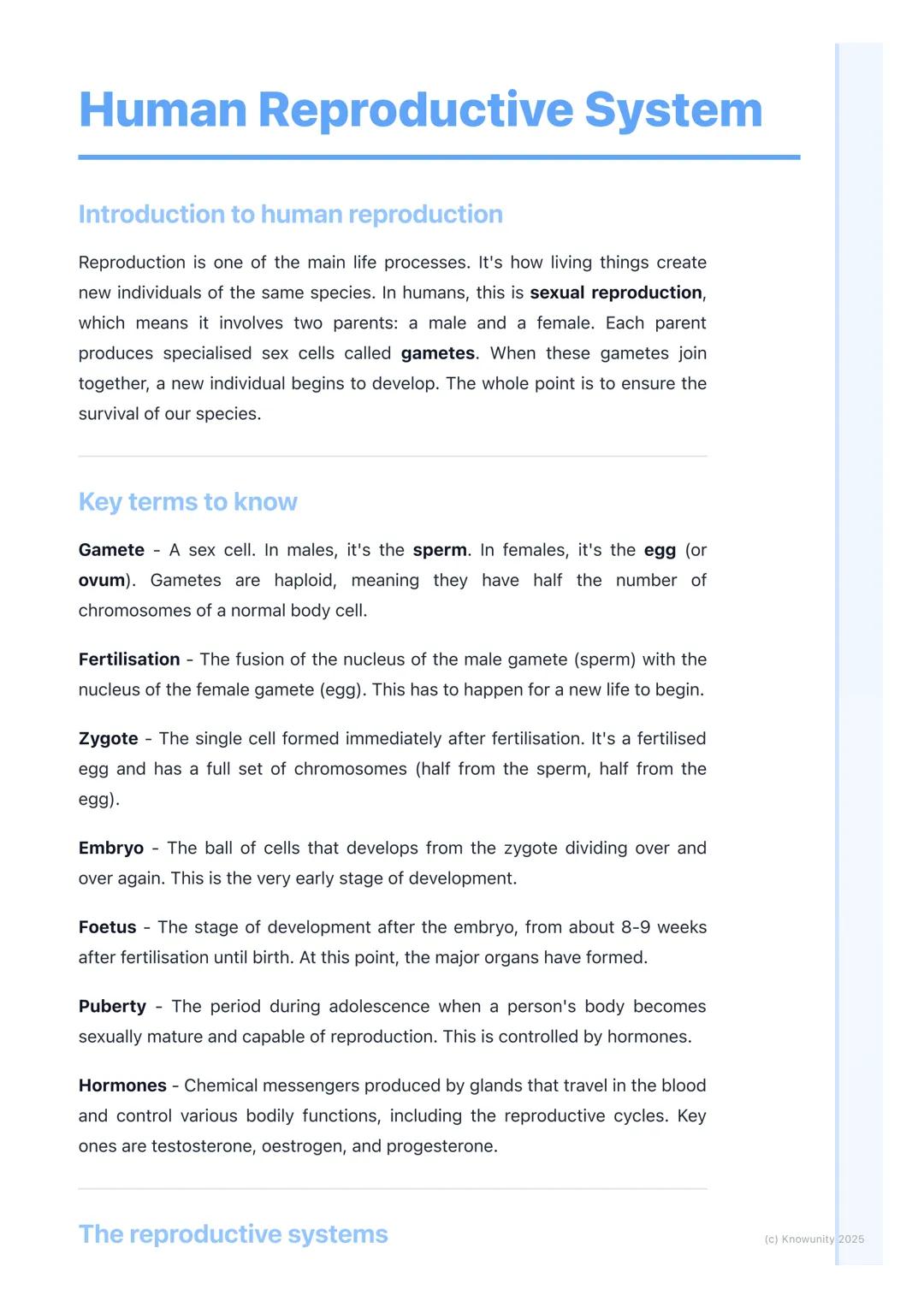
Introduction to Human Reproduction
Sexual reproduction is how humans ensure our species survives - it's literally one of the most important life processes you'll study. Unlike some organisms that can reproduce alone, humans need both a male and female parent to create offspring.
Each parent contributes special sex cells called gametes (sperm from males, eggs from females). These cells are unique because they're haploid, meaning they carry only half the chromosomes of regular body cells - this is essential for creating genetically diverse offspring.
When a sperm and egg fuse during fertilisation, they create a zygote with a complete set of chromosomes. This single cell then divides repeatedly to form an embryo, which later develops into a foetus. The whole process is controlled by hormones - chemical messengers that coordinate everything from puberty to pregnancy.
Key Point: Remember that gametes have half the chromosomes of normal cells - this prevents chromosome doubling in offspring!
2
of 6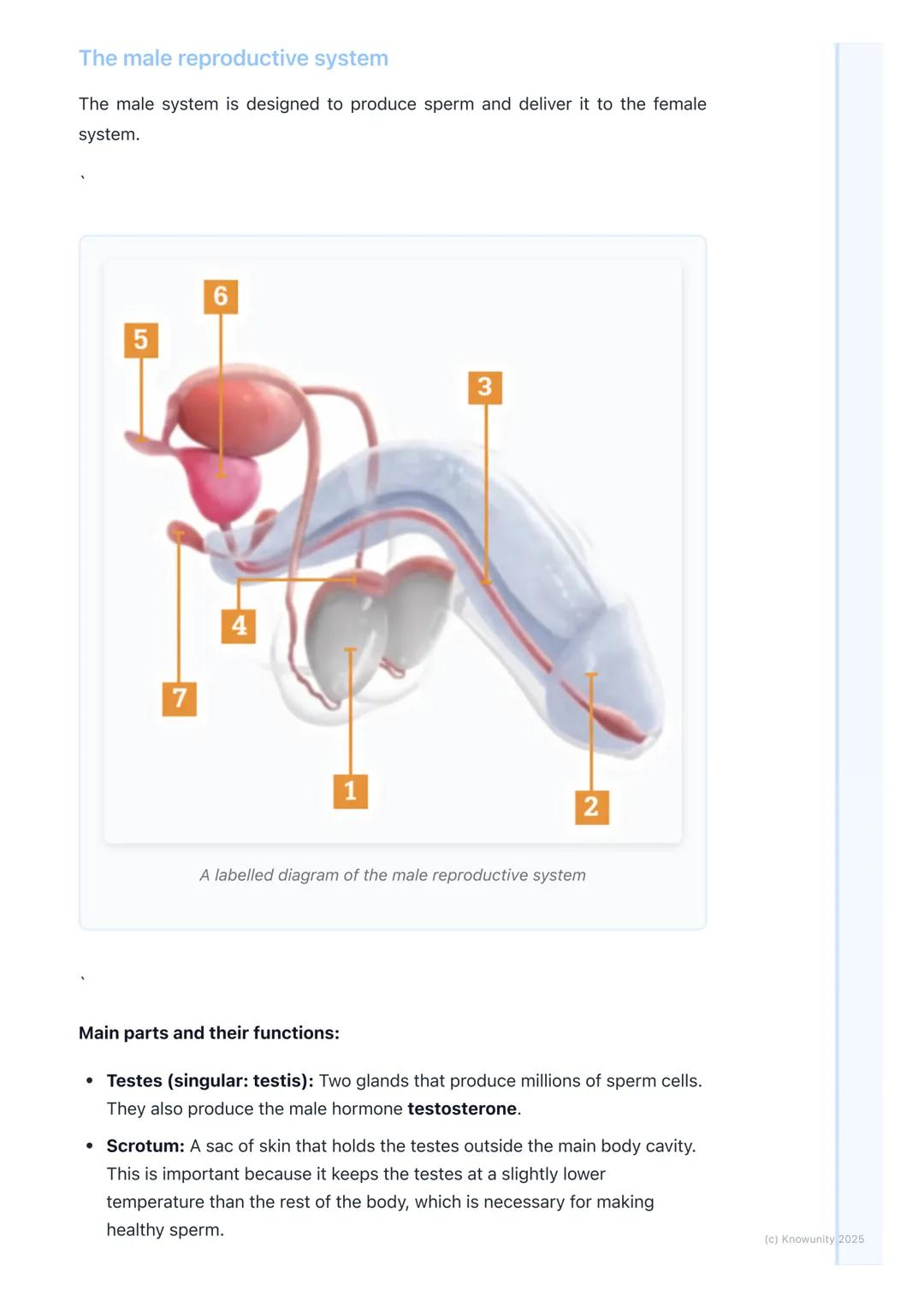
The Male Reproductive System
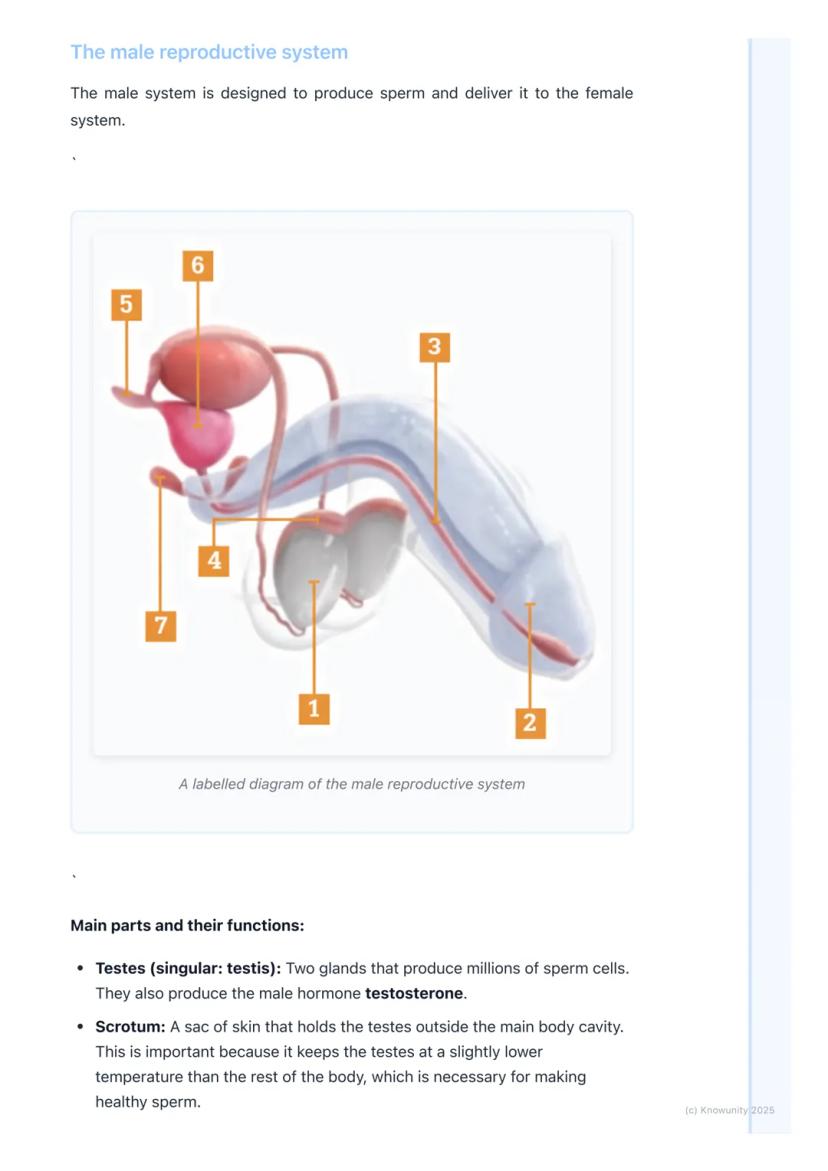
The male system has one main job: produce millions of sperm and deliver them to the female reproductive system. It's actually quite efficient at this task once puberty kicks in.
The testes are the powerhouses here - they're constantly churning out sperm whilst also producing testosterone, the hormone that triggers male development. They hang in the scrotum outside the body because sperm production needs cooler temperatures than your core body temperature.
Sperm ducts transport the sperm towards the urethra, but not before several glands (like the prostate) add nutritious fluids. This mixture becomes semen - it's not just sperm, but a complete survival package for those tiny swimmers. The penis then delivers this semen into the female's vagina during intercourse.
Exam Tip: The scrotum's location outside the body isn't random - it keeps testes 2-3°C cooler than body temperature for optimal sperm production!
3
of 6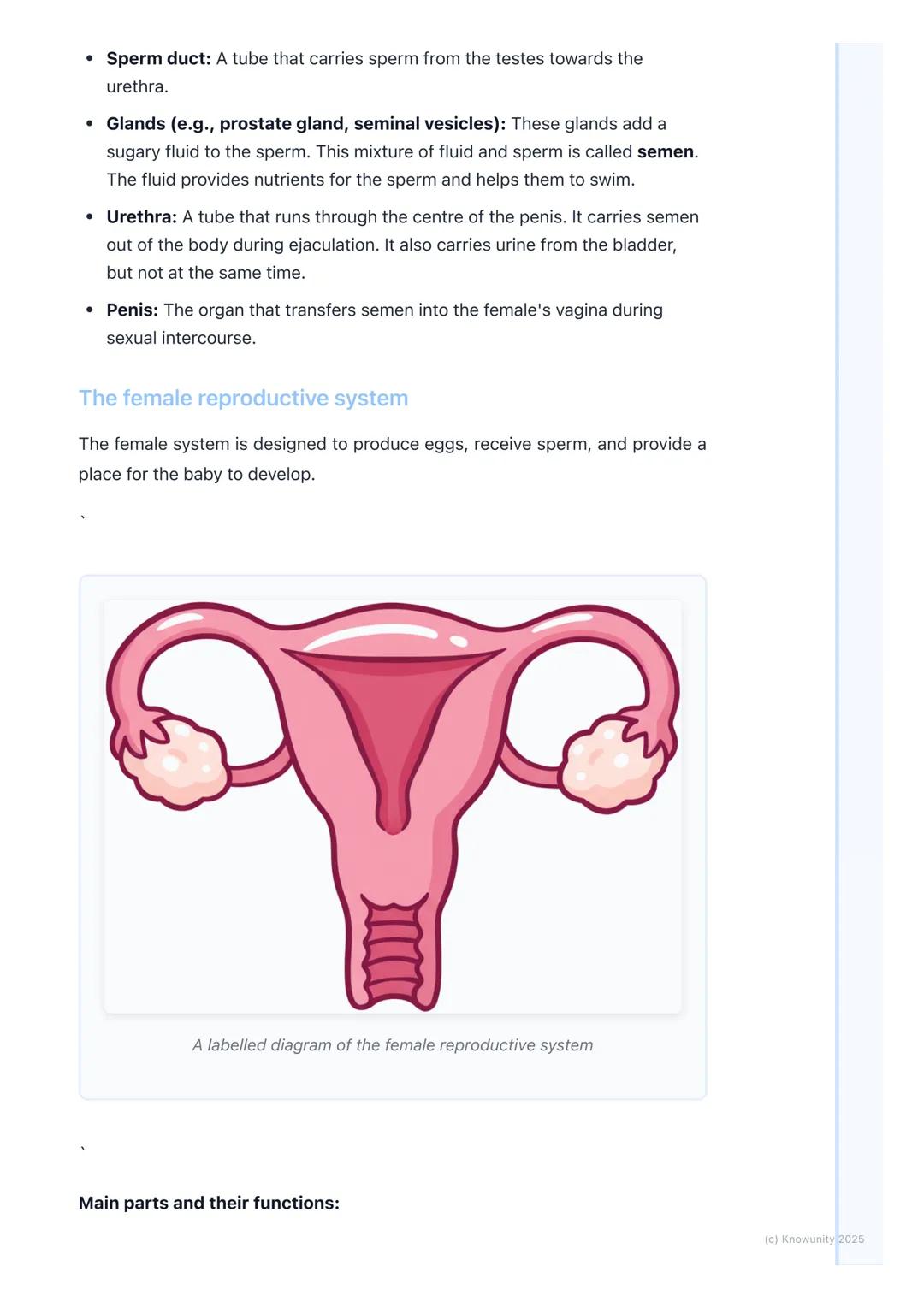
The Female Reproductive System
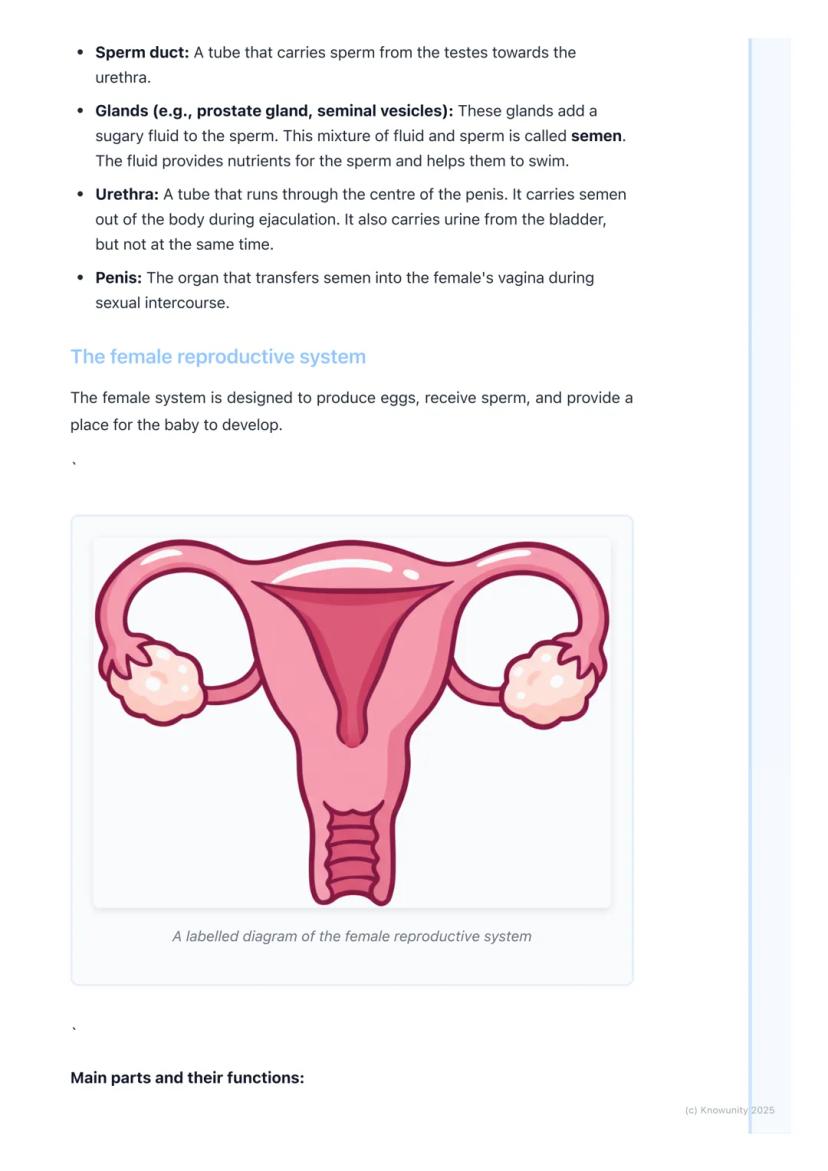
The female system is far more complex because it doesn't just produce gametes - it also provides a safe environment for a baby to develop for nine months. Talk about multitasking!
The ovaries contain thousands of immature eggs that you're born with (no new ones are made after birth). Each month, usually just one egg matures and travels down a fallopian tube towards the uterus. The ovaries also pump out oestrogen and progesterone, hormones that control the menstrual cycle.
If sperm are present, fertilisation happens in the fallopian tube - not the uterus as many people think! The uterus is where the fertilised egg implants and grows. The cervix acts like a gateway between the uterus and vagina, whilst the vagina serves as both the entry point for sperm and eventually the birth canal.
Common Mistake: Fertilisation occurs in the fallopian tubes, whilst implantation happens in the uterus - don't mix these up in exams!
4
of 6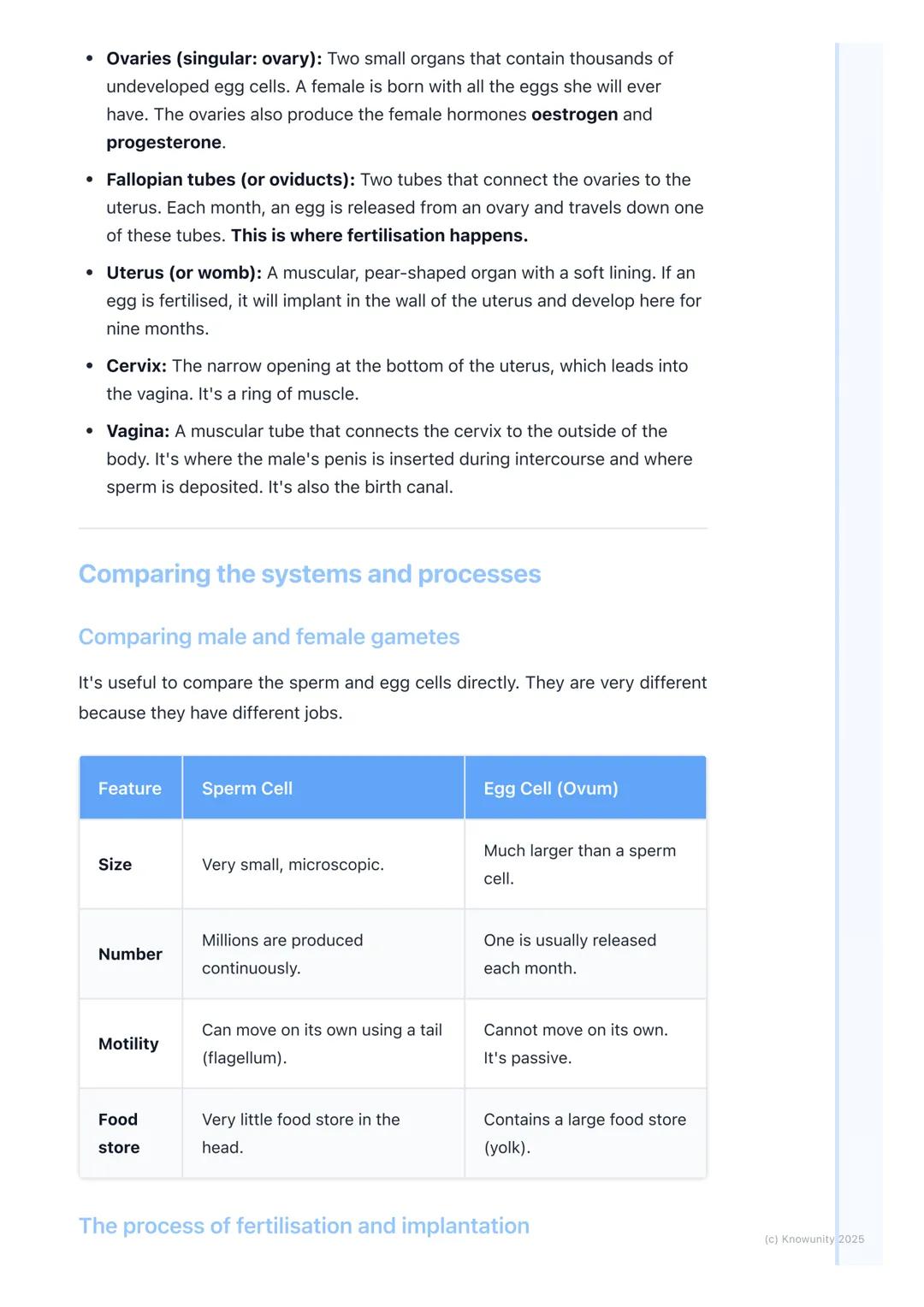
Comparing Male and Female Gametes
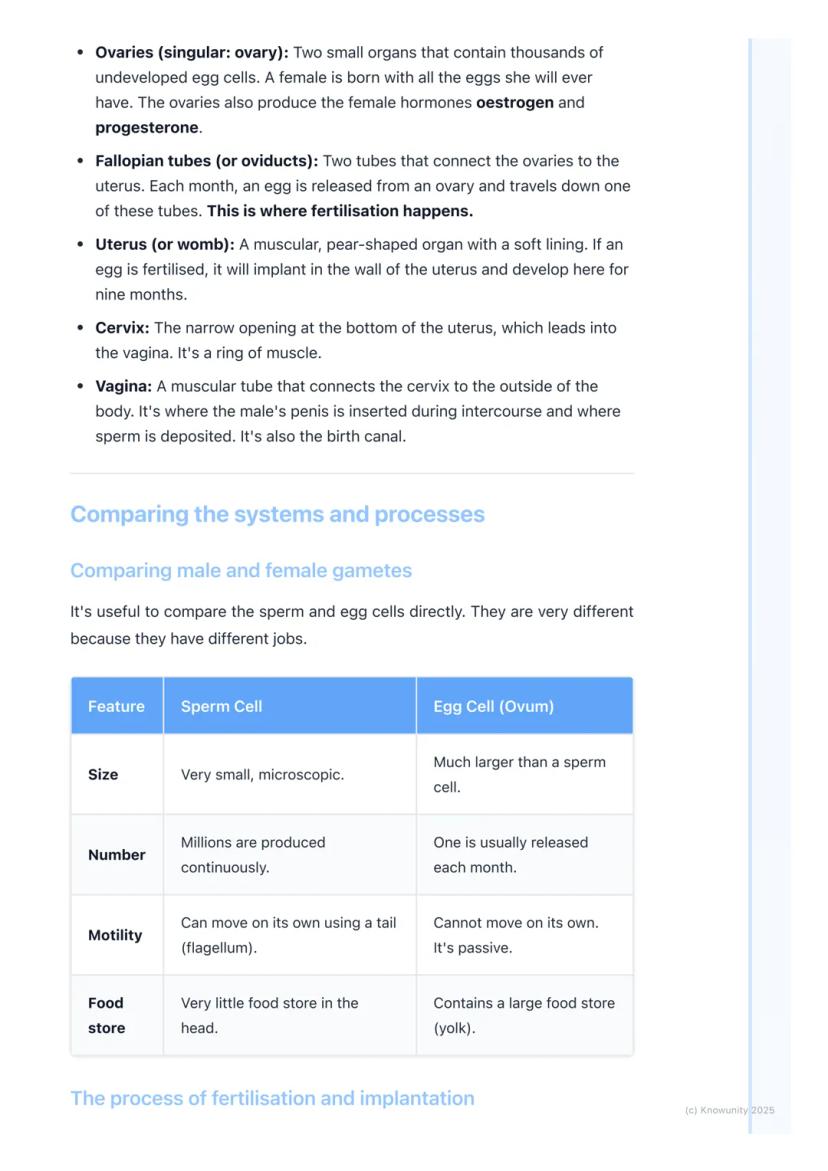
Sperm and eggs are like complete opposites, and there's a good reason for this. Sperm cells are tiny, fast-moving, and produced in millions - they're basically built for speed and quantity. They've got a streamlined head and a whip-like tail for swimming through the female reproductive tract.
Egg cells take the opposite approach - they're massive (relatively speaking), can't move on their own, and contain loads of nutrients. Females typically release just one egg per month, making it precious cargo that needs to be well-equipped for early development.
This difference makes sense when you think about it: millions of sperm compete for one egg, so they need to be mobile and numerous. The egg just needs to be ready with food stores once fertilisation occurs.
Memory Trick: Think "sperm = small and speedy" vs "eggs = enormous and equipped" to remember their key differences!
5
of 6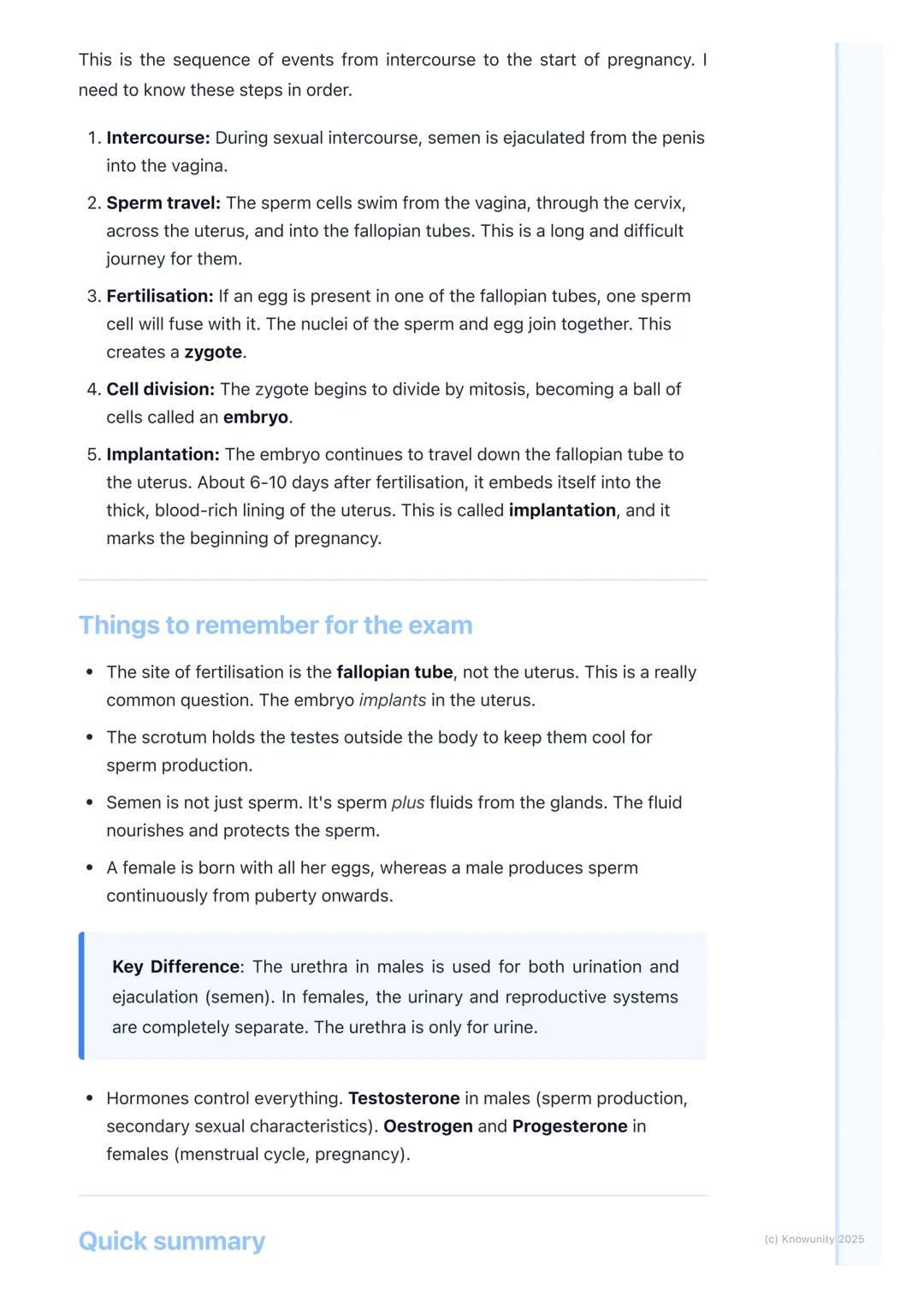
From Fertilisation to Implantation
Here's the amazing journey from intercourse to pregnancy - this sequence is exam gold, so nail it down! During sexual intercourse, millions of sperm are deposited in the vagina, but most won't survive the trek ahead.
The surviving sperm swim through the cervix, across the uterus, and into the fallopian tubes - it's like an obstacle course for microscopic swimmers. If they encounter an egg, fertilisation creates a zygote with DNA from both parents.
The zygote immediately starts dividing through mitosis, becoming a ball of cells called an embryo. About 6-10 days later, this embryo reaches the uterus and burrows into its thick, blood-rich lining. This implantation officially marks the start of pregnancy.
Exam Essential: Fertilisation location = fallopian tube. Implantation location = uterus. Getting these mixed up is a common exam error!
6
of 6
Quick Reference Guide
Here's your cheat sheet for the human reproductive system - perfect for last-minute revision before tests! The male system focuses on sperm production in the testes and semen delivery through the penis, whilst the female system handles egg maturation in ovaries and foetal development in the uterus.
Remember the key sequence: intercourse → sperm travel → fertilisation (fallopian tube) → zygote formation → embryo development → implantation (uterus). Hormones like testosterone, oestrogen, and progesterone control everything from puberty to pregnancy.
The most important differences to remember: males produce gametes continuously after puberty, females are born with all their eggs. The male urethra serves dual purposes (urine and semen), whilst female urinary and reproductive systems are completely separate.
Study Smart: Focus on locations, sequences, and hormone functions - these concepts appear in nearly every reproduction exam question!
Hiç sormayacaksın sanmıştık...
Knowunity yapay zeka arkadaşı nedir?
Yapay zeka arkadaşımız öğrencilerin ihtiyaçlarına göre özel olarak tasarlanmıştır. Platformda bulunan milyonlarca içeriğe dayanarak öğrencilere gerçekten anlamlı ve ilgili yanıtlar verebiliyoruz. Ancak mesele sadece cevaplar değil, refakatçi aynı zamanda kişiselleştirilmiş öğrenme planları, sınavlar veya sohbet içerikleri ve öğrencilerin becerilerine ve gelişimlerine dayalı %100 kişiselleştirme ile öğrencilere günlük öğrenme zorluklarında rehberlik ediyor.
Knowunity uygulamasını nereden indirebilirim?
Uygulamayı Google Play Store ve Apple App Store'dan indirebilirsiniz.
Knowunity ücretsiz mi?
Knowunity uygulaması ücretsiz! Uygulamamız çok yakında indirmeye hazır olacak, bekle bizi. 💙
Science dersinin en popüler içerikleri
6En popüler içerikler
9Aradığını bulamıyor musun? Diğer derslere göz at.
Kullanıcılarımızdan yorumlar. Onlar her şeyi çok beğendi — sen de beğeneceksin.
4.6/5App Store
4.7/5Google Play
Uygulama çok kolay kullanılıyor ve güzel tasarlanmış. Şu ana kadar aradığım her şeyi buldum ve sunumlardan çok şey öğrendim! Kesinlikle ödevlerim için hep kullanacağım!
A.S.iOS kullanıcısı
Uygulama çok iyi. Çok fazla ders notu ve yardımlaşma var. Örneğin benim problem yaşadığım bir ders Geometriydi ve ANINDA yardım ettiler beraber hem sorularımı çözdük hem konu anlatımı buldum. Herkese tavsiye ederim.
S.L.Android kullanıcısı
BEN ŞOK. Reklamını sık sık gördüğüm için uygulamayı denedim ve gerçekten hayran kaldım. Bu uygulama okul için tam ihtiyacım olan şey. Anında ödev yardımı, konu anlatımı, örnek sınavlar, flaşkartlar hepsi hepsi var, şiddetle tavsiye ederim ✅
A.iOS kullanıcısı
Science19 görüntüleme·Güncellendi Jun 6, 2026·6 sayfaUnderstanding the Human Reproductive System
Understanding how humans reproduce is crucial for your biology exams and life in general. This involves two specialised systems working together to create new life through sexual reproduction, where male and female gametes combine to form a new individual.
1
of 6Ders notlarını görmek için kaydol. Ücretsiz!
- Tüm belgeleri görebilirsin
- Notlarını Yükselt
- Milyonlarca öğrenciye katıl
Introduction to Human Reproduction
Sexual reproduction is how humans ensure our species survives - it's literally one of the most important life processes you'll study. Unlike some organisms that can reproduce alone, humans need both a male and female parent to create offspring.
Each parent contributes special sex cells called gametes (sperm from males, eggs from females). These cells are unique because they're haploid, meaning they carry only half the chromosomes of regular body cells - this is essential for creating genetically diverse offspring.
When a sperm and egg fuse during fertilisation, they create a zygote with a complete set of chromosomes. This single cell then divides repeatedly to form an embryo, which later develops into a foetus. The whole process is controlled by hormones - chemical messengers that coordinate everything from puberty to pregnancy.
Key Point: Remember that gametes have half the chromosomes of normal cells - this prevents chromosome doubling in offspring!
2
of 6Ders notlarını görmek için kaydol. Ücretsiz!
- Tüm belgeleri görebilirsin
- Notlarını Yükselt
- Milyonlarca öğrenciye katıl
The Male Reproductive System
The male system has one main job: produce millions of sperm and deliver them to the female reproductive system. It's actually quite efficient at this task once puberty kicks in.
The testes are the powerhouses here - they're constantly churning out sperm whilst also producing testosterone, the hormone that triggers male development. They hang in the scrotum outside the body because sperm production needs cooler temperatures than your core body temperature.
Sperm ducts transport the sperm towards the urethra, but not before several glands (like the prostate) add nutritious fluids. This mixture becomes semen - it's not just sperm, but a complete survival package for those tiny swimmers. The penis then delivers this semen into the female's vagina during intercourse.
Exam Tip: The scrotum's location outside the body isn't random - it keeps testes 2-3°C cooler than body temperature for optimal sperm production!
3
of 6Ders notlarını görmek için kaydol. Ücretsiz!
- Tüm belgeleri görebilirsin
- Notlarını Yükselt
- Milyonlarca öğrenciye katıl
The Female Reproductive System
The female system is far more complex because it doesn't just produce gametes - it also provides a safe environment for a baby to develop for nine months. Talk about multitasking!
The ovaries contain thousands of immature eggs that you're born with (no new ones are made after birth). Each month, usually just one egg matures and travels down a fallopian tube towards the uterus. The ovaries also pump out oestrogen and progesterone, hormones that control the menstrual cycle.
If sperm are present, fertilisation happens in the fallopian tube - not the uterus as many people think! The uterus is where the fertilised egg implants and grows. The cervix acts like a gateway between the uterus and vagina, whilst the vagina serves as both the entry point for sperm and eventually the birth canal.
Common Mistake: Fertilisation occurs in the fallopian tubes, whilst implantation happens in the uterus - don't mix these up in exams!
4
of 6Ders notlarını görmek için kaydol. Ücretsiz!
- Tüm belgeleri görebilirsin
- Notlarını Yükselt
- Milyonlarca öğrenciye katıl
Comparing Male and Female Gametes
Sperm and eggs are like complete opposites, and there's a good reason for this. Sperm cells are tiny, fast-moving, and produced in millions - they're basically built for speed and quantity. They've got a streamlined head and a whip-like tail for swimming through the female reproductive tract.
Egg cells take the opposite approach - they're massive (relatively speaking), can't move on their own, and contain loads of nutrients. Females typically release just one egg per month, making it precious cargo that needs to be well-equipped for early development.
This difference makes sense when you think about it: millions of sperm compete for one egg, so they need to be mobile and numerous. The egg just needs to be ready with food stores once fertilisation occurs.
Memory Trick: Think "sperm = small and speedy" vs "eggs = enormous and equipped" to remember their key differences!
5
of 6Ders notlarını görmek için kaydol. Ücretsiz!
- Tüm belgeleri görebilirsin
- Notlarını Yükselt
- Milyonlarca öğrenciye katıl
From Fertilisation to Implantation
Here's the amazing journey from intercourse to pregnancy - this sequence is exam gold, so nail it down! During sexual intercourse, millions of sperm are deposited in the vagina, but most won't survive the trek ahead.
The surviving sperm swim through the cervix, across the uterus, and into the fallopian tubes - it's like an obstacle course for microscopic swimmers. If they encounter an egg, fertilisation creates a zygote with DNA from both parents.
The zygote immediately starts dividing through mitosis, becoming a ball of cells called an embryo. About 6-10 days later, this embryo reaches the uterus and burrows into its thick, blood-rich lining. This implantation officially marks the start of pregnancy.
Exam Essential: Fertilisation location = fallopian tube. Implantation location = uterus. Getting these mixed up is a common exam error!
6
of 6Ders notlarını görmek için kaydol. Ücretsiz!
- Tüm belgeleri görebilirsin
- Notlarını Yükselt
- Milyonlarca öğrenciye katıl
Quick Reference Guide
Here's your cheat sheet for the human reproductive system - perfect for last-minute revision before tests! The male system focuses on sperm production in the testes and semen delivery through the penis, whilst the female system handles egg maturation in ovaries and foetal development in the uterus.
Remember the key sequence: intercourse → sperm travel → fertilisation (fallopian tube) → zygote formation → embryo development → implantation (uterus). Hormones like testosterone, oestrogen, and progesterone control everything from puberty to pregnancy.
The most important differences to remember: males produce gametes continuously after puberty, females are born with all their eggs. The male urethra serves dual purposes (urine and semen), whilst female urinary and reproductive systems are completely separate.
Study Smart: Focus on locations, sequences, and hormone functions - these concepts appear in nearly every reproduction exam question!
Hiç sormayacaksın sanmıştık...
Knowunity yapay zeka arkadaşı nedir?
Yapay zeka arkadaşımız öğrencilerin ihtiyaçlarına göre özel olarak tasarlanmıştır. Platformda bulunan milyonlarca içeriğe dayanarak öğrencilere gerçekten anlamlı ve ilgili yanıtlar verebiliyoruz. Ancak mesele sadece cevaplar değil, refakatçi aynı zamanda kişiselleştirilmiş öğrenme planları, sınavlar veya sohbet içerikleri ve öğrencilerin becerilerine ve gelişimlerine dayalı %100 kişiselleştirme ile öğrencilere günlük öğrenme zorluklarında rehberlik ediyor.
Knowunity uygulamasını nereden indirebilirim?
Uygulamayı Google Play Store ve Apple App Store'dan indirebilirsiniz.
Knowunity ücretsiz mi?
Knowunity uygulaması ücretsiz! Uygulamamız çok yakında indirmeye hazır olacak, bekle bizi. 💙
Science dersinin en popüler içerikleri
6En popüler içerikler
9Aradığını bulamıyor musun? Diğer derslere göz at.
Kullanıcılarımızdan yorumlar. Onlar her şeyi çok beğendi — sen de beğeneceksin.
4.6/5App Store
4.7/5Google Play
Uygulama çok kolay kullanılıyor ve güzel tasarlanmış. Şu ana kadar aradığım her şeyi buldum ve sunumlardan çok şey öğrendim! Kesinlikle ödevlerim için hep kullanacağım!
A.S.iOS kullanıcısı
Uygulama çok iyi. Çok fazla ders notu ve yardımlaşma var. Örneğin benim problem yaşadığım bir ders Geometriydi ve ANINDA yardım ettiler beraber hem sorularımı çözdük hem konu anlatımı buldum. Herkese tavsiye ederim.
S.L.Android kullanıcısı
BEN ŞOK. Reklamını sık sık gördüğüm için uygulamayı denedim ve gerçekten hayran kaldım. Bu uygulama okul için tam ihtiyacım olan şey. Anında ödev yardımı, konu anlatımı, örnek sınavlar, flaşkartlar hepsi hepsi var, şiddetle tavsiye ederim ✅
A.iOS kullanıcısı