
Cells are the fundamental building blocks of all living organisms,... Daha fazla göster
 Science
 Irish
Irish English
Ders notlarını görmek için kaydolÜcretsiz!
Tüm belgeleri görebilirsin
Notlarını Yükselt
Milyonlarca öğrenciye katıl
Knowunity AI
Daha fazla
Dersler
Triangle Congruence and Similarity Theorems
Triangle Properties and Classification
Linear Equations and Graphs
Geometric Angle Relationships
Trigonometric Functions and Identities
Equation Solving Techniques
Circle Geometry Fundamentals
Division Operations and Methods
Basic Differentiation Rules
Exponent and Logarithm Properties
Tüm konuları göster
Human Organ Systems
Reproductive Cell Cycles
Biological Sciences Subdisciplines
Cellular Energy Metabolism
Autotrophic Energy Processes
Inheritance Patterns and Principles
Biomolecular Structure and Organization
Cell Cycle and Division Mechanics
Cellular Organization and Development
Biological Structural Organization
Tüm konuları göster
Chemical Sciences and Applications
Atomic Structure and Composition
Molecular Electron Structure Representation
Atomic Electron Behavior
Matter Properties and Water
Mole Concept and Calculations
Gas Laws and Behavior
Periodic Table Organization
Chemical Thermodynamics Fundamentals
Chemical Bond Types and Properties
Tüm konuları göster
European Renaissance and Enlightenment
European Cultural Movements 800-1920
American Revolution Era 1763-1797
American Civil War 1861-1865
Global Imperial Systems
Mongol and Chinese Dynasties
U.S. Presidents and World Leaders
Historical Sources and Documentation
World Wars Era and Impact
World Religious Systems
Tüm konuları göster
Classic and Contemporary Novels
Literary Character Analysis
Rhetorical Theory and Practice
Classic Literary Narratives
Reading Analysis and Interpretation
Narrative Structure and Techniques
English Language Components
Influential English-Language Authors
Basic Sentence Structure
Narrative Voice and Perspective
Tüm konuları göster
1
•
Güncellendi May 4, 2026
•
Cells are the fundamental building blocks of all living organisms,... Daha fazla göster

Ever wondered what makes something "alive"? It all comes down to cells! These microscopic structures are the foundation of all living organisms, from bacteria to humans.
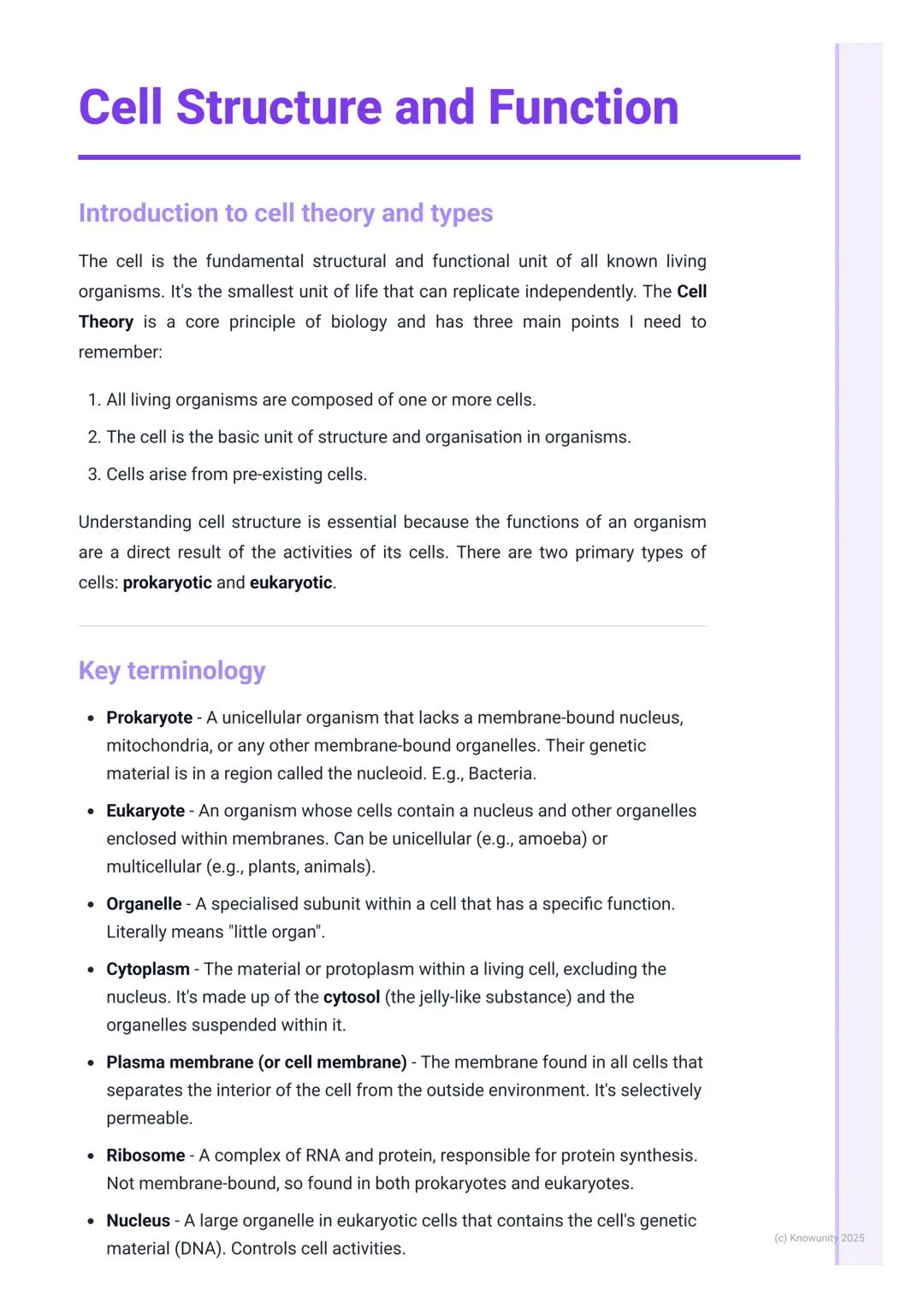
The cell theory has three key principles you need to remember: all living things are made of one or more cells, cells are the basic structural and functional units of life, and all cells come from pre-existing cells. This theory is fundamental to understanding biology.
There are two main types of cells: prokaryotic cells (like bacteria) which are simpler and lack membrane-bound organelles, and eukaryotic cells (like those in plants and animals) which are more complex and contain a true nucleus and various organelles.
Quick Tip: Think of cells as tiny factories, with each organelle being a department that performs a specific job. Together, they keep the "business" of life running smoothly!
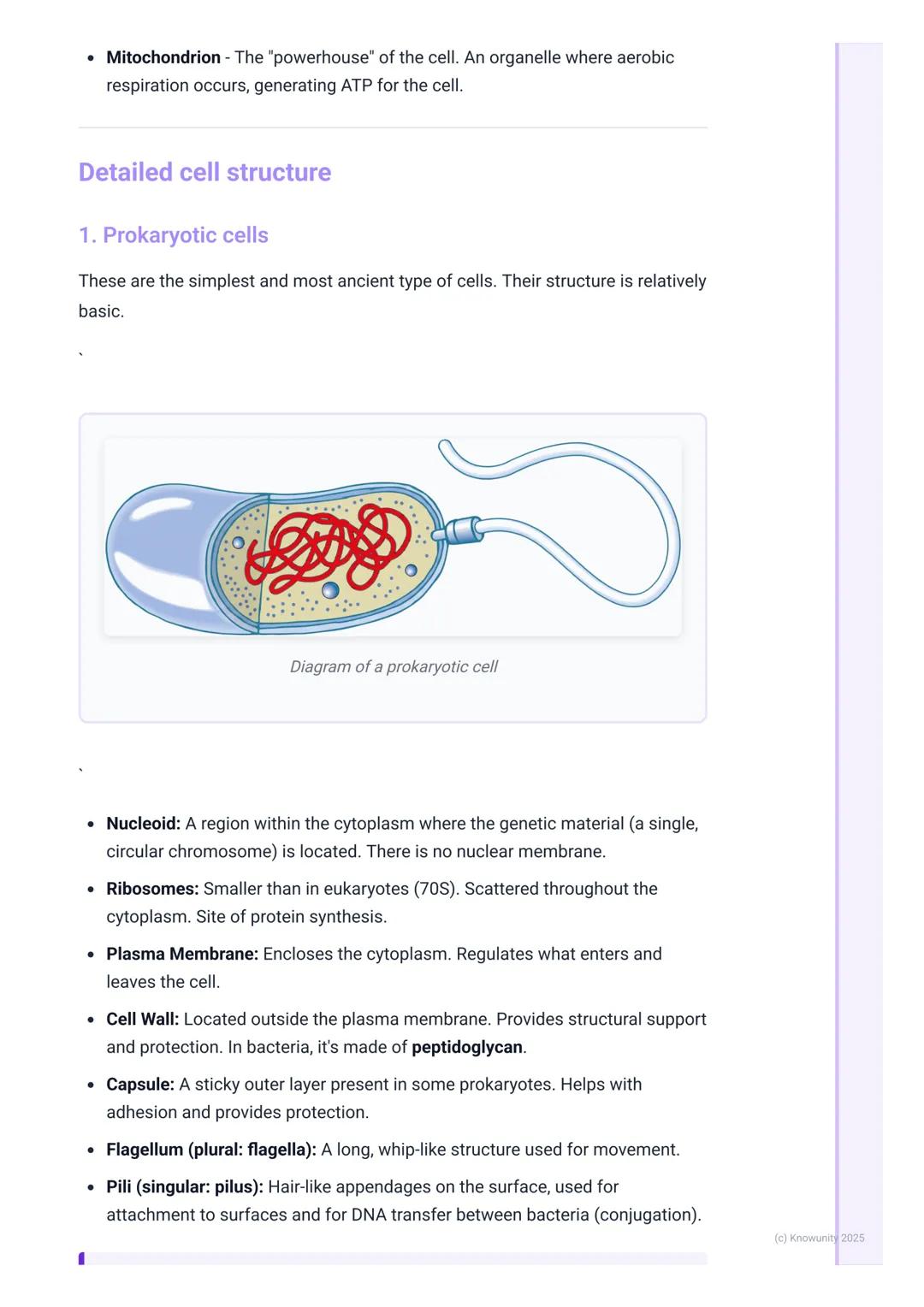
Prokaryotic cells are like the original "no-frills" version of cells - simple but incredibly effective. These ancient cells have survived billions of years with their basic design.
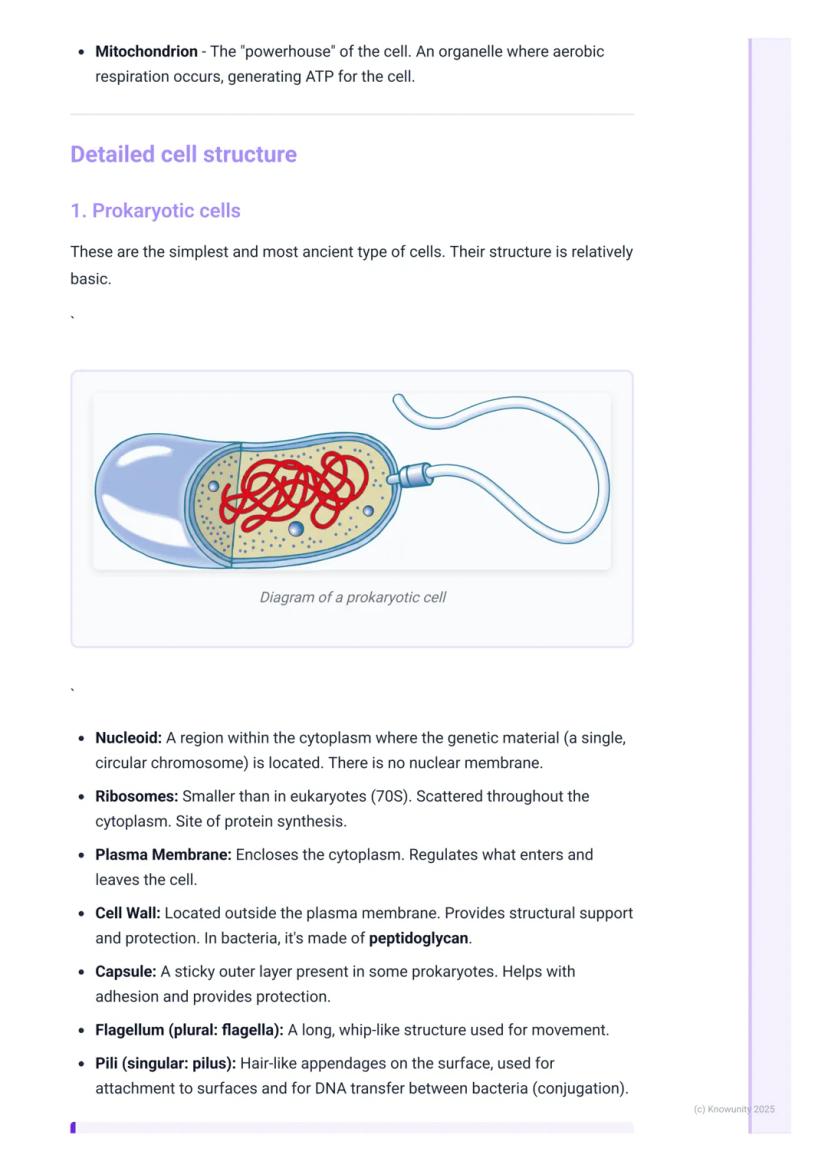
The genetic material in prokaryotes isn't housed in a nucleus but instead floats in a region called the nucleoid. They have smaller ribosomes (70S) scattered throughout their cytoplasm that manufacture proteins. The plasma membrane surrounds the cell contents and controls what enters and exits.
Most prokaryotes have a cell wall made of peptidoglycan that provides structural support and protection. Many also have additional features like a sticky capsule for protection and adhesion, flagella for movement, and pili for attachment and DNA transfer between cells.
Remember This: The key defining feature of prokaryotic cells is the absence of membrane-bound organelles - no nucleus, no mitochondria, no chloroplasts!
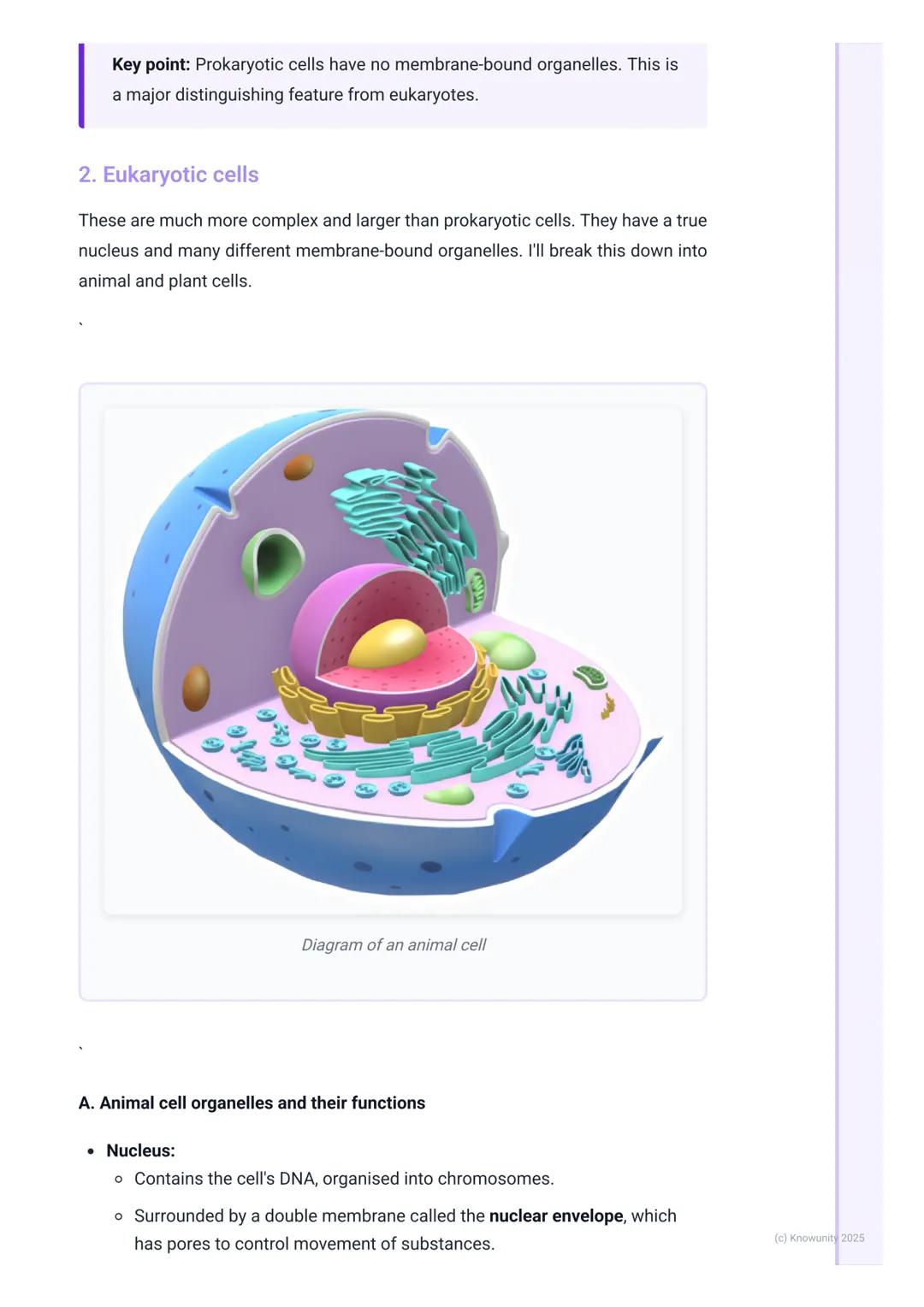
Eukaryotic cells are like high-tech upgrades of prokaryotes - larger, more complex, and with specialized compartments for different functions. These cells make up your body and those of all plants, animals, and fungi.
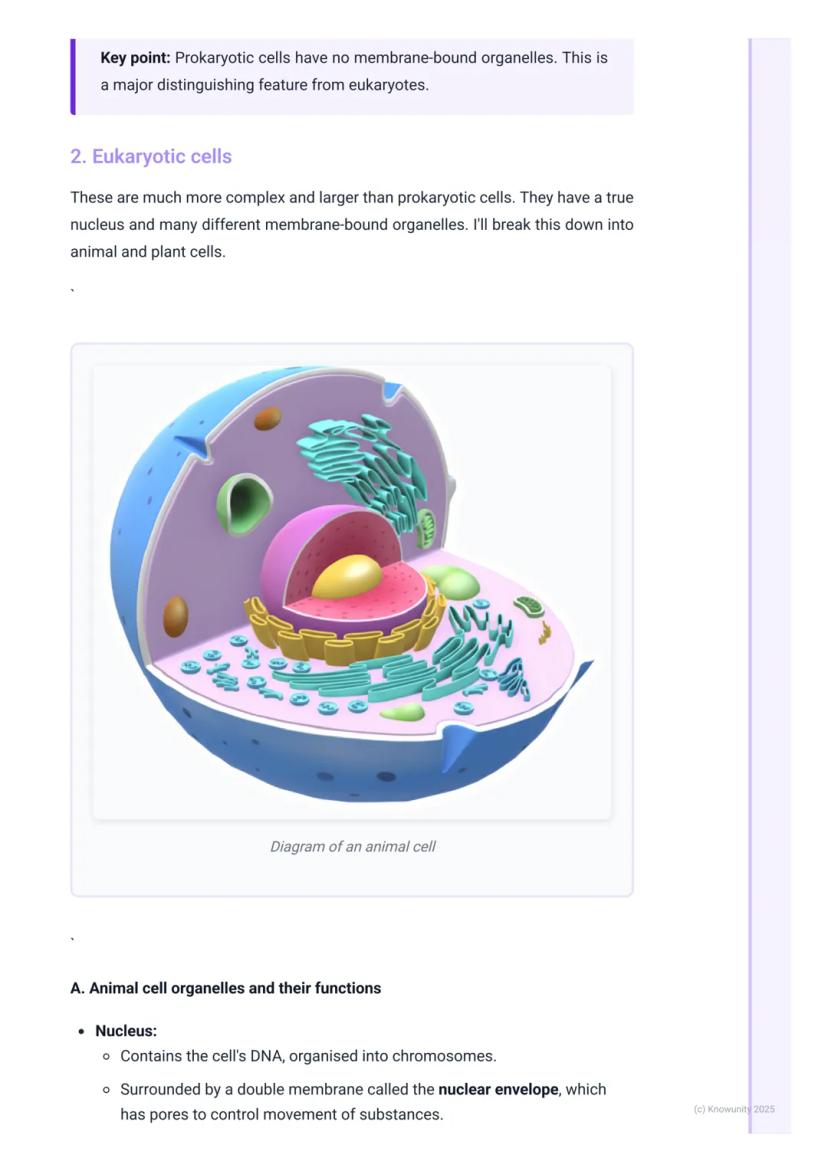
The hallmark of eukaryotic cells is the nucleus - a control center surrounded by a double membrane that houses DNA organized into chromosomes. The nuclear envelope has pores that regulate what moves in and out. Inside the nucleus is the nucleolus, where ribosomes are manufactured.
Animal cell organelles include mitochondria (the powerhouse that produces ATP through aerobic respiration), ribosomes (protein factories), and the endoplasmic reticulum (ER) which processes proteins and lipids. The Golgi apparatus acts like the cell's post office, packaging and directing molecules to their destinations.
Exam Alert: Remember that eukaryotic cells are typically 10-100 times larger than prokaryotic cells and contain many more components - this complexity allows for the specialization needed in multicellular organisms!
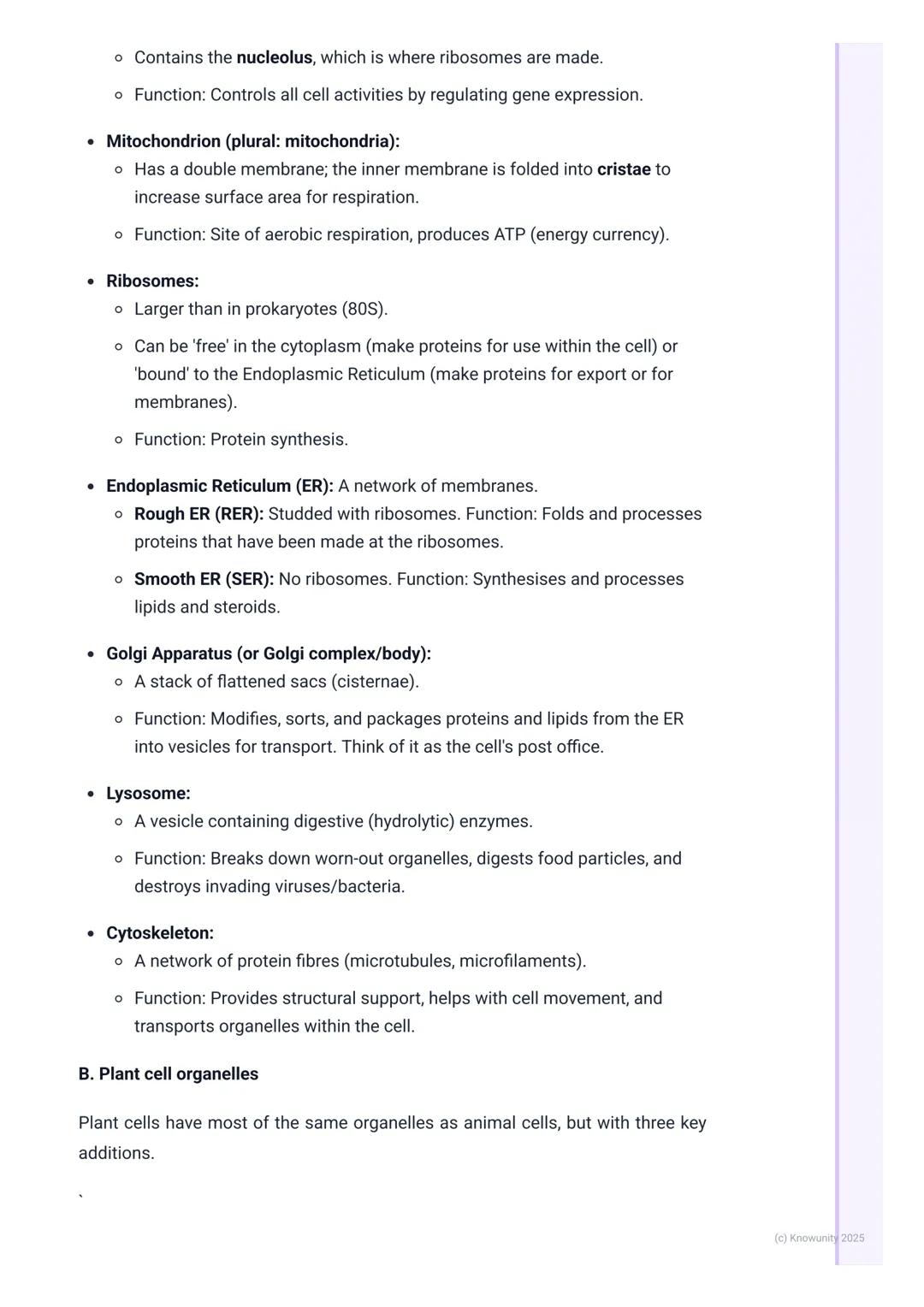
Animal cells contain a fascinating array of specialized structures that work together like a well-oiled machine. Understanding their functions helps explain how our bodies operate at the cellular level.
The mitochondria have a distinctive double membrane structure with the inner membrane folded into cristae to increase surface area for ATP production. Ribosomes can be free-floating in the cytoplasm or attached to the rough ER, determining whether the proteins they produce stay within the cell or are exported. The endoplasmic reticulum comes in two types: rough ER (studded with ribosomes) processes proteins, while smooth ER handles lipids and steroids.
Other crucial organelles include the Golgi apparatus, which modifies and packages molecules, lysosomes containing digestive enzymes that break down cellular waste and invaders, and the cytoskeleton, a network of protein fibers that provides structure and facilitates movement within the cell.
Study Tip: When learning about organelles, associate each with a real-world equivalent - the nucleus is like a manager, mitochondria are power plants, the ER is a manufacturing facility, and the Golgi apparatus is a packaging and shipping center!
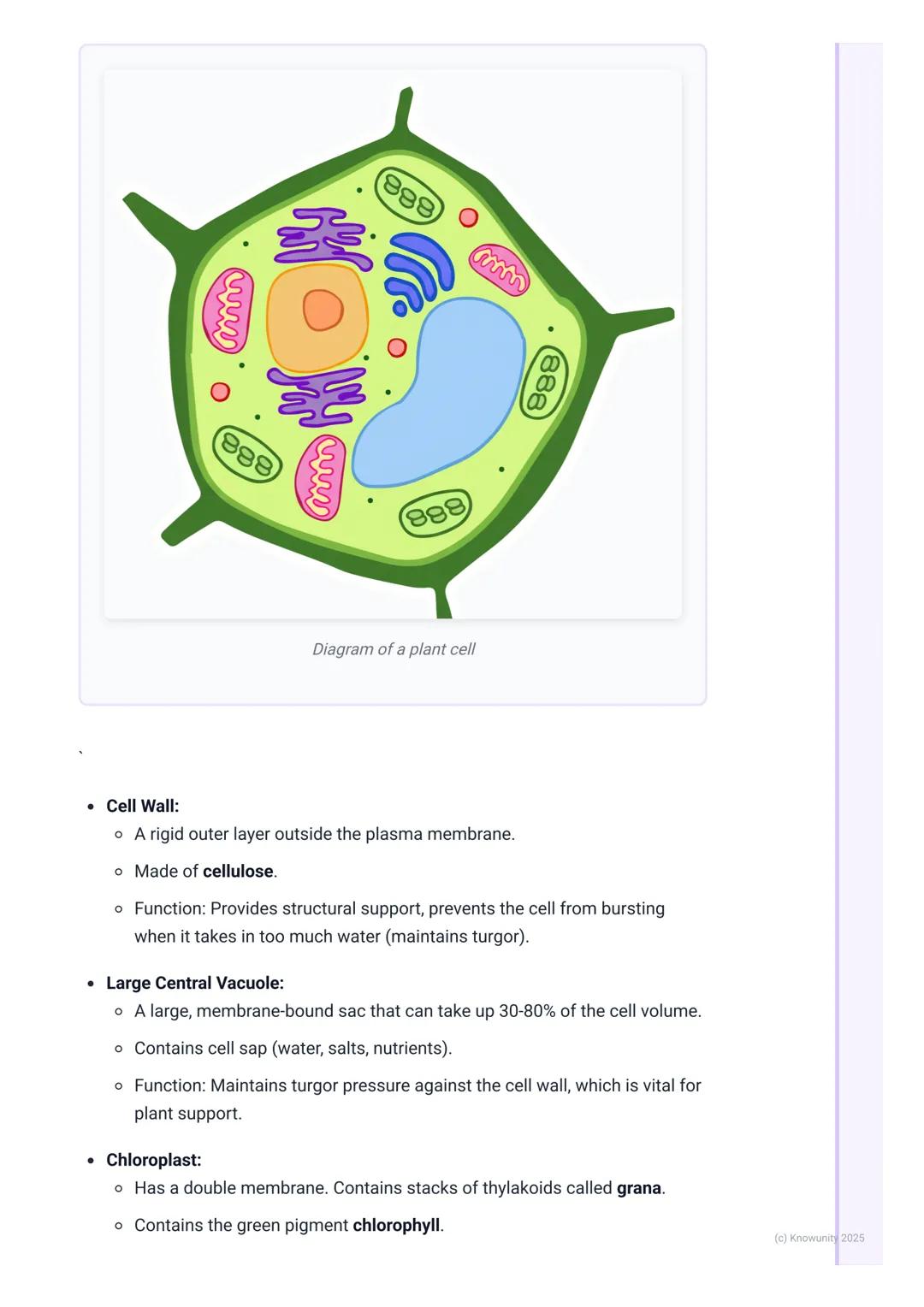
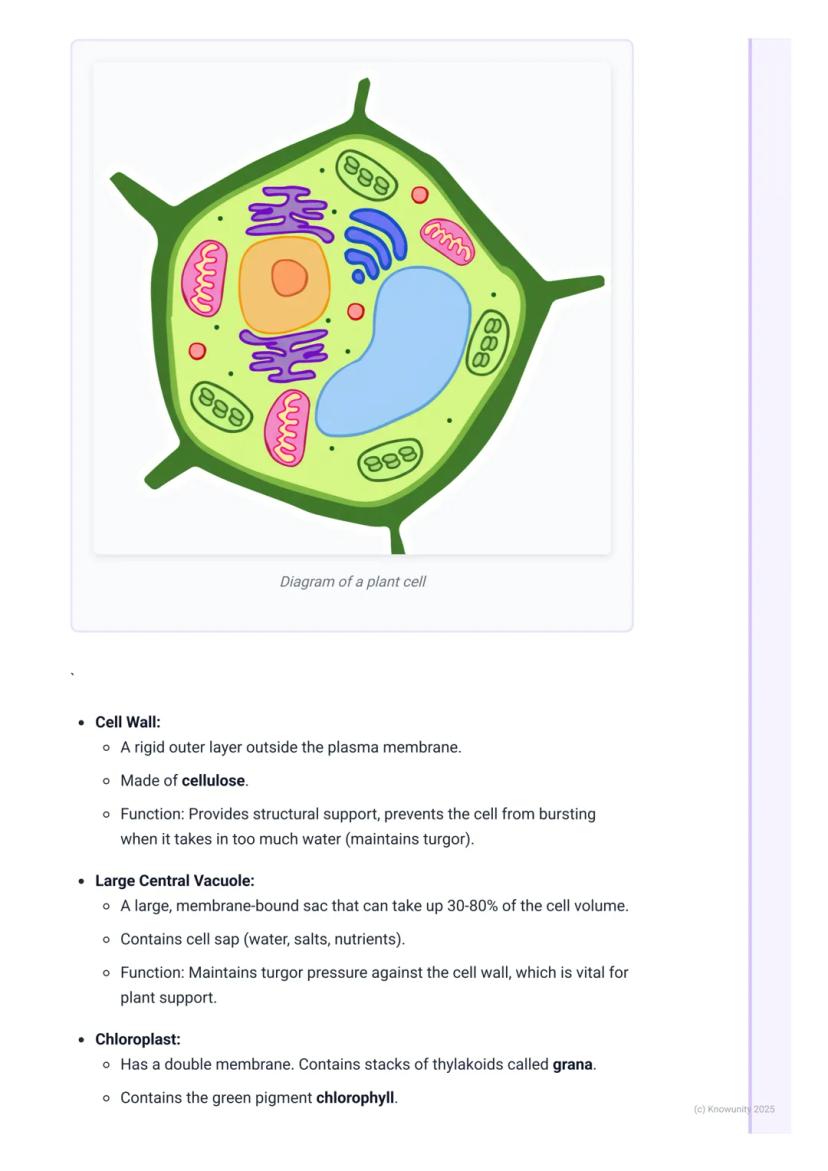
Plant cells share many features with animal cells but have evolved unique structures that enable them to harness sunlight and maintain rigidity. These specialized components explain how plants can stand tall and produce their own food.
The cell wall, composed primarily of cellulose, surrounds the cell membrane and provides structural support. This rigid layer prevents the cell from bursting when it absorbs water and helps plants maintain their shape. Unlike the bacterial cell wall, plant cell walls are made of cellulose rather than peptidoglycan.
The large central vacuole can occupy up to 80% of a plant cell's volume and stores water, nutrients, and waste products. It plays a crucial role in maintaining turgor pressure - the outward pressure against the cell wall that gives plants their rigidity.
Perhaps most importantly, plant cells contain chloroplasts - remarkable organelles with double membranes housing stacks of thylakoids called grana. These structures contain the green pigment chlorophyll, which captures sunlight and converts it into chemical energy during photosynthesis.
Connection Point: Notice how plant cell specializations reflect their lifestyle - they need to stand upright (cell wall), store resources (large vacuole), and make their own food (chloroplasts)!
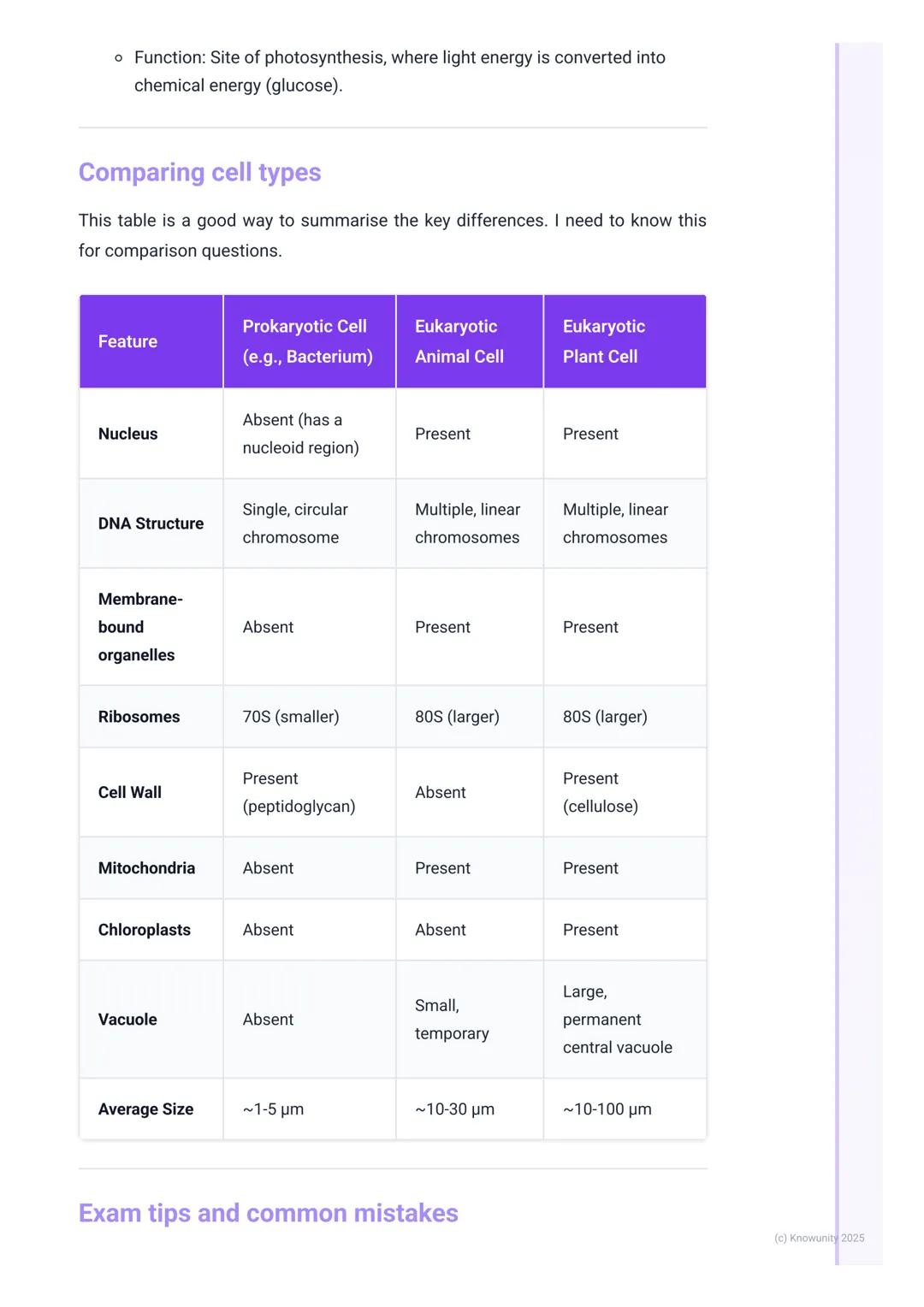
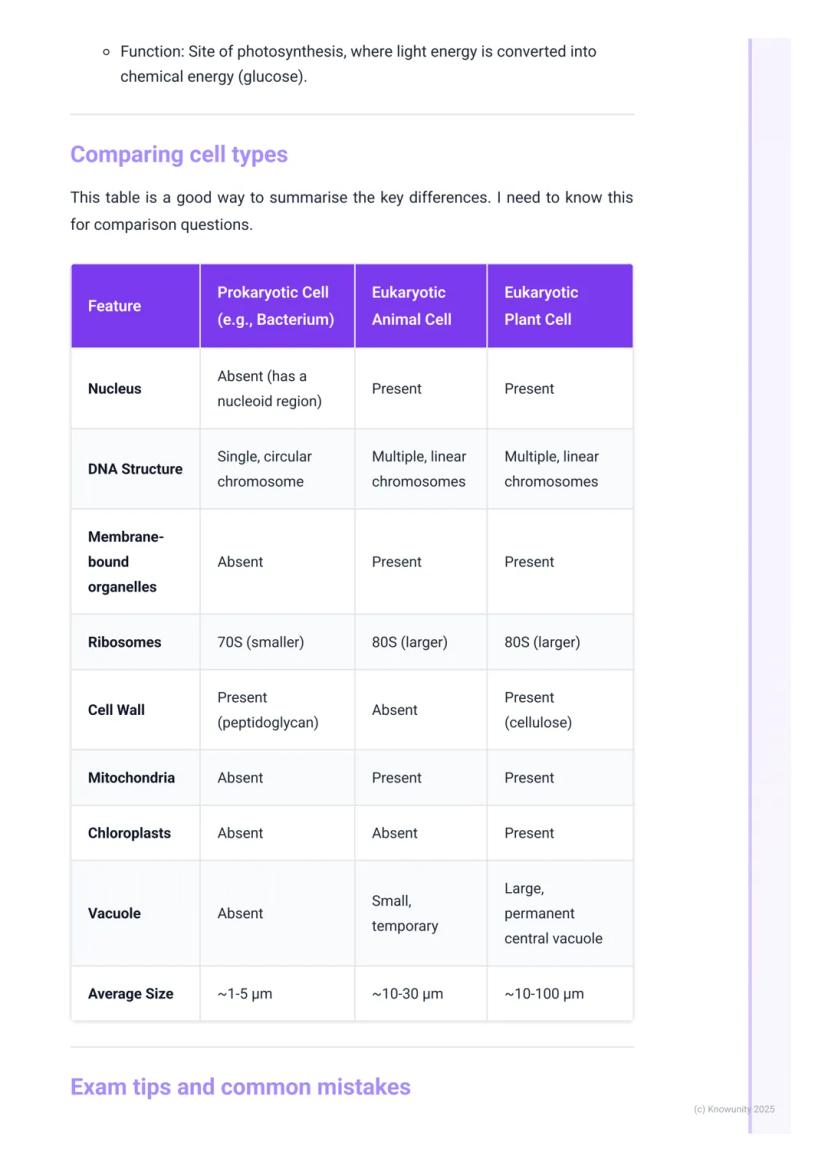
Understanding the differences between cell types is essential for biology exams and builds your foundation for more advanced concepts. Being able to compare and contrast them shows a deeper understanding of cell biology.
Prokaryotic cells are smaller and simpler, with a single circular chromosome in the nucleoid region rather than a true nucleus. They lack membrane-bound organelles but do have smaller ribosomes (70S) and a peptidoglycan cell wall. These ancient cells represent the earliest forms of life on Earth.
Eukaryotic animal cells are larger with multiple linear chromosomes housed in a true nucleus. They contain various membrane-bound organelles including mitochondria, but lack cell walls, chloroplasts, and large central vacuoles. Instead, they have small, temporary vacuoles and specialized lysosomes for digestion.
Eukaryotic plant cells combine features of animal cells with their own specializations. They have a nucleus and mitochondria like animal cells, but also contain chloroplasts for photosynthesis, a cellulose cell wall for support, and a large central vacuole for maintaining turgor pressure.
Exam Focus: Remember that all cells have a plasma membrane, cytoplasm, and genetic material, but the packaging and additional structures differ significantly between types!
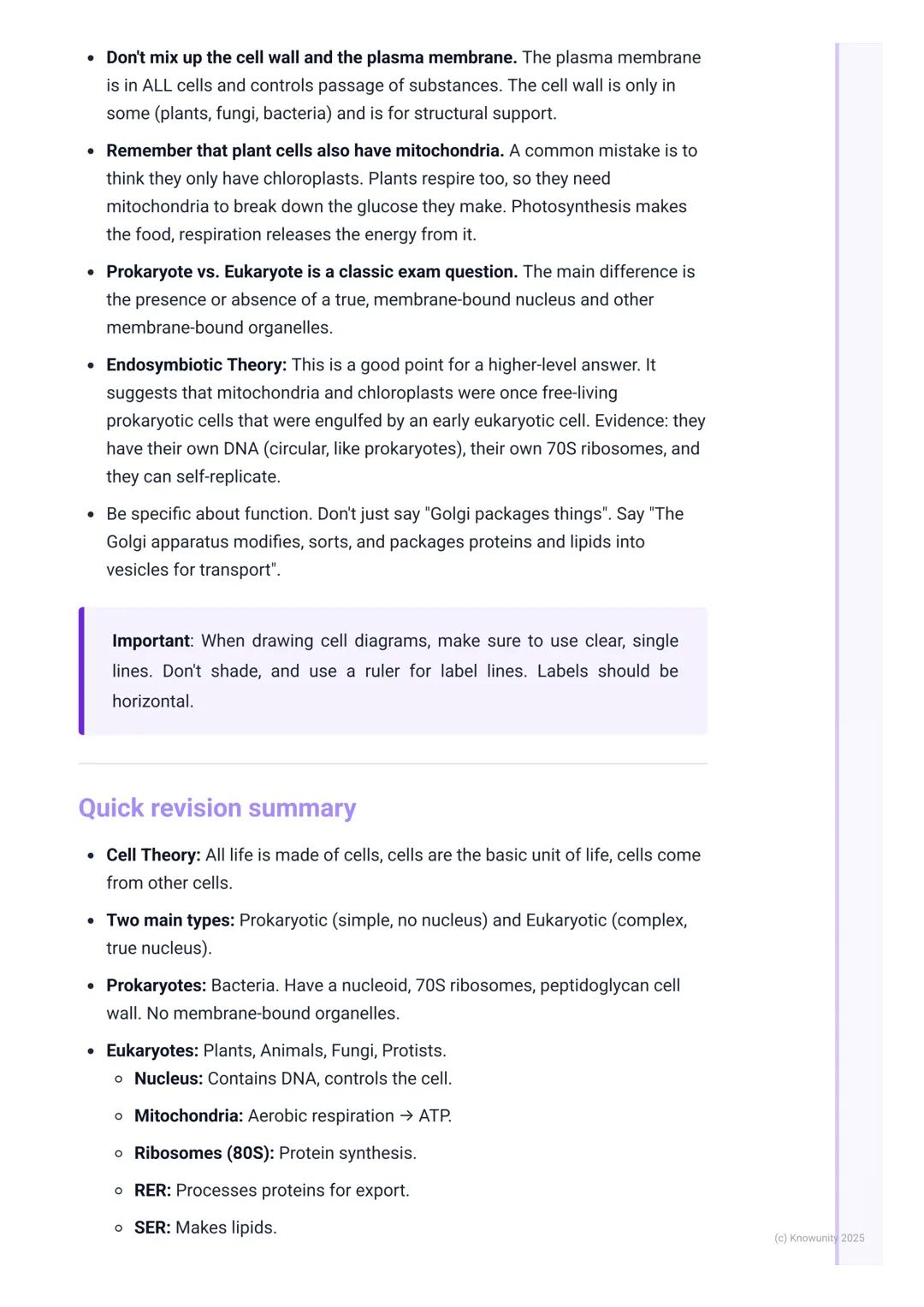
Avoid these common pitfalls when studying cell biology to secure those top marks in your exams. Being aware of typical mistakes can help you focus your revision effectively.
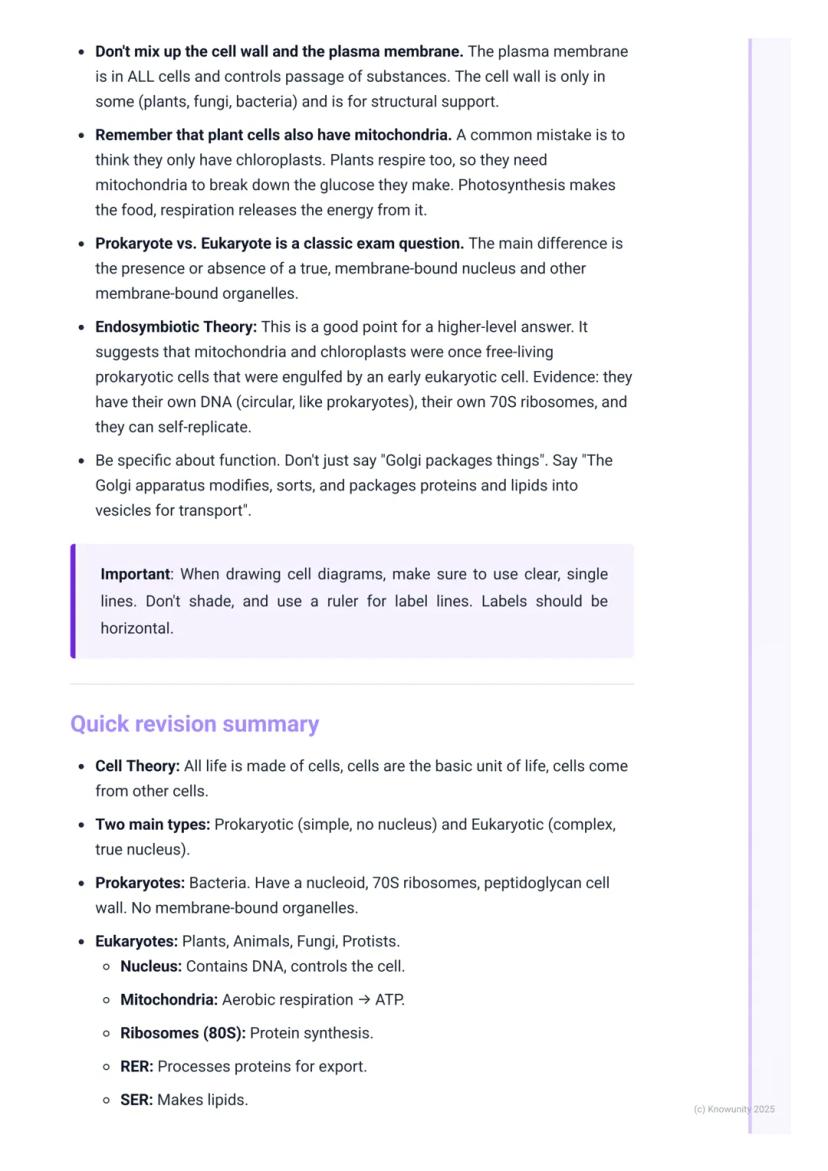
Don't confuse the plasma membrane (present in ALL cells and controlling substance passage) with the cell wall (only in plants, fungi, and bacteria for structural support). Another common error is forgetting that plant cells have mitochondria in addition to chloroplasts - plants need both photosynthesis to make glucose AND respiration to release energy from it.
The endosymbiotic theory is worth mentioning in higher-level answers. It proposes that mitochondria and chloroplasts were once free-living prokaryotes that were engulfed by early eukaryotic cells. Evidence includes their own circular DNA, 70S ribosomes, and ability to self-replicate - all prokaryotic characteristics.
When describing organelle functions, be specific. Instead of saying "the Golgi packages things," write that "the Golgi apparatus modifies, sorts, and packages proteins and lipids into vesicles for transport." For cell diagrams, use clear single lines, horizontal labels, and avoid shading.
Confidence Booster: If you can explain why cellular structures evolved as they did, you're thinking like a biologist! Understanding the relationship between structure and function is key to mastering cell biology.

Let's pull everything together into a concise overview that highlights the most essential points you need to remember about cells. These are your go-to facts for quick revision before an exam.
The cell theory establishes that all living things are made of cells, cells are the basic units of life, and all cells come from pre-existing cells. The two main cell types are prokaryotic (simple, no nucleus) and eukaryotic (complex, true nucleus).
Prokaryotes like bacteria have a nucleoid region with a circular chromosome, 70S ribosomes, and a peptidoglycan cell wall, but no membrane-bound organelles. Eukaryotes include plants, animals, fungi, and protists, all with a nucleus containing DNA, mitochondria for energy production, 80S ribosomes for protein synthesis, and various specialized organelles like the ER and Golgi apparatus.
Plant cells have unique structures including a cellulose cell wall for support, a large central vacuole for maintaining turgor pressure, and chloroplasts for photosynthesis. Animal cells lack these plant-specific features but have lysosomes for intracellular digestion.
Final Tip: Understanding cells is like learning a new language - once you grasp the vocabulary of organelles and their functions, you'll be able to "read" the complex processes of life at the cellular level!
Yapay zeka arkadaşımız öğrencilerin ihtiyaçlarına göre özel olarak tasarlanmıştır. Platformda bulunan milyonlarca içeriğe dayanarak öğrencilere gerçekten anlamlı ve ilgili yanıtlar verebiliyoruz. Ancak mesele sadece cevaplar değil, refakatçi aynı zamanda kişiselleştirilmiş öğrenme planları, sınavlar veya sohbet içerikleri ve öğrencilerin becerilerine ve gelişimlerine dayalı %100 kişiselleştirme ile öğrencilere günlük öğrenme zorluklarında rehberlik ediyor.
Uygulamayı Google Play Store ve Apple App Store'dan indirebilirsiniz.
Knowunity uygulaması ücretsiz! Uygulamamız çok yakında indirmeye hazır olacak, bekle bizi. 💙
App Store
Google Play
Uygulama çok kolay kullanılıyor ve güzel tasarlanmış. Şu ana kadar aradığım her şeyi buldum ve sunumlardan çok şey öğrendim! Kesinlikle ödevlerim için hep kullanacağım!
A.S.
iOS kullanıcısı
Uygulama çok iyi. Çok fazla ders notu ve yardımlaşma var. Örneğin benim problem yaşadığım bir ders Geometriydi ve ANINDA yardım ettiler beraber hem sorularımı çözdük hem konu anlatımı buldum. Herkese tavsiye ederim.
S.L.
Android kullanıcısı
BEN ŞOK. Reklamını sık sık gördüğüm için uygulamayı denedim ve gerçekten hayran kaldım. Bu uygulama okul için tam ihtiyacım olan şey. Anında ödev yardımı, konu anlatımı, örnek sınavlar, flaşkartlar hepsi hepsi var, şiddetle tavsiye ederim ✅
A.
iOS kullanıcısı
Knowunity'yi keşfedinceye kadar ödevlerimi zamanında tamamlamakta zorlanıyordum, Knowunity sadece kendi ders notlarımı yüklemeyi kolaylaştırmakla kalmıyor, aynı zamanda çalışmamı daha hızlı ve verimli hale getiren harika özetler de sunuyor.
Thomas R
iOS kullanıcısı
Ödevlerim için önemli bilgilerin tümünü bulmak her zaman bir zorluktu - Knowunity'yi kullanmaya başladığımdan beri, ders notlarımı kolayca yükleyebilir ve başkalarının özetlerinden faydalanabilirim, bu da organizasyon konusunda bana çok yardımcı oluyor.
Lisa M
Android kullanıcısı
Ders çalışırken genellikle yeterince genel bakışa sahip olmadığımı hissederdim, ama Knowunity'yi kullanmaya başladığımdan beri bu artık sorun değil - ders notlarımı yüklüyorum ve platformda her zaman yardımcı özetler buluyorum, bu da öğrenmemi çok daha kolaylaştırıyor.
David K
iOS kullanıcısı
Uygulama acayip iyi! Konuyu yazıyorum hemen yanıt alıyorum. Bi şeyi anlamak için 10 tane youtube videosu izlemem gerekmiyor. Kesssinlikle tavsiye ederim!
Sudenaz Ocak
Android kullanıcısı
Matematikte baya kötüydüm ama bu uygulama sayesinde şimdi daha iyiyim. Uygulamayı yapanlara için çok teşekkürler!
G.B.
Android kullanıcısı
Sunumlarım için tüm bilgileri toplamak gerçekten zordu. Ama Knowunity'yi kullanmaya başladığımdan beri, notlarımı yüklüyorum ve başkalarından harika özetler buluyorum - bu da çalışmamı çok daha verimli hale getiriyor!
Julia S
Android kullanıcısı
Tüm çalışma materyalleriyle sürekli stres altındaydım, ama Knowunity'yi kullanmaya başladığımdan beri, notlarımı yüklüyor ve başkalarının harika özetlerine bakıyorum - her şeyi daha iyi yönetmemi sağlıyor ve çok daha az stresli.
Marco B
iOS kullanıcısı
QUİZLER VE FLASHCARDLAR ÇOK FAYDALI VE Knowunity AI'I ÇOK SEVİYORUM. AYRICA TAM OLARAK CHATGPT GİBİ AMA DAHA AKILLI!! RİMEL SORUNLARIMDA DA YARDIM ETTİ!! GERÇEK DERSLERİMDE DE TABII Kİ! DUHHH 😍😁😲🤑💗✨🎀😮
Sarah L
Android kullanıcısı
Eskiden okul materyallerini Google'da aramakla saatler harcardım, ama şimdi sadece notlarımı Knowunity'ye yüklüyorum ve başkalarının faydalı özetlerine bakıyorum - sınavlara hazırlanırken kendimi çok daha güvende hissediyorum.
Paul T
iOS kullanıcısı
Uygulama çok kolay kullanılıyor ve güzel tasarlanmış. Şu ana kadar aradığım her şeyi buldum ve sunumlardan çok şey öğrendim! Kesinlikle ödevlerim için hep kullanacağım!
A.S.
iOS kullanıcısı
Uygulama çok iyi. Çok fazla ders notu ve yardımlaşma var. Örneğin benim problem yaşadığım bir ders Geometriydi ve ANINDA yardım ettiler beraber hem sorularımı çözdük hem konu anlatımı buldum. Herkese tavsiye ederim.
S.L.
Android kullanıcısı
BEN ŞOK. Reklamını sık sık gördüğüm için uygulamayı denedim ve gerçekten hayran kaldım. Bu uygulama okul için tam ihtiyacım olan şey. Anında ödev yardımı, konu anlatımı, örnek sınavlar, flaşkartlar hepsi hepsi var, şiddetle tavsiye ederim ✅
A.
iOS kullanıcısı
Knowunity'yi keşfedinceye kadar ödevlerimi zamanında tamamlamakta zorlanıyordum, Knowunity sadece kendi ders notlarımı yüklemeyi kolaylaştırmakla kalmıyor, aynı zamanda çalışmamı daha hızlı ve verimli hale getiren harika özetler de sunuyor.
Thomas R
iOS kullanıcısı
Ödevlerim için önemli bilgilerin tümünü bulmak her zaman bir zorluktu - Knowunity'yi kullanmaya başladığımdan beri, ders notlarımı kolayca yükleyebilir ve başkalarının özetlerinden faydalanabilirim, bu da organizasyon konusunda bana çok yardımcı oluyor.
Lisa M
Android kullanıcısı
Ders çalışırken genellikle yeterince genel bakışa sahip olmadığımı hissederdim, ama Knowunity'yi kullanmaya başladığımdan beri bu artık sorun değil - ders notlarımı yüklüyorum ve platformda her zaman yardımcı özetler buluyorum, bu da öğrenmemi çok daha kolaylaştırıyor.
David K
iOS kullanıcısı
Uygulama acayip iyi! Konuyu yazıyorum hemen yanıt alıyorum. Bi şeyi anlamak için 10 tane youtube videosu izlemem gerekmiyor. Kesssinlikle tavsiye ederim!
Sudenaz Ocak
Android kullanıcısı
Matematikte baya kötüydüm ama bu uygulama sayesinde şimdi daha iyiyim. Uygulamayı yapanlara için çok teşekkürler!
G.B.
Android kullanıcısı
Sunumlarım için tüm bilgileri toplamak gerçekten zordu. Ama Knowunity'yi kullanmaya başladığımdan beri, notlarımı yüklüyorum ve başkalarından harika özetler buluyorum - bu da çalışmamı çok daha verimli hale getiriyor!
Julia S
Android kullanıcısı
Tüm çalışma materyalleriyle sürekli stres altındaydım, ama Knowunity'yi kullanmaya başladığımdan beri, notlarımı yüklüyor ve başkalarının harika özetlerine bakıyorum - her şeyi daha iyi yönetmemi sağlıyor ve çok daha az stresli.
Marco B
iOS kullanıcısı
QUİZLER VE FLASHCARDLAR ÇOK FAYDALI VE Knowunity AI'I ÇOK SEVİYORUM. AYRICA TAM OLARAK CHATGPT GİBİ AMA DAHA AKILLI!! RİMEL SORUNLARIMDA DA YARDIM ETTİ!! GERÇEK DERSLERİMDE DE TABII Kİ! DUHHH 😍😁😲🤑💗✨🎀😮
Sarah L
Android kullanıcısı
Eskiden okul materyallerini Google'da aramakla saatler harcardım, ama şimdi sadece notlarımı Knowunity'ye yüklüyorum ve başkalarının faydalı özetlerine bakıyorum - sınavlara hazırlanırken kendimi çok daha güvende hissediyorum.
Paul T
iOS kullanıcısı
Cells are the fundamental building blocks of all living organisms, serving as the basic units of life capable of independent replication. Understanding their structure and function is essential to biology as it explains how organisms carry out life processes. The... Daha fazla göster
Tüm belgeleri görebilirsin
Notlarını Yükselt
Milyonlarca öğrenciye katıl
Ever wondered what makes something "alive"? It all comes down to cells! These microscopic structures are the foundation of all living organisms, from bacteria to humans.
The cell theory has three key principles you need to remember: all living things are made of one or more cells, cells are the basic structural and functional units of life, and all cells come from pre-existing cells. This theory is fundamental to understanding biology.
There are two main types of cells: prokaryotic cells (like bacteria) which are simpler and lack membrane-bound organelles, and eukaryotic cells (like those in plants and animals) which are more complex and contain a true nucleus and various organelles.
Quick Tip: Think of cells as tiny factories, with each organelle being a department that performs a specific job. Together, they keep the "business" of life running smoothly!
Tüm belgeleri görebilirsin
Notlarını Yükselt
Milyonlarca öğrenciye katıl
Prokaryotic cells are like the original "no-frills" version of cells - simple but incredibly effective. These ancient cells have survived billions of years with their basic design.
The genetic material in prokaryotes isn't housed in a nucleus but instead floats in a region called the nucleoid. They have smaller ribosomes (70S) scattered throughout their cytoplasm that manufacture proteins. The plasma membrane surrounds the cell contents and controls what enters and exits.
Most prokaryotes have a cell wall made of peptidoglycan that provides structural support and protection. Many also have additional features like a sticky capsule for protection and adhesion, flagella for movement, and pili for attachment and DNA transfer between cells.
Remember This: The key defining feature of prokaryotic cells is the absence of membrane-bound organelles - no nucleus, no mitochondria, no chloroplasts!
Tüm belgeleri görebilirsin
Notlarını Yükselt
Milyonlarca öğrenciye katıl
Eukaryotic cells are like high-tech upgrades of prokaryotes - larger, more complex, and with specialized compartments for different functions. These cells make up your body and those of all plants, animals, and fungi.
The hallmark of eukaryotic cells is the nucleus - a control center surrounded by a double membrane that houses DNA organized into chromosomes. The nuclear envelope has pores that regulate what moves in and out. Inside the nucleus is the nucleolus, where ribosomes are manufactured.
Animal cell organelles include mitochondria (the powerhouse that produces ATP through aerobic respiration), ribosomes (protein factories), and the endoplasmic reticulum (ER) which processes proteins and lipids. The Golgi apparatus acts like the cell's post office, packaging and directing molecules to their destinations.
Exam Alert: Remember that eukaryotic cells are typically 10-100 times larger than prokaryotic cells and contain many more components - this complexity allows for the specialization needed in multicellular organisms!
Tüm belgeleri görebilirsin
Notlarını Yükselt
Milyonlarca öğrenciye katıl
Animal cells contain a fascinating array of specialized structures that work together like a well-oiled machine. Understanding their functions helps explain how our bodies operate at the cellular level.
The mitochondria have a distinctive double membrane structure with the inner membrane folded into cristae to increase surface area for ATP production. Ribosomes can be free-floating in the cytoplasm or attached to the rough ER, determining whether the proteins they produce stay within the cell or are exported. The endoplasmic reticulum comes in two types: rough ER (studded with ribosomes) processes proteins, while smooth ER handles lipids and steroids.
Other crucial organelles include the Golgi apparatus, which modifies and packages molecules, lysosomes containing digestive enzymes that break down cellular waste and invaders, and the cytoskeleton, a network of protein fibers that provides structure and facilitates movement within the cell.
Study Tip: When learning about organelles, associate each with a real-world equivalent - the nucleus is like a manager, mitochondria are power plants, the ER is a manufacturing facility, and the Golgi apparatus is a packaging and shipping center!
Tüm belgeleri görebilirsin
Notlarını Yükselt
Milyonlarca öğrenciye katıl
Plant cells share many features with animal cells but have evolved unique structures that enable them to harness sunlight and maintain rigidity. These specialized components explain how plants can stand tall and produce their own food.
The cell wall, composed primarily of cellulose, surrounds the cell membrane and provides structural support. This rigid layer prevents the cell from bursting when it absorbs water and helps plants maintain their shape. Unlike the bacterial cell wall, plant cell walls are made of cellulose rather than peptidoglycan.
The large central vacuole can occupy up to 80% of a plant cell's volume and stores water, nutrients, and waste products. It plays a crucial role in maintaining turgor pressure - the outward pressure against the cell wall that gives plants their rigidity.
Perhaps most importantly, plant cells contain chloroplasts - remarkable organelles with double membranes housing stacks of thylakoids called grana. These structures contain the green pigment chlorophyll, which captures sunlight and converts it into chemical energy during photosynthesis.
Connection Point: Notice how plant cell specializations reflect their lifestyle - they need to stand upright (cell wall), store resources (large vacuole), and make their own food (chloroplasts)!
Tüm belgeleri görebilirsin
Notlarını Yükselt
Milyonlarca öğrenciye katıl
Understanding the differences between cell types is essential for biology exams and builds your foundation for more advanced concepts. Being able to compare and contrast them shows a deeper understanding of cell biology.
Prokaryotic cells are smaller and simpler, with a single circular chromosome in the nucleoid region rather than a true nucleus. They lack membrane-bound organelles but do have smaller ribosomes (70S) and a peptidoglycan cell wall. These ancient cells represent the earliest forms of life on Earth.
Eukaryotic animal cells are larger with multiple linear chromosomes housed in a true nucleus. They contain various membrane-bound organelles including mitochondria, but lack cell walls, chloroplasts, and large central vacuoles. Instead, they have small, temporary vacuoles and specialized lysosomes for digestion.
Eukaryotic plant cells combine features of animal cells with their own specializations. They have a nucleus and mitochondria like animal cells, but also contain chloroplasts for photosynthesis, a cellulose cell wall for support, and a large central vacuole for maintaining turgor pressure.
Exam Focus: Remember that all cells have a plasma membrane, cytoplasm, and genetic material, but the packaging and additional structures differ significantly between types!
Tüm belgeleri görebilirsin
Notlarını Yükselt
Milyonlarca öğrenciye katıl
Avoid these common pitfalls when studying cell biology to secure those top marks in your exams. Being aware of typical mistakes can help you focus your revision effectively.
Don't confuse the plasma membrane (present in ALL cells and controlling substance passage) with the cell wall (only in plants, fungi, and bacteria for structural support). Another common error is forgetting that plant cells have mitochondria in addition to chloroplasts - plants need both photosynthesis to make glucose AND respiration to release energy from it.
The endosymbiotic theory is worth mentioning in higher-level answers. It proposes that mitochondria and chloroplasts were once free-living prokaryotes that were engulfed by early eukaryotic cells. Evidence includes their own circular DNA, 70S ribosomes, and ability to self-replicate - all prokaryotic characteristics.
When describing organelle functions, be specific. Instead of saying "the Golgi packages things," write that "the Golgi apparatus modifies, sorts, and packages proteins and lipids into vesicles for transport." For cell diagrams, use clear single lines, horizontal labels, and avoid shading.
Confidence Booster: If you can explain why cellular structures evolved as they did, you're thinking like a biologist! Understanding the relationship between structure and function is key to mastering cell biology.
Tüm belgeleri görebilirsin
Notlarını Yükselt
Milyonlarca öğrenciye katıl
Let's pull everything together into a concise overview that highlights the most essential points you need to remember about cells. These are your go-to facts for quick revision before an exam.
The cell theory establishes that all living things are made of cells, cells are the basic units of life, and all cells come from pre-existing cells. The two main cell types are prokaryotic (simple, no nucleus) and eukaryotic (complex, true nucleus).
Prokaryotes like bacteria have a nucleoid region with a circular chromosome, 70S ribosomes, and a peptidoglycan cell wall, but no membrane-bound organelles. Eukaryotes include plants, animals, fungi, and protists, all with a nucleus containing DNA, mitochondria for energy production, 80S ribosomes for protein synthesis, and various specialized organelles like the ER and Golgi apparatus.
Plant cells have unique structures including a cellulose cell wall for support, a large central vacuole for maintaining turgor pressure, and chloroplasts for photosynthesis. Animal cells lack these plant-specific features but have lysosomes for intracellular digestion.
Final Tip: Understanding cells is like learning a new language - once you grasp the vocabulary of organelles and their functions, you'll be able to "read" the complex processes of life at the cellular level!
Yapay zeka arkadaşımız öğrencilerin ihtiyaçlarına göre özel olarak tasarlanmıştır. Platformda bulunan milyonlarca içeriğe dayanarak öğrencilere gerçekten anlamlı ve ilgili yanıtlar verebiliyoruz. Ancak mesele sadece cevaplar değil, refakatçi aynı zamanda kişiselleştirilmiş öğrenme planları, sınavlar veya sohbet içerikleri ve öğrencilerin becerilerine ve gelişimlerine dayalı %100 kişiselleştirme ile öğrencilere günlük öğrenme zorluklarında rehberlik ediyor.
Uygulamayı Google Play Store ve Apple App Store'dan indirebilirsiniz.
Knowunity uygulaması ücretsiz! Uygulamamız çok yakında indirmeye hazır olacak, bekle bizi. 💙
0
Akıllı Araçlar YENİ
Bu notu şunlara dönüştür: ✓ 50+ Alıştırma Sorusu ✓ Etkileşimli Flash Kartları ✓ Tam Deneme Sınavı ✓ Kompozisyon Taslakları
App Store
Google Play
Uygulama çok kolay kullanılıyor ve güzel tasarlanmış. Şu ana kadar aradığım her şeyi buldum ve sunumlardan çok şey öğrendim! Kesinlikle ödevlerim için hep kullanacağım!
A.S.
iOS kullanıcısı
Uygulama çok iyi. Çok fazla ders notu ve yardımlaşma var. Örneğin benim problem yaşadığım bir ders Geometriydi ve ANINDA yardım ettiler beraber hem sorularımı çözdük hem konu anlatımı buldum. Herkese tavsiye ederim.
S.L.
Android kullanıcısı
BEN ŞOK. Reklamını sık sık gördüğüm için uygulamayı denedim ve gerçekten hayran kaldım. Bu uygulama okul için tam ihtiyacım olan şey. Anında ödev yardımı, konu anlatımı, örnek sınavlar, flaşkartlar hepsi hepsi var, şiddetle tavsiye ederim ✅
A.
iOS kullanıcısı
Knowunity'yi keşfedinceye kadar ödevlerimi zamanında tamamlamakta zorlanıyordum, Knowunity sadece kendi ders notlarımı yüklemeyi kolaylaştırmakla kalmıyor, aynı zamanda çalışmamı daha hızlı ve verimli hale getiren harika özetler de sunuyor.
Thomas R
iOS kullanıcısı
Ödevlerim için önemli bilgilerin tümünü bulmak her zaman bir zorluktu - Knowunity'yi kullanmaya başladığımdan beri, ders notlarımı kolayca yükleyebilir ve başkalarının özetlerinden faydalanabilirim, bu da organizasyon konusunda bana çok yardımcı oluyor.
Lisa M
Android kullanıcısı
Ders çalışırken genellikle yeterince genel bakışa sahip olmadığımı hissederdim, ama Knowunity'yi kullanmaya başladığımdan beri bu artık sorun değil - ders notlarımı yüklüyorum ve platformda her zaman yardımcı özetler buluyorum, bu da öğrenmemi çok daha kolaylaştırıyor.
David K
iOS kullanıcısı
Uygulama acayip iyi! Konuyu yazıyorum hemen yanıt alıyorum. Bi şeyi anlamak için 10 tane youtube videosu izlemem gerekmiyor. Kesssinlikle tavsiye ederim!
Sudenaz Ocak
Android kullanıcısı
Matematikte baya kötüydüm ama bu uygulama sayesinde şimdi daha iyiyim. Uygulamayı yapanlara için çok teşekkürler!
G.B.
Android kullanıcısı
Sunumlarım için tüm bilgileri toplamak gerçekten zordu. Ama Knowunity'yi kullanmaya başladığımdan beri, notlarımı yüklüyorum ve başkalarından harika özetler buluyorum - bu da çalışmamı çok daha verimli hale getiriyor!
Julia S
Android kullanıcısı
Tüm çalışma materyalleriyle sürekli stres altındaydım, ama Knowunity'yi kullanmaya başladığımdan beri, notlarımı yüklüyor ve başkalarının harika özetlerine bakıyorum - her şeyi daha iyi yönetmemi sağlıyor ve çok daha az stresli.
Marco B
iOS kullanıcısı
QUİZLER VE FLASHCARDLAR ÇOK FAYDALI VE Knowunity AI'I ÇOK SEVİYORUM. AYRICA TAM OLARAK CHATGPT GİBİ AMA DAHA AKILLI!! RİMEL SORUNLARIMDA DA YARDIM ETTİ!! GERÇEK DERSLERİMDE DE TABII Kİ! DUHHH 😍😁😲🤑💗✨🎀😮
Sarah L
Android kullanıcısı
Eskiden okul materyallerini Google'da aramakla saatler harcardım, ama şimdi sadece notlarımı Knowunity'ye yüklüyorum ve başkalarının faydalı özetlerine bakıyorum - sınavlara hazırlanırken kendimi çok daha güvende hissediyorum.
Paul T
iOS kullanıcısı
Uygulama çok kolay kullanılıyor ve güzel tasarlanmış. Şu ana kadar aradığım her şeyi buldum ve sunumlardan çok şey öğrendim! Kesinlikle ödevlerim için hep kullanacağım!
A.S.
iOS kullanıcısı
Uygulama çok iyi. Çok fazla ders notu ve yardımlaşma var. Örneğin benim problem yaşadığım bir ders Geometriydi ve ANINDA yardım ettiler beraber hem sorularımı çözdük hem konu anlatımı buldum. Herkese tavsiye ederim.
S.L.
Android kullanıcısı
BEN ŞOK. Reklamını sık sık gördüğüm için uygulamayı denedim ve gerçekten hayran kaldım. Bu uygulama okul için tam ihtiyacım olan şey. Anında ödev yardımı, konu anlatımı, örnek sınavlar, flaşkartlar hepsi hepsi var, şiddetle tavsiye ederim ✅
A.
iOS kullanıcısı
Knowunity'yi keşfedinceye kadar ödevlerimi zamanında tamamlamakta zorlanıyordum, Knowunity sadece kendi ders notlarımı yüklemeyi kolaylaştırmakla kalmıyor, aynı zamanda çalışmamı daha hızlı ve verimli hale getiren harika özetler de sunuyor.
Thomas R
iOS kullanıcısı
Ödevlerim için önemli bilgilerin tümünü bulmak her zaman bir zorluktu - Knowunity'yi kullanmaya başladığımdan beri, ders notlarımı kolayca yükleyebilir ve başkalarının özetlerinden faydalanabilirim, bu da organizasyon konusunda bana çok yardımcı oluyor.
Lisa M
Android kullanıcısı
Ders çalışırken genellikle yeterince genel bakışa sahip olmadığımı hissederdim, ama Knowunity'yi kullanmaya başladığımdan beri bu artık sorun değil - ders notlarımı yüklüyorum ve platformda her zaman yardımcı özetler buluyorum, bu da öğrenmemi çok daha kolaylaştırıyor.
David K
iOS kullanıcısı
Uygulama acayip iyi! Konuyu yazıyorum hemen yanıt alıyorum. Bi şeyi anlamak için 10 tane youtube videosu izlemem gerekmiyor. Kesssinlikle tavsiye ederim!
Sudenaz Ocak
Android kullanıcısı
Matematikte baya kötüydüm ama bu uygulama sayesinde şimdi daha iyiyim. Uygulamayı yapanlara için çok teşekkürler!
G.B.
Android kullanıcısı
Sunumlarım için tüm bilgileri toplamak gerçekten zordu. Ama Knowunity'yi kullanmaya başladığımdan beri, notlarımı yüklüyorum ve başkalarından harika özetler buluyorum - bu da çalışmamı çok daha verimli hale getiriyor!
Julia S
Android kullanıcısı
Tüm çalışma materyalleriyle sürekli stres altındaydım, ama Knowunity'yi kullanmaya başladığımdan beri, notlarımı yüklüyor ve başkalarının harika özetlerine bakıyorum - her şeyi daha iyi yönetmemi sağlıyor ve çok daha az stresli.
Marco B
iOS kullanıcısı
QUİZLER VE FLASHCARDLAR ÇOK FAYDALI VE Knowunity AI'I ÇOK SEVİYORUM. AYRICA TAM OLARAK CHATGPT GİBİ AMA DAHA AKILLI!! RİMEL SORUNLARIMDA DA YARDIM ETTİ!! GERÇEK DERSLERİMDE DE TABII Kİ! DUHHH 😍😁😲🤑💗✨🎀😮
Sarah L
Android kullanıcısı
Eskiden okul materyallerini Google'da aramakla saatler harcardım, ama şimdi sadece notlarımı Knowunity'ye yüklüyorum ve başkalarının faydalı özetlerine bakıyorum - sınavlara hazırlanırken kendimi çok daha güvende hissediyorum.
Paul T
iOS kullanıcısı