
Ever wondered why some athletes cheat whilst others play by...
 LCPE2 görüntüleme·Güncellendi Jun 16, 2026·6 sayfa
Understanding Ethics and Fairness in Modern Sports
1 / 6
1
of 6
The Foundations of Sporting Ethics
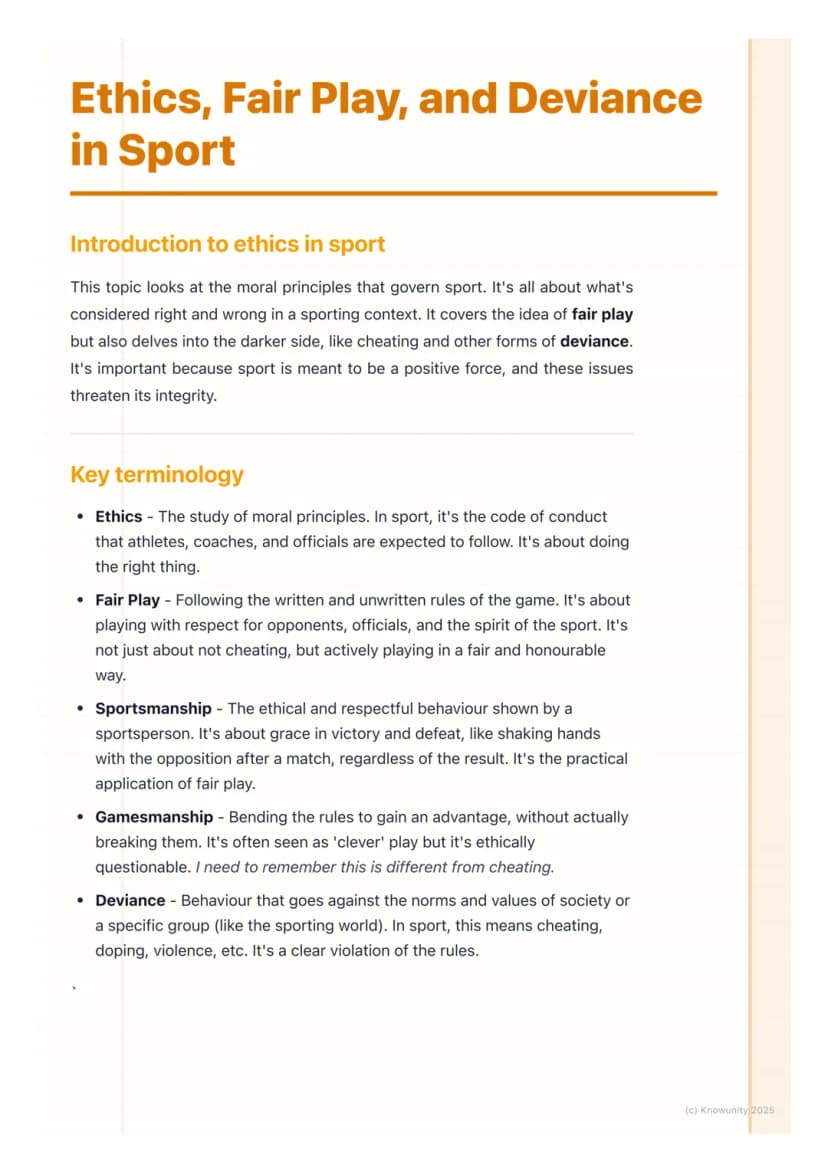
Think about your favourite sport – there's always drama when someone breaks the rules or plays unfairly. Ethics in sport is basically the moral code that tells us what's right and wrong in competitive situations.
Fair play goes beyond just following the written rules. It's about respecting your opponents, officials, and the spirit of the game itself. When you see players help an injured opponent or admit to a handball, that's fair play in action.
Sportsmanship is fair play put into practice – shaking hands after a match, accepting defeat gracefully, and celebrating victories with humility. It's the behaviour that makes sport something we can all be proud of.
Remember: Ethics isn't just about avoiding punishment – it's about maintaining sport's integrity and keeping it enjoyable for everyone involved.
2
of 6
The Spectrum of Sporting Behaviour
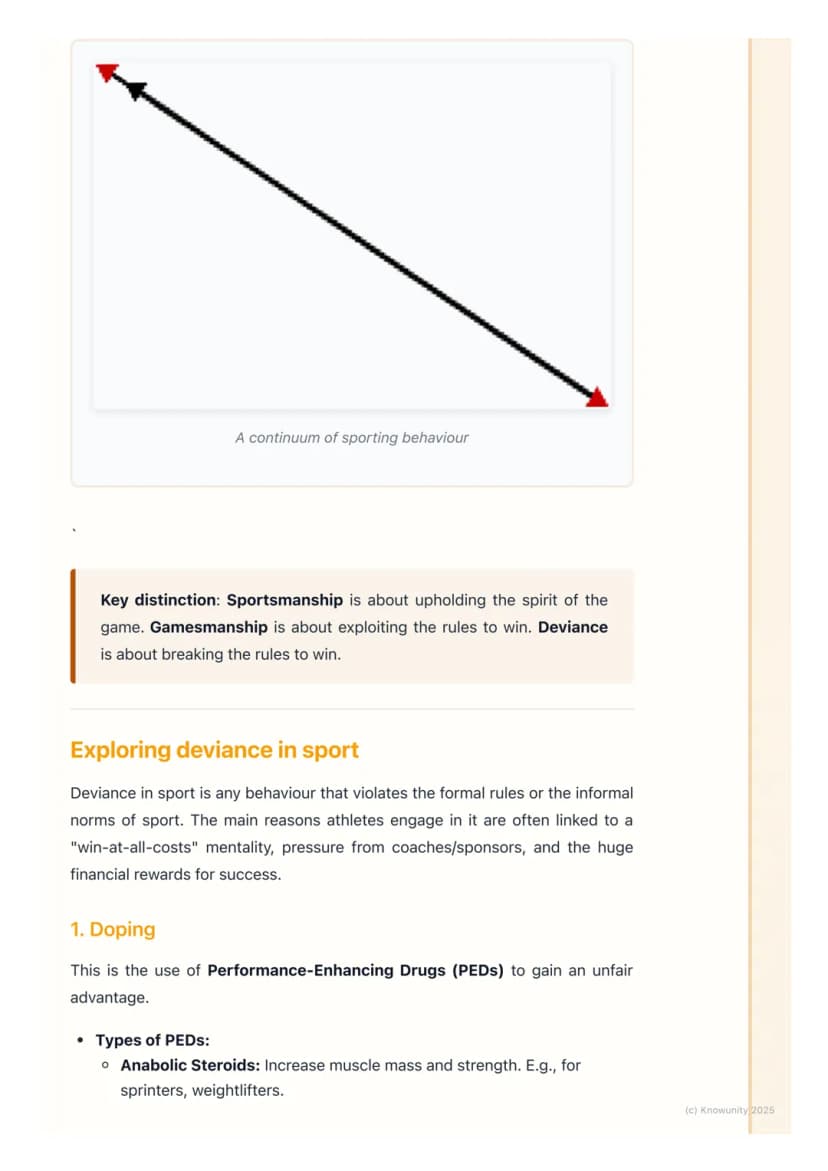
Not all questionable behaviour is the same – there's actually a spectrum from perfect sportsmanship to outright cheating. Understanding this helps you analyse sporting situations more effectively.
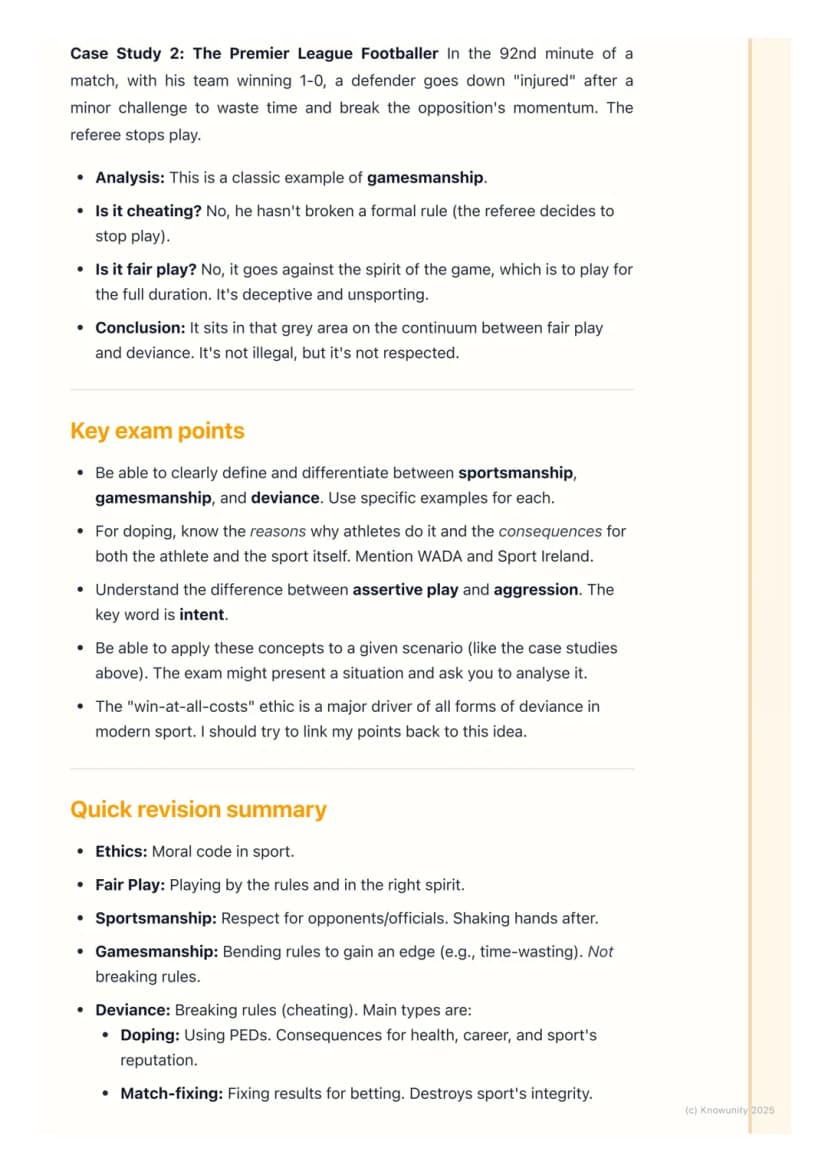
Gamesmanship sits in the grey area. It's about bending rules without actually breaking them – like a footballer going down "injured" to waste time. Technically legal? Yes. Morally questionable? Absolutely. It's the art of gaining an advantage through cunning rather than skill.
Deviance is where we cross the line into actual rule-breaking. This includes doping, match-fixing, and violence. Unlike gamesmanship, deviance clearly violates sport's formal rules and can destroy careers.
The key difference? Intent and rule-breaking. Gamesmanship exploits loopholes, whilst deviance smashes through the boundaries entirely. Both damage sport's reputation, but deviance does lasting harm to its integrity.
Quick Check: If you're unsure whether behaviour is gamesmanship or deviance, ask yourself: "Are they actually breaking a written rule?"
3
of 6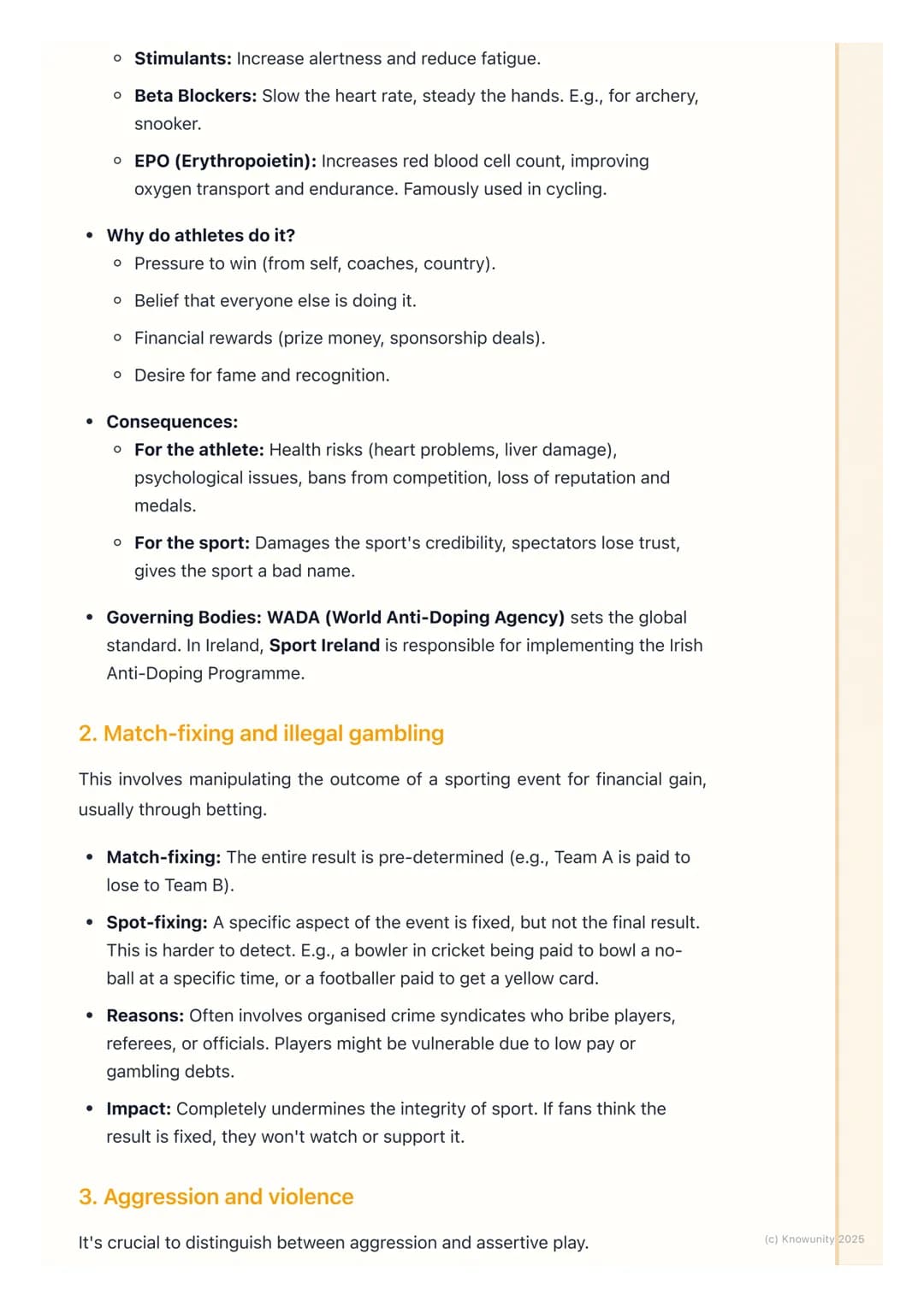
Doping: The Ultimate Sporting Betrayal
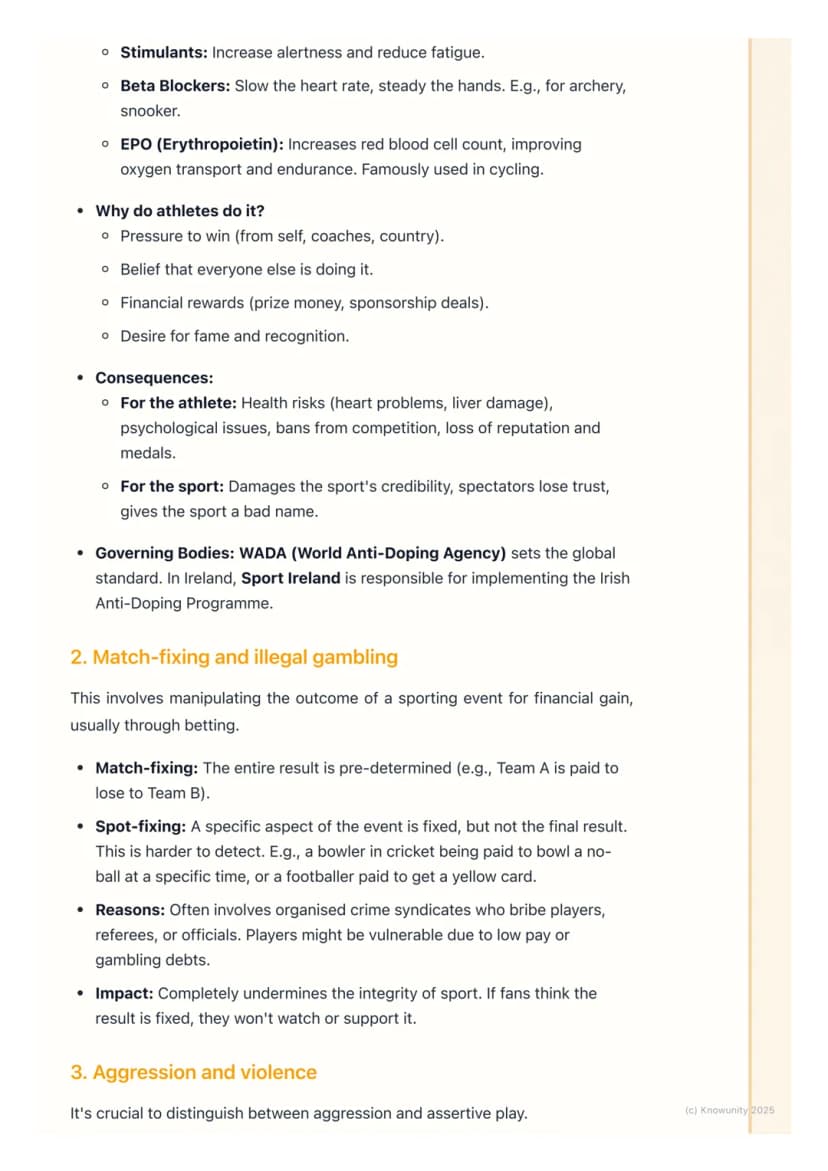
Performance-enhancing drugs (PEDs) represent sport's biggest ethical challenge. Athletes use them to gain unfair advantages, but the consequences are devastating for everyone involved.
Different drugs serve different purposes. Anabolic steroids build muscle mass for strength sports, whilst stimulants increase alertness and reduce fatigue. EPO boosts oxygen transport for endurance events, and beta blockers steady hands for precision sports like archery.
Why do athletes risk everything? The pressure is immense – from coaches, countries, and themselves. When millions in prize money and sponsorship deals are at stake, some athletes convince themselves that "everyone else is doing it" and take the plunge.
The fallout is brutal. Health risks include heart problems and liver damage, whilst career consequences include lengthy bans and stripped medals. For the sport itself, doping scandals destroy public trust and tarnish reputations for decades. WADA and Sport Ireland work tirelessly to catch cheaters, but the damage to sport's credibility lingers long after the headlines fade.
Reality Check: No amount of prize money or fame is worth the permanent health risks and career destruction that doping brings.
4
of 6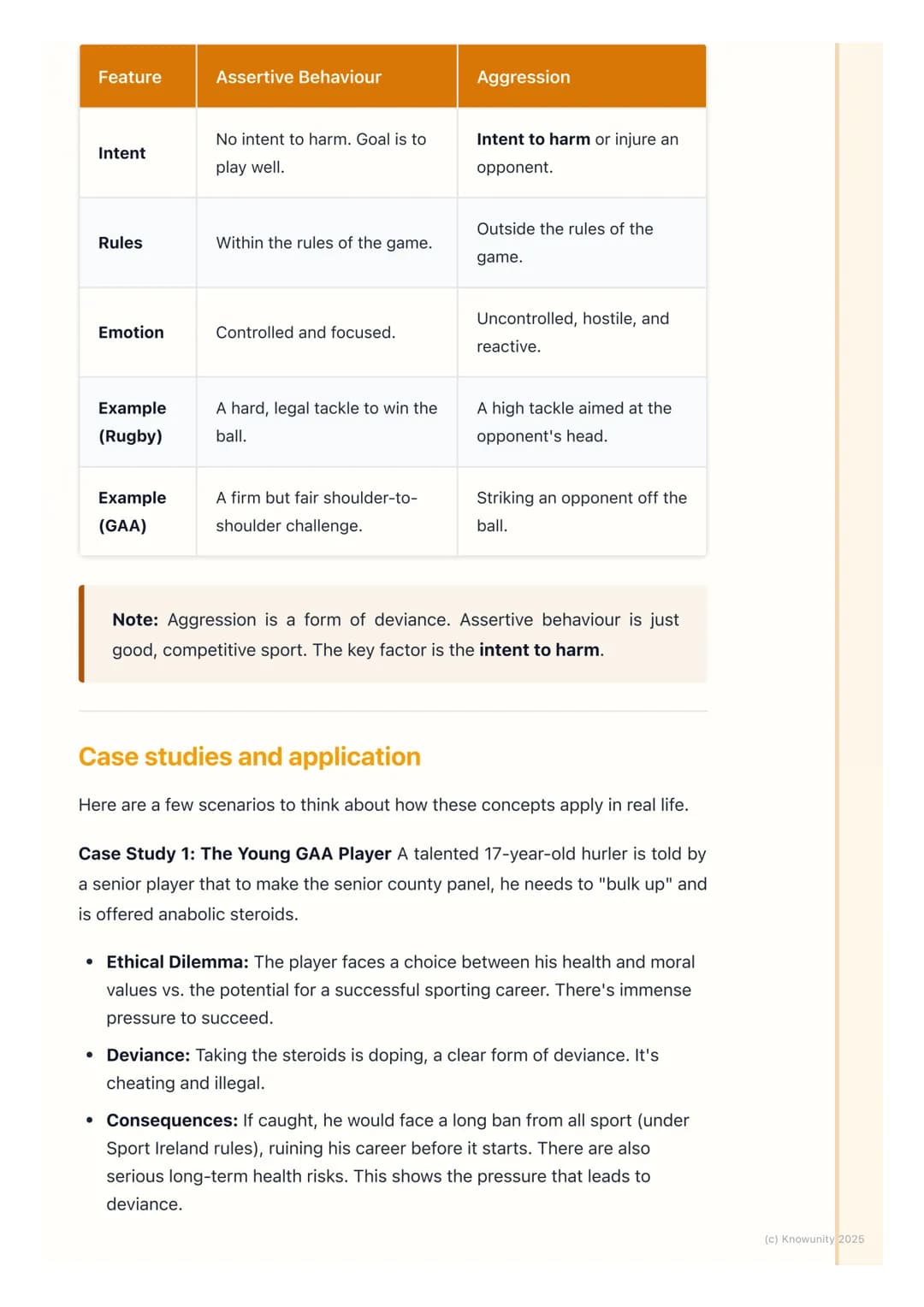
Match-Fixing and Violence in Sport
Match-fixing might seem like a victimless crime, but it's actually sport's death sentence. When results are predetermined for betting profits, sport loses its most precious asset – unpredictability.
Spot-fixing is particularly sneaky because it doesn't affect the final result. A cricket bowler might be paid to bowl a no-ball at a specific time, or a footballer might deliberately get a yellow card. It's harder to detect but equally damaging to sport's integrity.
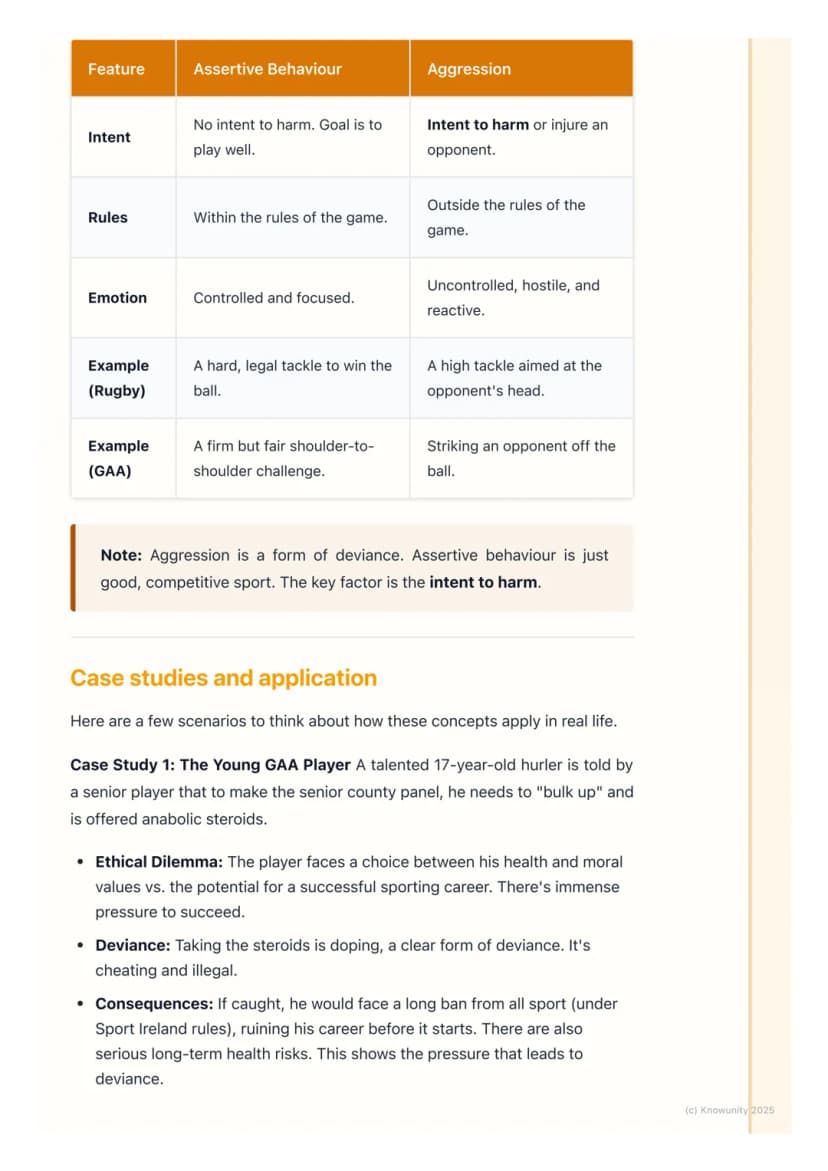
Violence crosses another crucial line. Assertive behaviour – like a hard but legal rugby tackle – is perfectly acceptable competitive play. Aggression, however, involves intent to harm and breaks the rules. The difference is crystal clear: assertive play aims to win fairly, whilst aggression aims to hurt opponents.
Understanding this distinction helps you analyse sporting incidents properly. A footballer making a strong tackle to win the ball shows assertiveness. The same player throwing a punch shows aggression and deviance.
Key Insight: Intent separates competitive spirit from dangerous behaviour – always look for the motivation behind the action.
5
of 6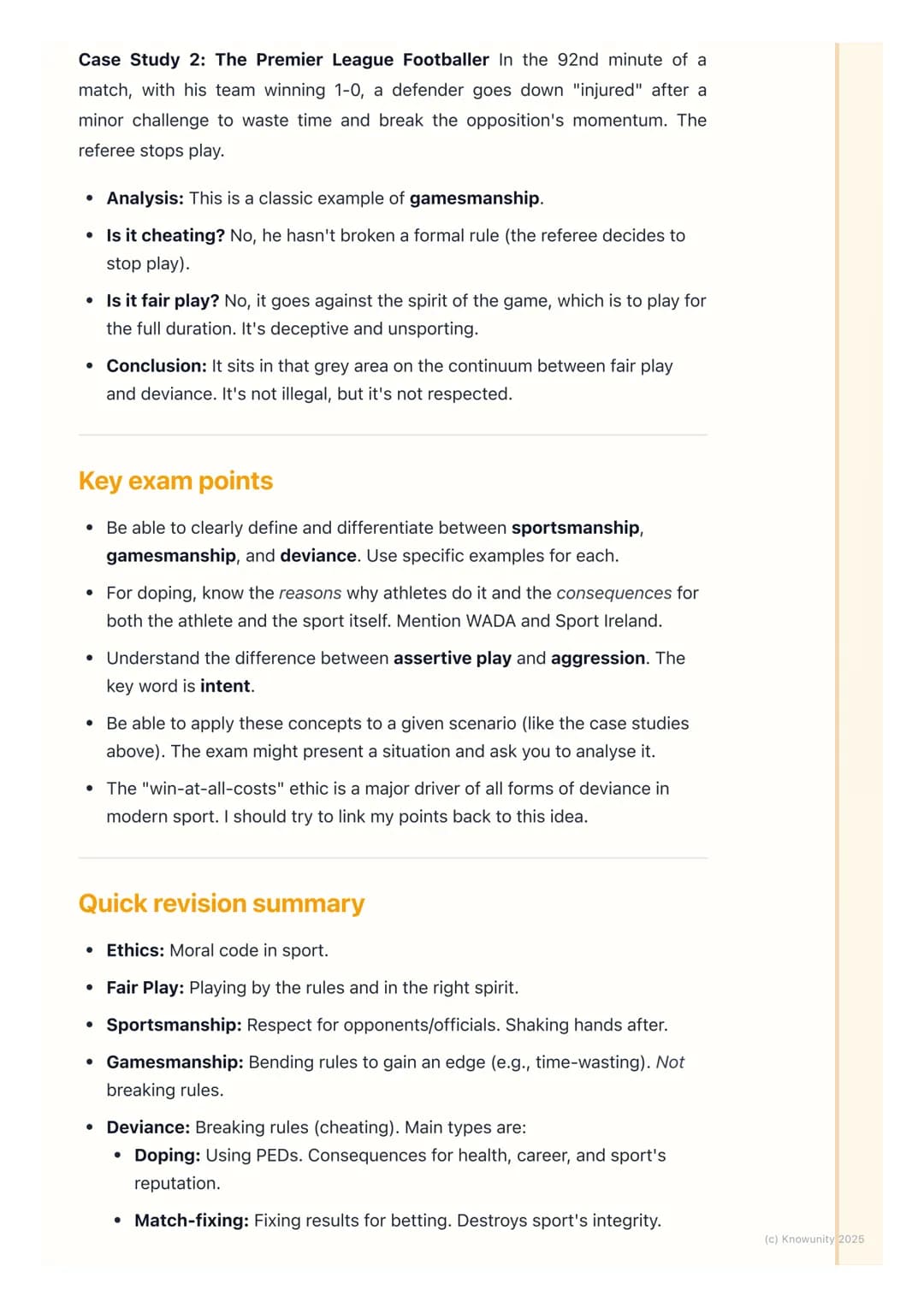
Real-World Applications and Case Studies
Let's apply these concepts to realistic scenarios you might face or witness. A 17-year-old GAA player offered steroids faces a classic ethical dilemma – short-term gain versus long-term consequences and moral values.
Taking the drugs would be clear deviance through doping. The consequences are severe: lifetime bans, serious health risks, and a destroyed reputation before their career even starts. This scenario perfectly illustrates how the "win-at-all-costs" mentality leads young athletes astray.
Consider a Premier League defender who goes down "injured" in the 92nd minute to waste time. This is textbook gamesmanship – technically within the rules but against sport's spirit. The referee chooses to stop play, so no formal rule is broken, but it's hardly fair play.
These examples show how ethical choices happen constantly in sport. Athletes face split-second decisions that can define their careers and sport's reputation. Understanding the spectrum from fair play to deviance helps you make better judgements about sporting behaviour.
Exam Tip: Always use specific examples to illustrate your points about sportsmanship, gamesmanship, and deviance – it shows deeper understanding.
6
of 6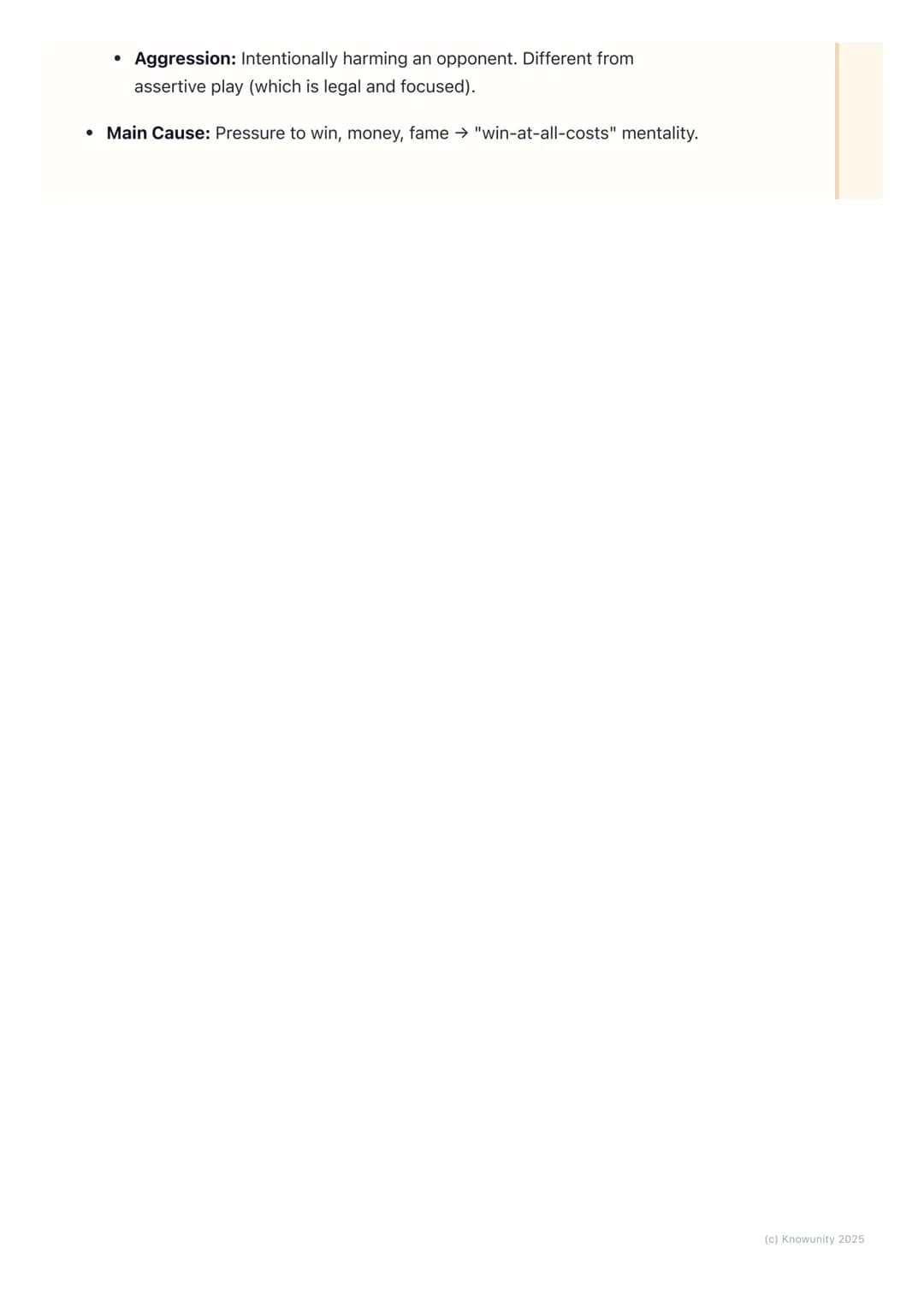
Quick Reference for Success
Ethics = Sport's moral code for right and wrong behaviour Fair Play = Following rules and respecting sport's spirit Sportsmanship = Practical demonstration of respect and honour Gamesmanship = Bending rules for advantage Deviance = Breaking rules completely
The "win-at-all-costs" mentality drives most sporting deviance. Pressure from money, fame, and expectations pushes athletes towards questionable choices.
Remember the intent test for violence: assertive behaviour aims to play well within rules, whilst aggression intends harm outside rules. WADA and Sport Ireland lead the fight against doping, but the responsibility for ethical behaviour ultimately lies with individual athletes and coaches.
Final Thought: Sport's beauty comes from fair competition – when we compromise ethics, we destroy what makes sport worth watching and playing.
Hiç sormayacaksın sanmıştık...
Knowunity yapay zeka arkadaşı nedir?
Yapay zeka arkadaşımız öğrencilerin ihtiyaçlarına göre özel olarak tasarlanmıştır. Platformda bulunan milyonlarca içeriğe dayanarak öğrencilere gerçekten anlamlı ve ilgili yanıtlar verebiliyoruz. Ancak mesele sadece cevaplar değil, refakatçi aynı zamanda kişiselleştirilmiş öğrenme planları, sınavlar veya sohbet içerikleri ve öğrencilerin becerilerine ve gelişimlerine dayalı %100 kişiselleştirme ile öğrencilere günlük öğrenme zorluklarında rehberlik ediyor.
Knowunity uygulamasını nereden indirebilirim?
Uygulamayı Google Play Store ve Apple App Store'dan indirebilirsiniz.
Knowunity ücretsiz mi?
Knowunity uygulaması ücretsiz! Uygulamamız çok yakında indirmeye hazır olacak, bekle bizi. 💙
LCPE dersinin en popüler içerikleri
4LCPEHealthy Eating Guidelines
This section explores national healthy eating guidelines, such as the food pyramid or healthy eating plate, to promote balanced dietary choices.
5th Year50
LCPEBiomechanics of Movement
Applying fundamental biomechanical principles such as force, motion, levers, and stability to analyse and improve human movement efficiency and performance in sport.
6th Year200
LCPEFactors effecting sports psychology ( confidence and self efficacy)
Higher Level LCPE psychological preprration notes
5th Year230
LCPETechnology in Sport
Investigating how technology is used in areas such as performance analysis, equipment design, officiating, and athlete monitoring to enhance training and competition.
6th Year50
En popüler içerikler
9 Irish
IrishIrish oral questions and answers
Questions and answers for the leaving cert oral
5th Year4264
 English
Key Quotes : Sive
Key Quotes and explanations: Sive
6th Year2842
IrishIrish oral questions
Outline of oral questions
5th Year2055
IrishIníon- le hÁine Durkin
Aine Durkin’s poem, Iníon: Themes & summary
5th Year850
IrishIrish poetry 2027
Iníon + Dínit an Bhróin
5th Year1133
IrishLC HL notes- Iníon (poem)
Includes poem in English and Irish, theme, key words & phrases
5th Year2284
EnglishCultural Context : Shawshank Redemption : Sive : Small Things Like These
Comparative Study : Cultural Context : Shawshank Redemption, Sive and Small Things Like These
6th Year1430
IrishMo Ghrá-sa (Idir Lúibíní)
Notes on mo ghrá-sa
5th Year380
IrishAn Gaeilge Aiste
Irish Language essay
6th Year1320
Aradığını bulamıyor musun? Diğer derslere göz at.
Kullanıcılarımızdan yorumlar. Onlar her şeyi çok beğendi — sen de beğeneceksin.
4.6/5App Store
4.7/5Google Play
Uygulama çok kolay kullanılıyor ve güzel tasarlanmış. Şu ana kadar aradığım her şeyi buldum ve sunumlardan çok şey öğrendim! Kesinlikle ödevlerim için hep kullanacağım!
A.S.iOS kullanıcısı
Uygulama çok iyi. Çok fazla ders notu ve yardımlaşma var. Örneğin benim problem yaşadığım bir ders Geometriydi ve ANINDA yardım ettiler beraber hem sorularımı çözdük hem konu anlatımı buldum. Herkese tavsiye ederim.
S.L.Android kullanıcısı
BEN ŞOK. Reklamını sık sık gördüğüm için uygulamayı denedim ve gerçekten hayran kaldım. Bu uygulama okul için tam ihtiyacım olan şey. Anında ödev yardımı, konu anlatımı, örnek sınavlar, flaşkartlar hepsi hepsi var, şiddetle tavsiye ederim ✅
A.iOS kullanıcısı
LCPE2 görüntüleme·Güncellendi Jun 16, 2026·6 sayfaUnderstanding Ethics and Fairness in Modern Sports
Ever wondered why some athletes cheat whilst others play by the rules? Sport is supposed to bring out the best in people, but sometimes it brings out the worst. Understanding ethics, fair play, and deviance in sport helps you make...
1
of 6
Ders notlarını görmek için kaydol. Ücretsiz!
- Tüm belgeleri görebilirsin
- Notlarını Yükselt
- Milyonlarca öğrenciye katıl
The Foundations of Sporting Ethics
Think about your favourite sport – there's always drama when someone breaks the rules or plays unfairly. Ethics in sport is basically the moral code that tells us what's right and wrong in competitive situations.
Fair play goes beyond just following the written rules. It's about respecting your opponents, officials, and the spirit of the game itself. When you see players help an injured opponent or admit to a handball, that's fair play in action.
Sportsmanship is fair play put into practice – shaking hands after a match, accepting defeat gracefully, and celebrating victories with humility. It's the behaviour that makes sport something we can all be proud of.
Remember: Ethics isn't just about avoiding punishment – it's about maintaining sport's integrity and keeping it enjoyable for everyone involved.
2
of 6Ders notlarını görmek için kaydol. Ücretsiz!
- Tüm belgeleri görebilirsin
- Notlarını Yükselt
- Milyonlarca öğrenciye katıl
The Spectrum of Sporting Behaviour
Not all questionable behaviour is the same – there's actually a spectrum from perfect sportsmanship to outright cheating. Understanding this helps you analyse sporting situations more effectively.
Gamesmanship sits in the grey area. It's about bending rules without actually breaking them – like a footballer going down "injured" to waste time. Technically legal? Yes. Morally questionable? Absolutely. It's the art of gaining an advantage through cunning rather than skill.
Deviance is where we cross the line into actual rule-breaking. This includes doping, match-fixing, and violence. Unlike gamesmanship, deviance clearly violates sport's formal rules and can destroy careers.
The key difference? Intent and rule-breaking. Gamesmanship exploits loopholes, whilst deviance smashes through the boundaries entirely. Both damage sport's reputation, but deviance does lasting harm to its integrity.
Quick Check: If you're unsure whether behaviour is gamesmanship or deviance, ask yourself: "Are they actually breaking a written rule?"
3
of 6Ders notlarını görmek için kaydol. Ücretsiz!
- Tüm belgeleri görebilirsin
- Notlarını Yükselt
- Milyonlarca öğrenciye katıl
Doping: The Ultimate Sporting Betrayal
Performance-enhancing drugs (PEDs) represent sport's biggest ethical challenge. Athletes use them to gain unfair advantages, but the consequences are devastating for everyone involved.
Different drugs serve different purposes. Anabolic steroids build muscle mass for strength sports, whilst stimulants increase alertness and reduce fatigue. EPO boosts oxygen transport for endurance events, and beta blockers steady hands for precision sports like archery.
Why do athletes risk everything? The pressure is immense – from coaches, countries, and themselves. When millions in prize money and sponsorship deals are at stake, some athletes convince themselves that "everyone else is doing it" and take the plunge.
The fallout is brutal. Health risks include heart problems and liver damage, whilst career consequences include lengthy bans and stripped medals. For the sport itself, doping scandals destroy public trust and tarnish reputations for decades. WADA and Sport Ireland work tirelessly to catch cheaters, but the damage to sport's credibility lingers long after the headlines fade.
Reality Check: No amount of prize money or fame is worth the permanent health risks and career destruction that doping brings.
4
of 6Ders notlarını görmek için kaydol. Ücretsiz!
- Tüm belgeleri görebilirsin
- Notlarını Yükselt
- Milyonlarca öğrenciye katıl
Match-Fixing and Violence in Sport
Match-fixing might seem like a victimless crime, but it's actually sport's death sentence. When results are predetermined for betting profits, sport loses its most precious asset – unpredictability.
Spot-fixing is particularly sneaky because it doesn't affect the final result. A cricket bowler might be paid to bowl a no-ball at a specific time, or a footballer might deliberately get a yellow card. It's harder to detect but equally damaging to sport's integrity.
Violence crosses another crucial line. Assertive behaviour – like a hard but legal rugby tackle – is perfectly acceptable competitive play. Aggression, however, involves intent to harm and breaks the rules. The difference is crystal clear: assertive play aims to win fairly, whilst aggression aims to hurt opponents.
Understanding this distinction helps you analyse sporting incidents properly. A footballer making a strong tackle to win the ball shows assertiveness. The same player throwing a punch shows aggression and deviance.
Key Insight: Intent separates competitive spirit from dangerous behaviour – always look for the motivation behind the action.
5
of 6Ders notlarını görmek için kaydol. Ücretsiz!
- Tüm belgeleri görebilirsin
- Notlarını Yükselt
- Milyonlarca öğrenciye katıl
Real-World Applications and Case Studies
Let's apply these concepts to realistic scenarios you might face or witness. A 17-year-old GAA player offered steroids faces a classic ethical dilemma – short-term gain versus long-term consequences and moral values.
Taking the drugs would be clear deviance through doping. The consequences are severe: lifetime bans, serious health risks, and a destroyed reputation before their career even starts. This scenario perfectly illustrates how the "win-at-all-costs" mentality leads young athletes astray.
Consider a Premier League defender who goes down "injured" in the 92nd minute to waste time. This is textbook gamesmanship – technically within the rules but against sport's spirit. The referee chooses to stop play, so no formal rule is broken, but it's hardly fair play.
These examples show how ethical choices happen constantly in sport. Athletes face split-second decisions that can define their careers and sport's reputation. Understanding the spectrum from fair play to deviance helps you make better judgements about sporting behaviour.
Exam Tip: Always use specific examples to illustrate your points about sportsmanship, gamesmanship, and deviance – it shows deeper understanding.
6
of 6Ders notlarını görmek için kaydol. Ücretsiz!
- Tüm belgeleri görebilirsin
- Notlarını Yükselt
- Milyonlarca öğrenciye katıl
Quick Reference for Success
Ethics = Sport's moral code for right and wrong behaviour Fair Play = Following rules and respecting sport's spirit Sportsmanship = Practical demonstration of respect and honour Gamesmanship = Bending rules for advantage Deviance = Breaking rules completely
The "win-at-all-costs" mentality drives most sporting deviance. Pressure from money, fame, and expectations pushes athletes towards questionable choices.
Remember the intent test for violence: assertive behaviour aims to play well within rules, whilst aggression intends harm outside rules. WADA and Sport Ireland lead the fight against doping, but the responsibility for ethical behaviour ultimately lies with individual athletes and coaches.
Final Thought: Sport's beauty comes from fair competition – when we compromise ethics, we destroy what makes sport worth watching and playing.
Hiç sormayacaksın sanmıştık...
Knowunity yapay zeka arkadaşı nedir?
Yapay zeka arkadaşımız öğrencilerin ihtiyaçlarına göre özel olarak tasarlanmıştır. Platformda bulunan milyonlarca içeriğe dayanarak öğrencilere gerçekten anlamlı ve ilgili yanıtlar verebiliyoruz. Ancak mesele sadece cevaplar değil, refakatçi aynı zamanda kişiselleştirilmiş öğrenme planları, sınavlar veya sohbet içerikleri ve öğrencilerin becerilerine ve gelişimlerine dayalı %100 kişiselleştirme ile öğrencilere günlük öğrenme zorluklarında rehberlik ediyor.
Knowunity uygulamasını nereden indirebilirim?
Uygulamayı Google Play Store ve Apple App Store'dan indirebilirsiniz.
Knowunity ücretsiz mi?
Knowunity uygulaması ücretsiz! Uygulamamız çok yakında indirmeye hazır olacak, bekle bizi. 💙
LCPE dersinin en popüler içerikleri
4LCPEHealthy Eating Guidelines
This section explores national healthy eating guidelines, such as the food pyramid or healthy eating plate, to promote balanced dietary choices.
5th Year50
LCPEBiomechanics of Movement
Applying fundamental biomechanical principles such as force, motion, levers, and stability to analyse and improve human movement efficiency and performance in sport.
6th Year200
LCPEFactors effecting sports psychology ( confidence and self efficacy)
Higher Level LCPE psychological preprration notes
5th Year230
LCPETechnology in Sport
Investigating how technology is used in areas such as performance analysis, equipment design, officiating, and athlete monitoring to enhance training and competition.
6th Year50
En popüler içerikler
9IrishIrish oral questions and answers
Questions and answers for the leaving cert oral
5th Year4264
EnglishKey Quotes : Sive
Key Quotes and explanations: Sive
6th Year2842
IrishIrish oral questions
Outline of oral questions
5th Year2055
IrishIníon- le hÁine Durkin
Aine Durkin’s poem, Iníon: Themes & summary
5th Year850
IrishIrish poetry 2027
Iníon + Dínit an Bhróin
5th Year1133
IrishLC HL notes- Iníon (poem)
Includes poem in English and Irish, theme, key words & phrases
5th Year2284
EnglishCultural Context : Shawshank Redemption : Sive : Small Things Like These
Comparative Study : Cultural Context : Shawshank Redemption, Sive and Small Things Like These
6th Year1430
IrishMo Ghrá-sa (Idir Lúibíní)
Notes on mo ghrá-sa
5th Year380
IrishAn Gaeilge Aiste
Irish Language essay
6th Year1320
Aradığını bulamıyor musun? Diğer derslere göz at.
Kullanıcılarımızdan yorumlar. Onlar her şeyi çok beğendi — sen de beğeneceksin.
4.6/5App Store
4.7/5Google Play
Uygulama çok kolay kullanılıyor ve güzel tasarlanmış. Şu ana kadar aradığım her şeyi buldum ve sunumlardan çok şey öğrendim! Kesinlikle ödevlerim için hep kullanacağım!
A.S.iOS kullanıcısı
Uygulama çok iyi. Çok fazla ders notu ve yardımlaşma var. Örneğin benim problem yaşadığım bir ders Geometriydi ve ANINDA yardım ettiler beraber hem sorularımı çözdük hem konu anlatımı buldum. Herkese tavsiye ederim.
S.L.Android kullanıcısı
BEN ŞOK. Reklamını sık sık gördüğüm için uygulamayı denedim ve gerçekten hayran kaldım. Bu uygulama okul için tam ihtiyacım olan şey. Anında ödev yardımı, konu anlatımı, örnek sınavlar, flaşkartlar hepsi hepsi var, şiddetle tavsiye ederim ✅
A.iOS kullanıcısı