
The Great Famine was one of the darkest chapters in... Daha fazla göster
 History14 görüntüleme·Güncellendi May 25, 2026·9 sayfa
The Irish Potato Famine: Causes and Consequences

1 / 9
1
of 9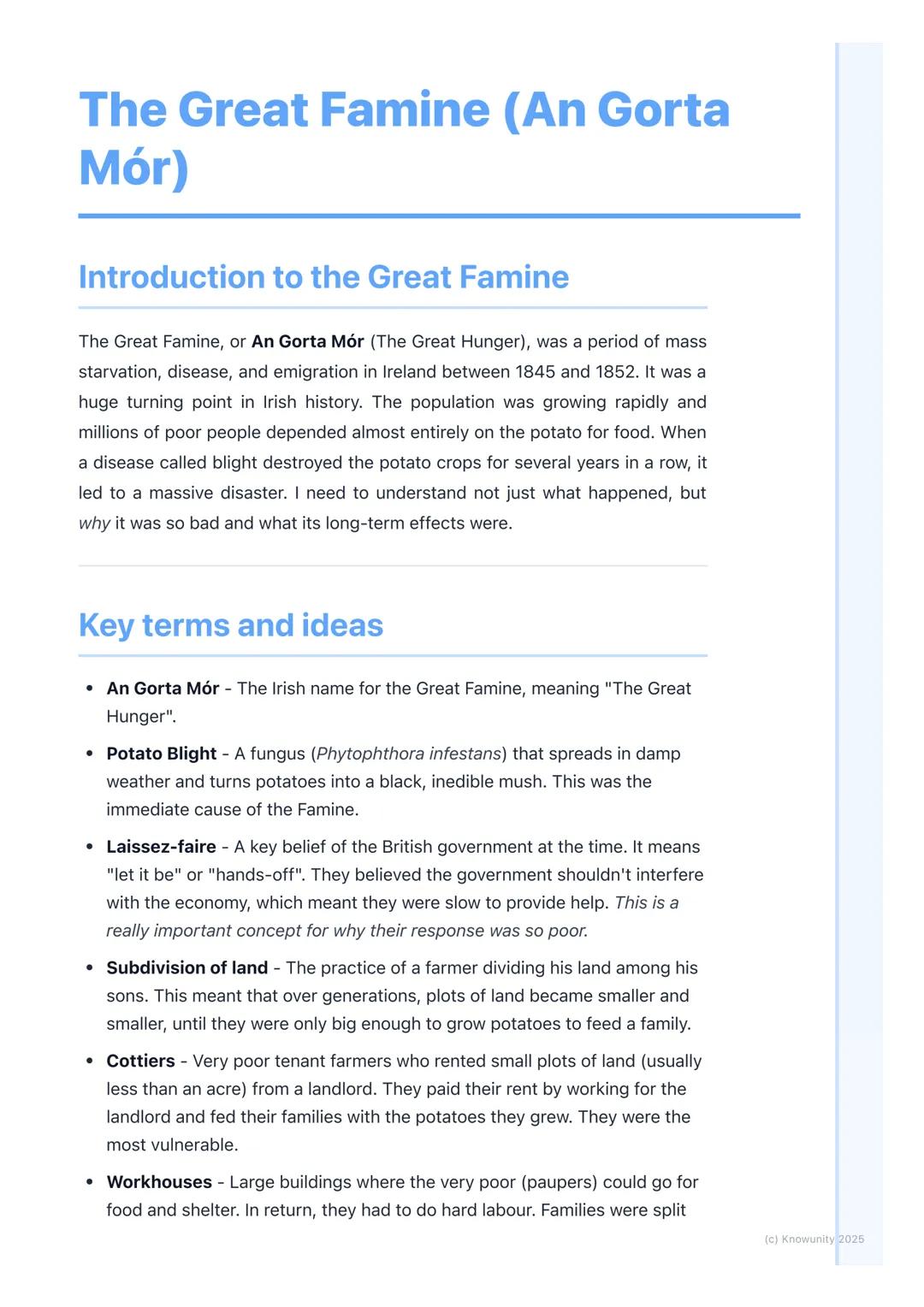
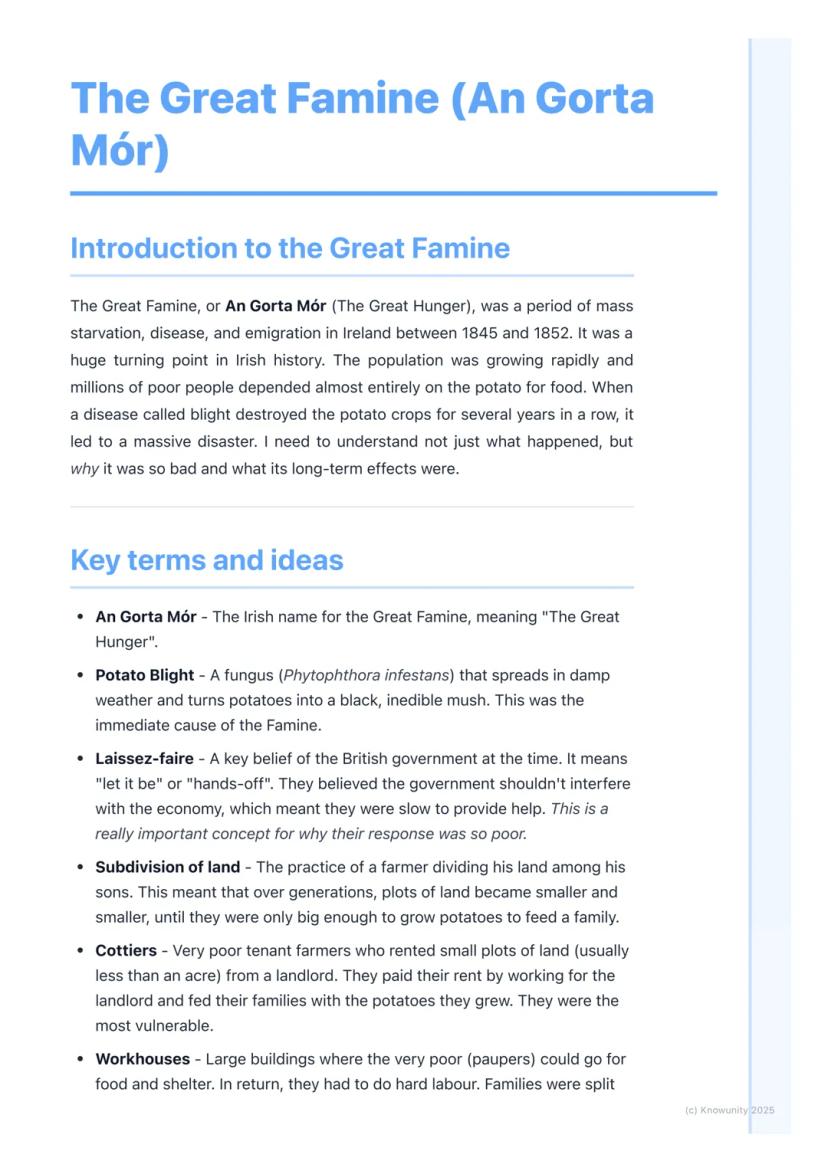
The Great Famine - An Gorta Mór
Ever wondered why so many Americans claim Irish heritage? The Great Famine is a huge part of that story. An Gorta Mór (The Great Hunger) wasn't just about potatoes going bad - it was a disaster waiting to happen.
When potato blight hit in 1845, it destroyed the one crop that millions of poor Irish people depended on completely. This fungus turned potatoes into black, rotting mush in damp weather. But here's the thing - other food was still being grown in Ireland and shipped to Britain whilst people starved.
Cottiers were the most vulnerable people during this time. These were extremely poor farmers who rented tiny plots of land (less than an acre) and paid rent by working for their landlords. When the potatoes failed, they had nothing left to eat and no way to pay rent.
Key Point: The British government's laissez-faire policy meant they were incredibly slow to help, believing the government shouldn't interfere with the market.
2
of 9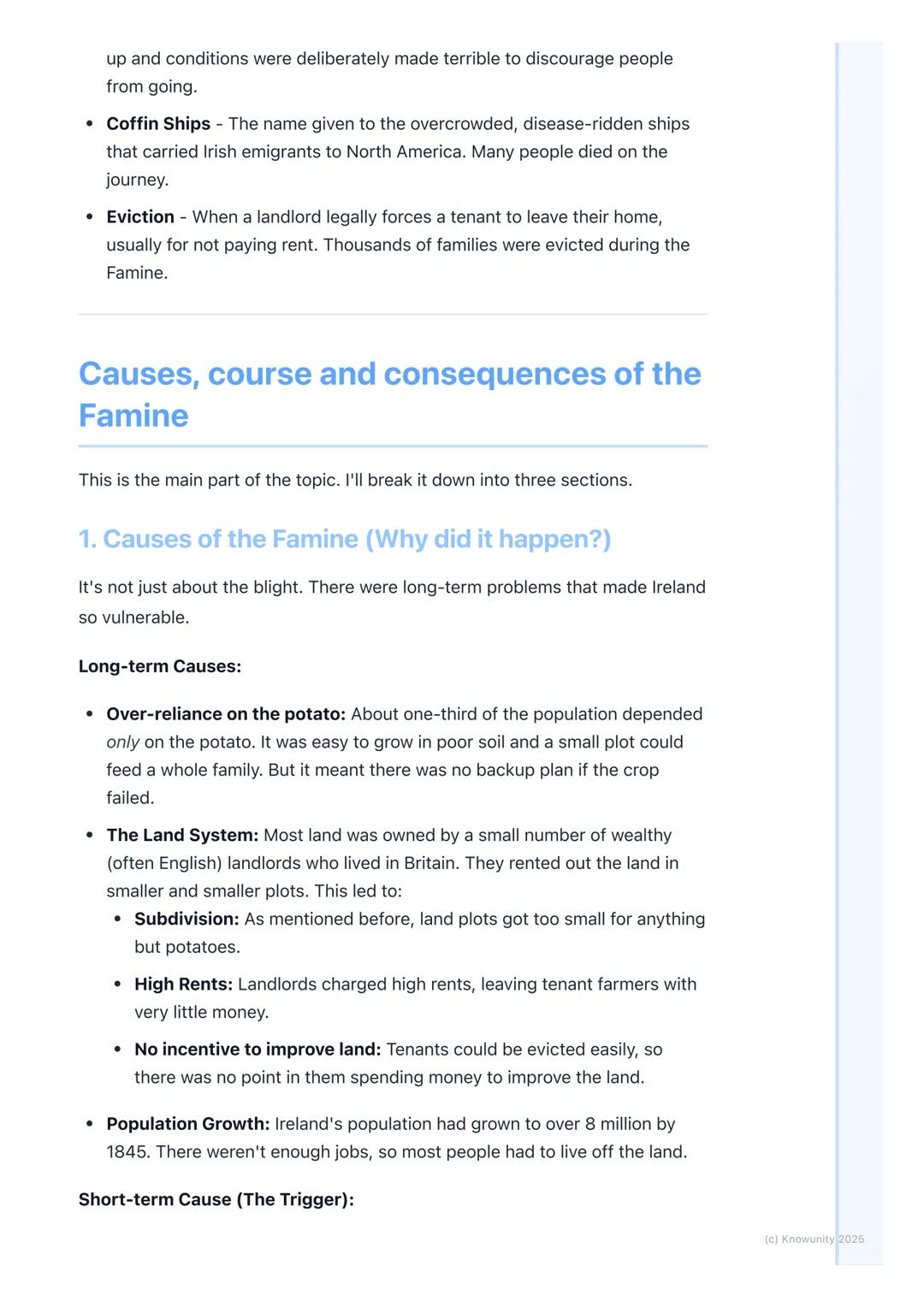
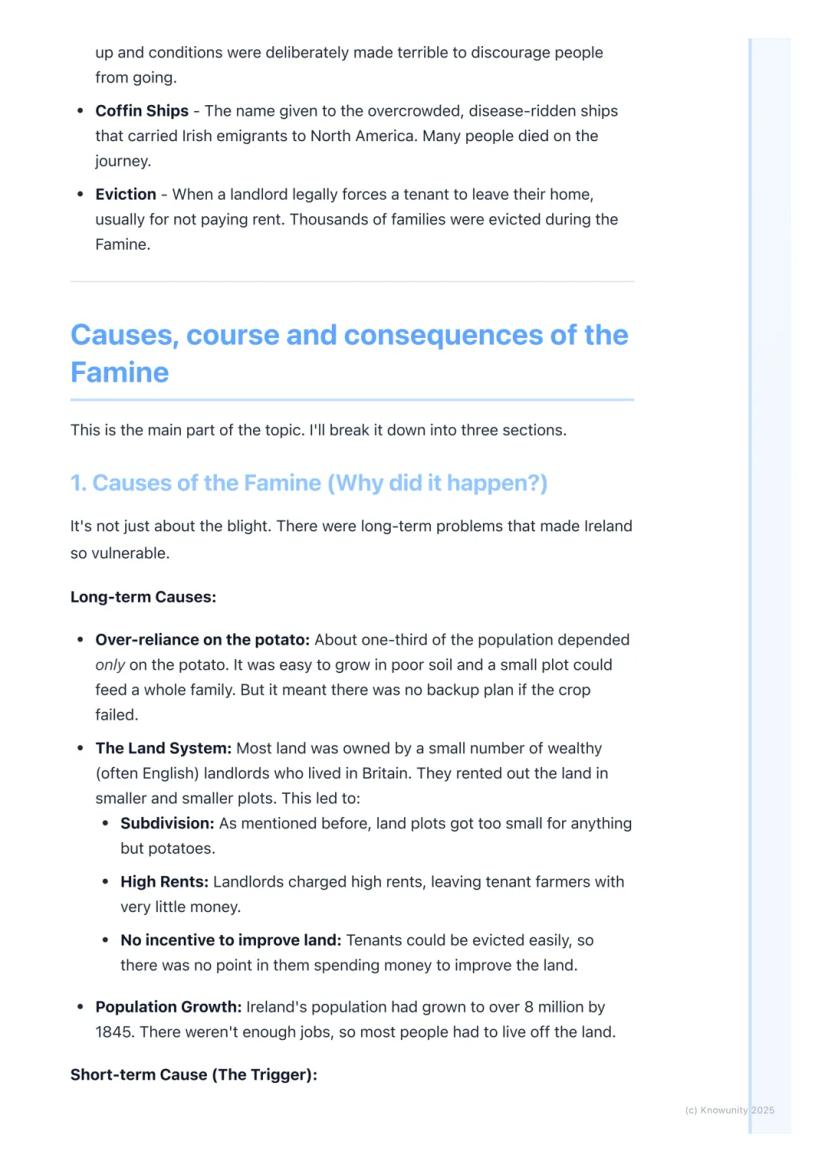
Why the Famine Happened - The Perfect Storm
You can't just blame the blight - Ireland was already a disaster waiting to happen. The subdivision of land meant that over generations, farms got smaller and smaller as fathers divided land between sons. Eventually, plots were so tiny that only potatoes could feed a family.
About one-third of Ireland's 8+ million people lived entirely on potatoes by 1845. It was brilliant for feeding lots of people on small plots, but catastrophic when it failed. Most land was owned by wealthy (often English) landlords who lived in Britain and charged high rents.
When blight arrived in September 1845, it destroyed a third of the crop. In 1846, it wiped out almost everything. People were already living on the edge - this pushed them over.
Remember: The long-term causes made Ireland vulnerable. The blight was just the trigger that set off the disaster.
3
of 9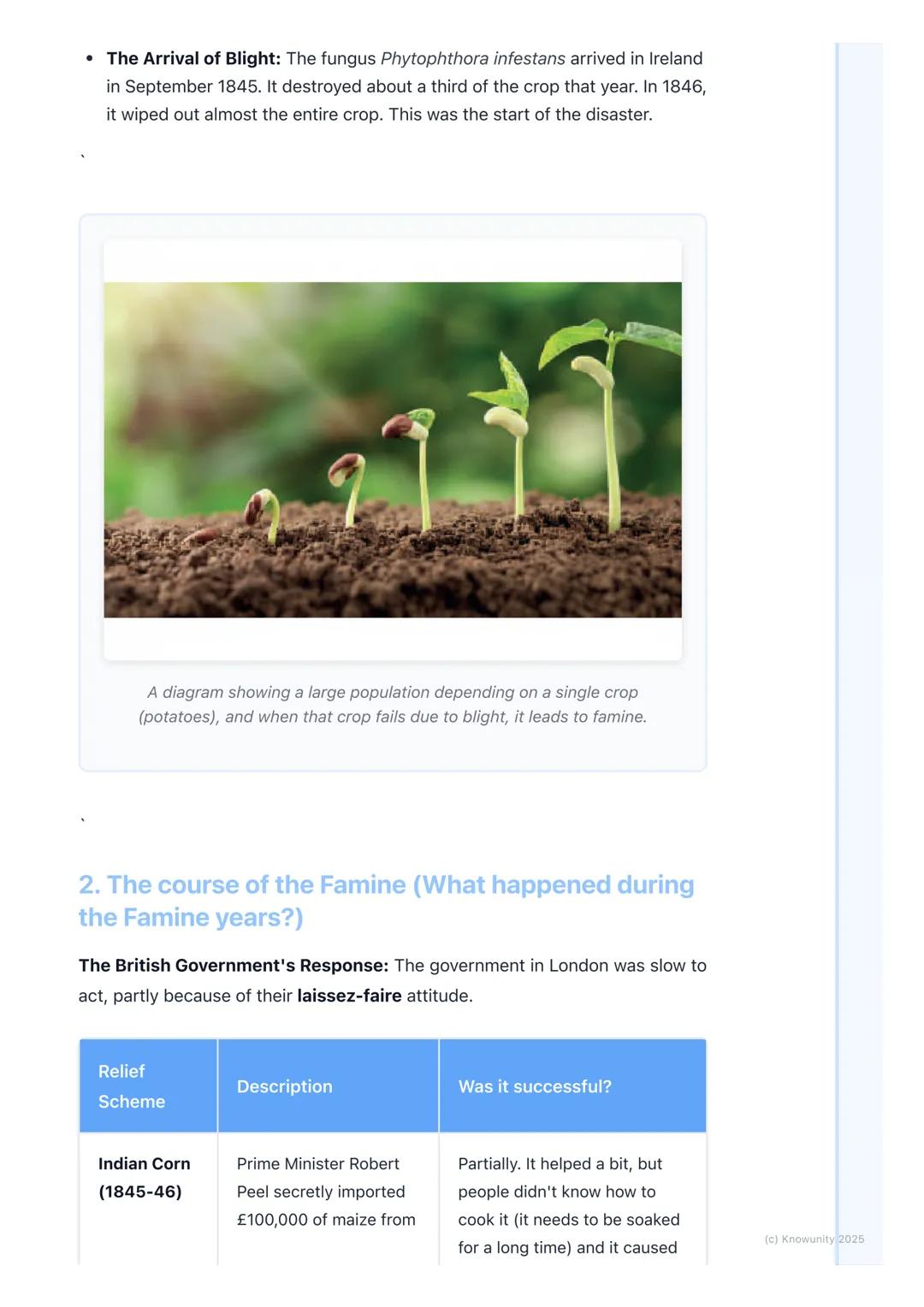
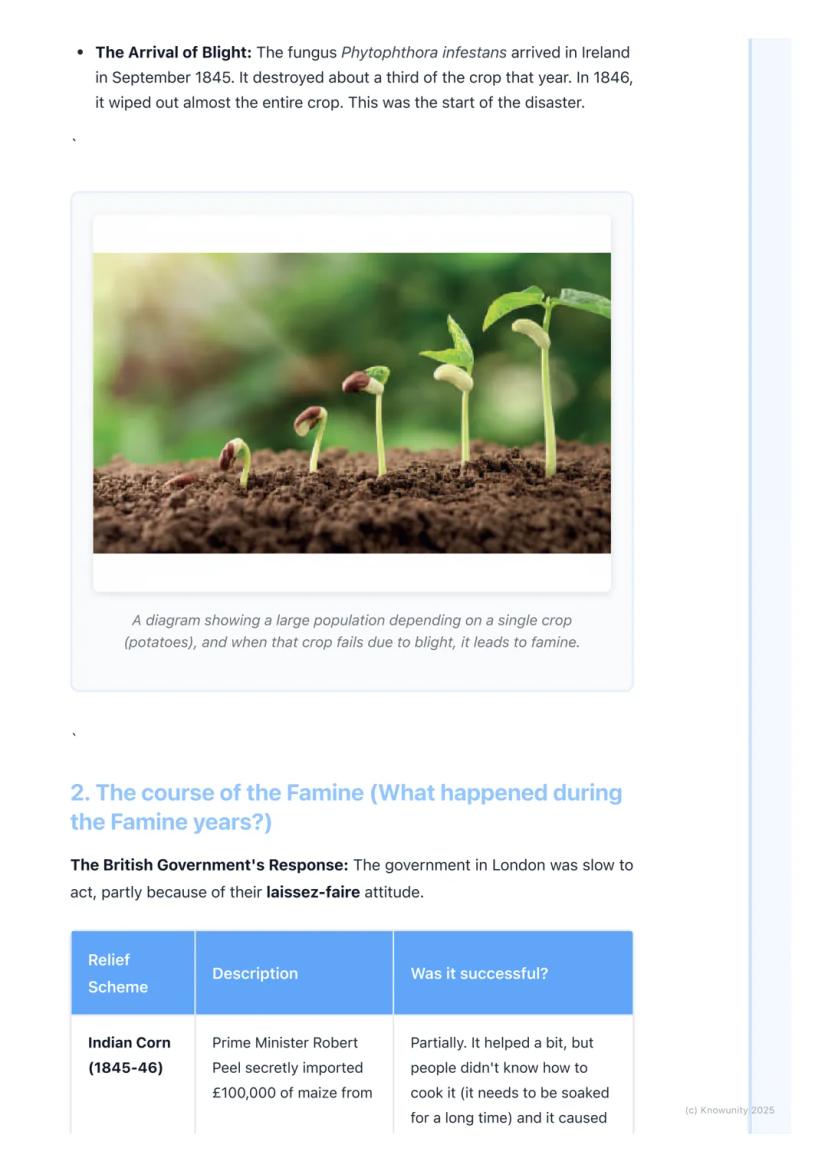
The Government's Failed Response
The British government's response was shockingly inadequate, and their laissez-faire attitude made everything worse. Prime Minister Robert Peel imported Indian corn (maize) from America, but people didn't know how to cook it properly and it caused stomach problems - they called it "Peel's Brimstone."
Public works schemes were meant to give people jobs building "famine roads" so they could earn money for food. Massive failure - wages were too low, the work was too hard for starving people, and food was still too expensive anyway.
The soup kitchens in 1847 were actually the most successful relief effort, feeding 3 million people daily at their peak. But the government shut them down after just six months! Workhouses became overcrowded death traps where diseases like typhus and cholera spread rapidly.
Shocking Fact: While people starved, Ireland was still exporting corn, wheat, and cattle to Britain because poor Irish farmers couldn't afford to buy it.
4
of 9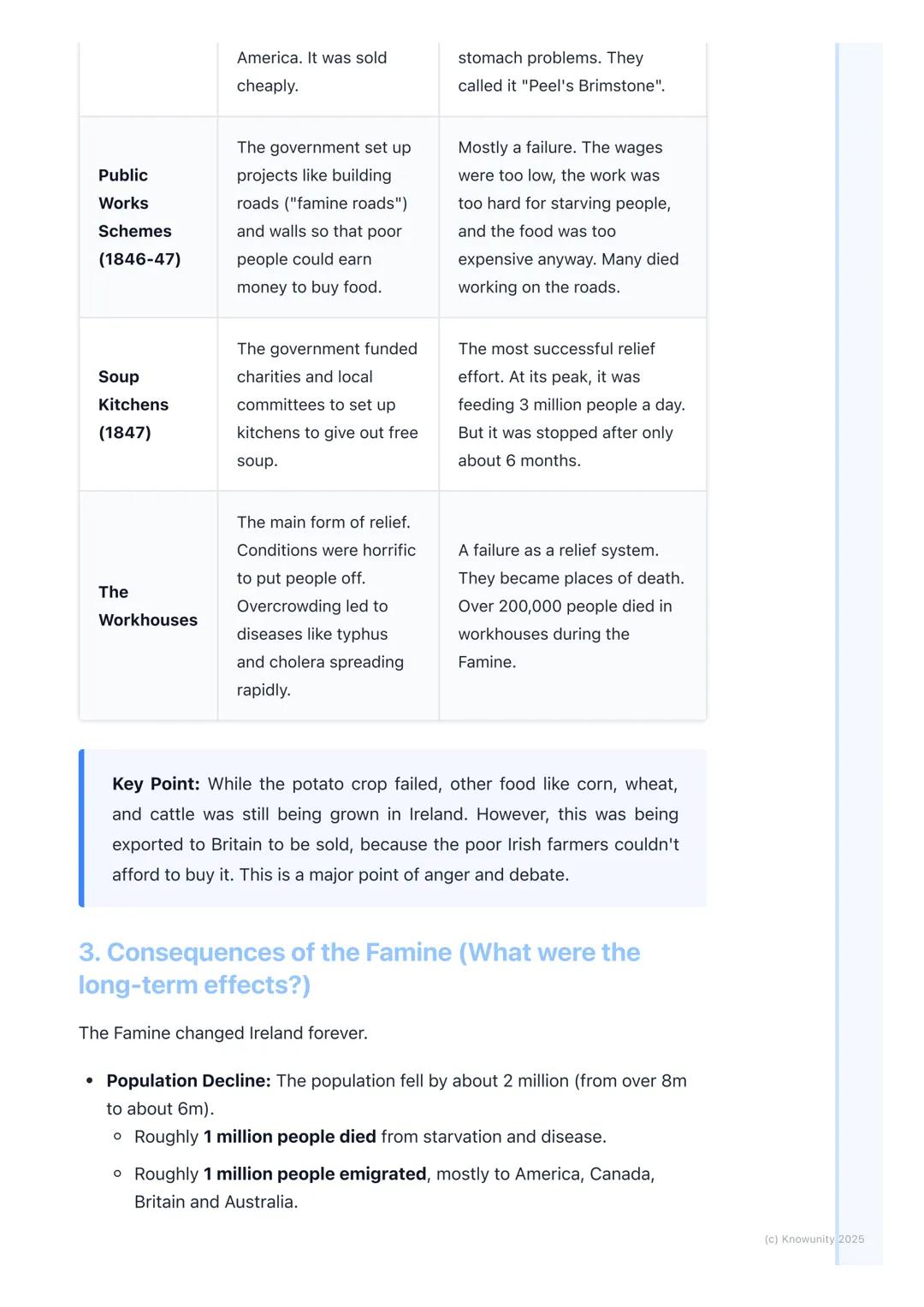
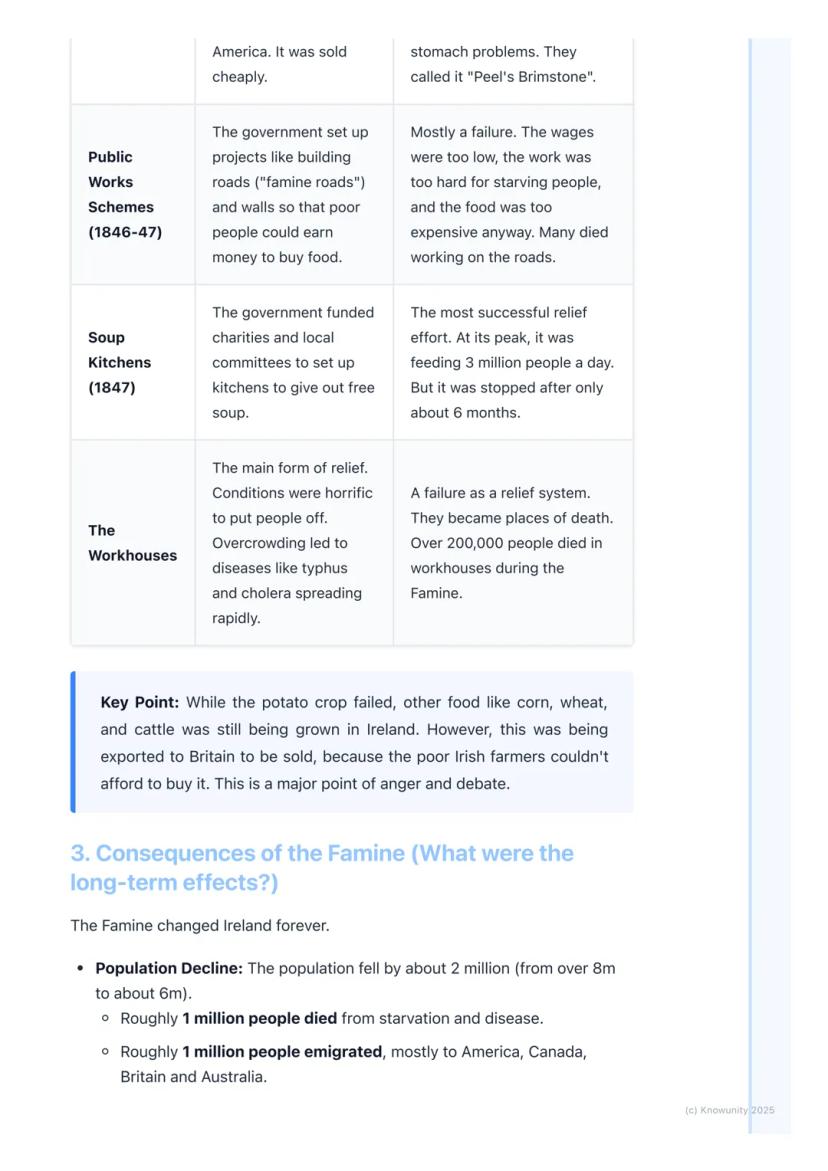
The Nightmare of Famine Life
Imagine being so desperate that workhouses seemed like a good option. Families were split up, conditions were deliberately awful to discourage people from coming, and over 200,000 people died in these places during the Famine. That's how bad things got.
Thousands of families faced eviction when they couldn't pay rent. Landlords legally threw people out of their homes, leaving entire families to die on roadsides. Those lucky enough to escape often boarded coffin ships - overcrowded, disease-ridden vessels to North America where many died during the journey.
The west of Ireland, where most people spoke Irish, was hit hardest. Entire communities were wiped out through death and emigration. This is why the Irish language declined so rapidly - whole generations of Irish speakers simply disappeared.
Key Point: The Famine wasn't just about hunger - it destroyed families, communities, and Irish culture itself.
5
of 9
How the Famine Changed Ireland Forever
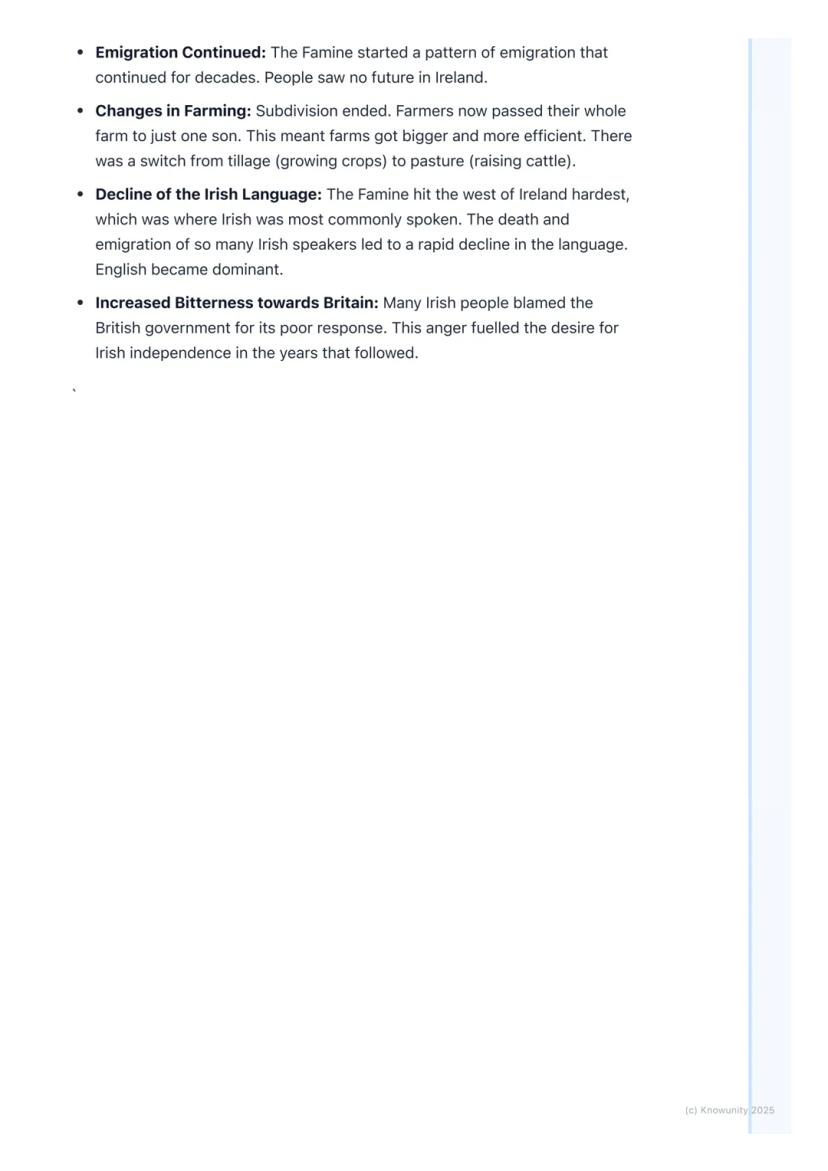
The numbers are staggering - Ireland's population dropped by about 2 million people. Roughly 1 million died from starvation and disease, whilst another million emigrated, mainly to America, Canada, Britain, and Australia. That's like losing a quarter of the entire population today.
But the changes went deeper than numbers. Subdivision ended completely - farmers now passed their whole farm to just one son, making farms bigger and more efficient. There was a major shift from growing crops to raising cattle, which needed fewer workers.
Emigration became a normal part of Irish life for decades after. Young people saw no future in staying, creating Irish communities worldwide. This mass emigration continued well into the 20th century, shaping Ireland's relationship with countries like America.
Long-term Impact: The Famine created lasting bitterness towards Britain that fuelled the independence movement. Many Irish people blamed the British government's poor response for making the disaster so much worse.
6
of 9
What You Need to Know for Exams
Don't just memorise facts - understand the connections. The long-term causes are just as important as the blight itself. You need to explain why Ireland was so vulnerable before the disease even arrived.
Know your key terms: cottiers, subdivision, laissez-faire, eviction, coffin ships. These aren't just vocabulary - they represent real people's experiences and government policies that shaped the disaster.
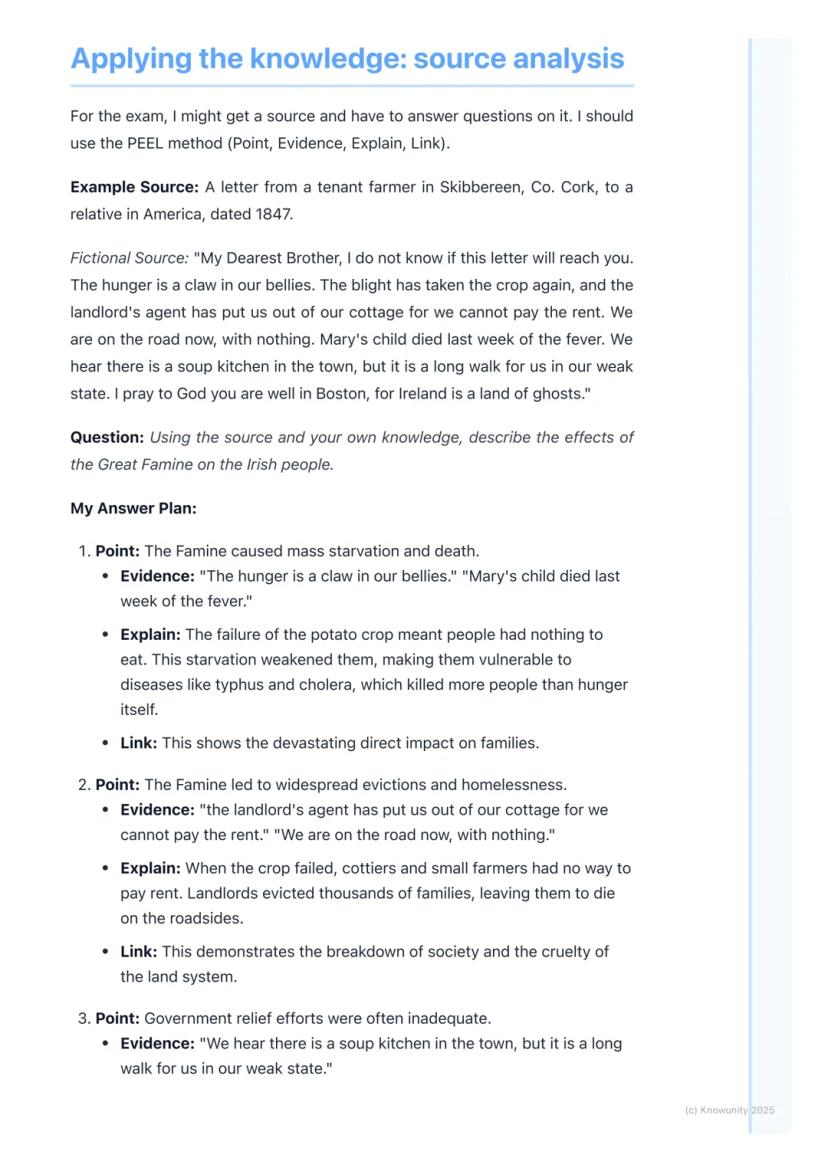
For source analysis, use the PEEL method (Point, Evidence, Explain, Link). Always connect the source to your wider knowledge about causes, government response, and consequences. Don't just describe what happened - explain why it happened and what it meant.
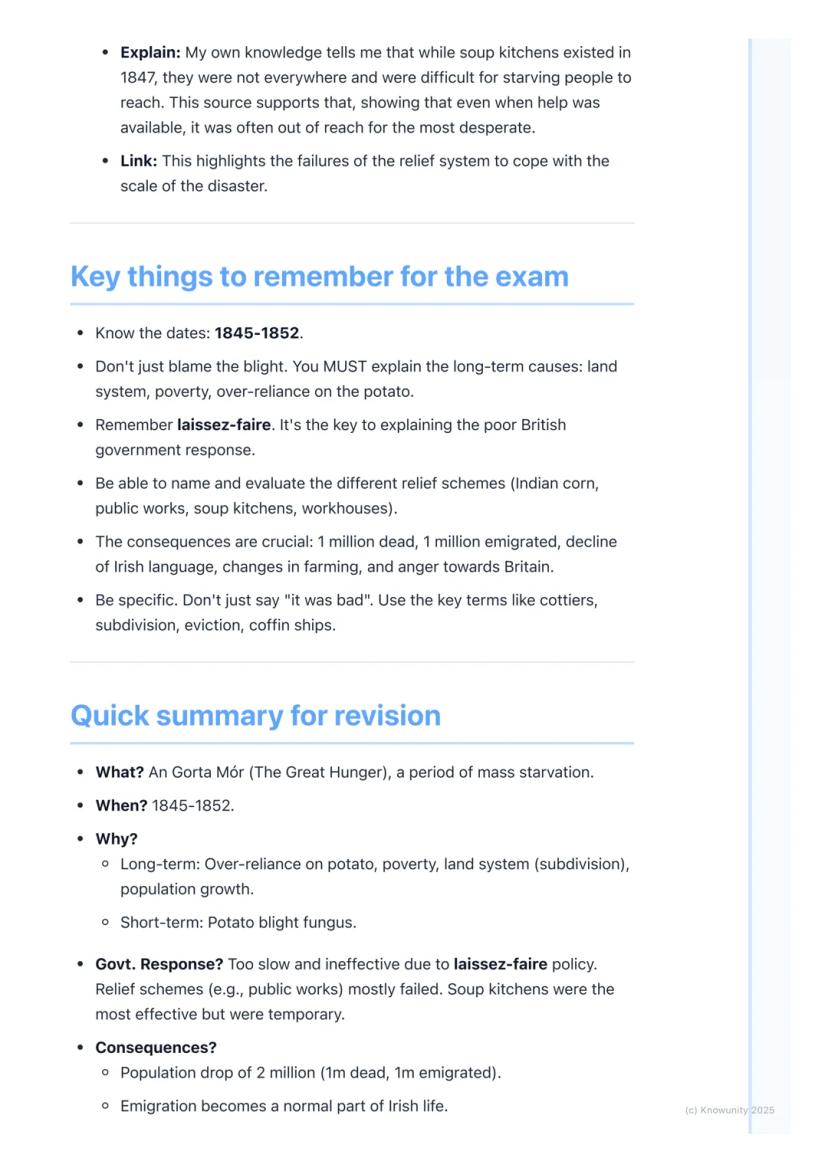
Exam Tip: Be specific about the government's relief schemes - Indian corn, public works, soup kitchens, workhouses. Know which ones worked, which failed, and why this matters for understanding British policy.
7
of 9
8
of 9
9
of 9
Hiç sormayacaksın sanmıştık...
Knowunity yapay zeka arkadaşı nedir?
Yapay zeka arkadaşımız öğrencilerin ihtiyaçlarına göre özel olarak tasarlanmıştır. Platformda bulunan milyonlarca içeriğe dayanarak öğrencilere gerçekten anlamlı ve ilgili yanıtlar verebiliyoruz. Ancak mesele sadece cevaplar değil, refakatçi aynı zamanda kişiselleştirilmiş öğrenme planları, sınavlar veya sohbet içerikleri ve öğrencilerin becerilerine ve gelişimlerine dayalı %100 kişiselleştirme ile öğrencilere günlük öğrenme zorluklarında rehberlik ediyor.
Knowunity uygulamasını nereden indirebilirim?
Uygulamayı Google Play Store ve Apple App Store'dan indirebilirsiniz.
Knowunity ücretsiz mi?
Knowunity uygulaması ücretsiz! Uygulamamız çok yakında indirmeye hazır olacak, bekle bizi. 💙
History dersinin en popüler içerikleri
9En popüler içerikler
9Aradığını bulamıyor musun? Diğer derslere göz at.
Kullanıcılarımızdan yorumlar. Onlar her şeyi çok beğendi — sen de beğeneceksin.
4.6/5App Store
4.7/5Google Play
Uygulama çok kolay kullanılıyor ve güzel tasarlanmış. Şu ana kadar aradığım her şeyi buldum ve sunumlardan çok şey öğrendim! Kesinlikle ödevlerim için hep kullanacağım!
A.S.iOS kullanıcısı
Uygulama çok iyi. Çok fazla ders notu ve yardımlaşma var. Örneğin benim problem yaşadığım bir ders Geometriydi ve ANINDA yardım ettiler beraber hem sorularımı çözdük hem konu anlatımı buldum. Herkese tavsiye ederim.
S.L.Android kullanıcısı
BEN ŞOK. Reklamını sık sık gördüğüm için uygulamayı denedim ve gerçekten hayran kaldım. Bu uygulama okul için tam ihtiyacım olan şey. Anında ödev yardımı, konu anlatımı, örnek sınavlar, flaşkartlar hepsi hepsi var, şiddetle tavsiye ederim ✅
A.iOS kullanıcısı
History14 görüntüleme·Güncellendi May 25, 2026·9 sayfaThe Irish Potato Famine: Causes and Consequences
The Great Famine was one of the darkest chapters in Irish history, and understanding it helps explain so much about modern Ireland. Between 1845 and 1852, a potato disease called blight turned Ireland into a nightmare of starvation, death, and... Daha fazla göster
1
of 9Ders notlarını görmek için kaydol. Ücretsiz!
- Tüm belgeleri görebilirsin
- Notlarını Yükselt
- Milyonlarca öğrenciye katıl
The Great Famine - An Gorta Mór
Ever wondered why so many Americans claim Irish heritage? The Great Famine is a huge part of that story. An Gorta Mór (The Great Hunger) wasn't just about potatoes going bad - it was a disaster waiting to happen.
When potato blight hit in 1845, it destroyed the one crop that millions of poor Irish people depended on completely. This fungus turned potatoes into black, rotting mush in damp weather. But here's the thing - other food was still being grown in Ireland and shipped to Britain whilst people starved.
Cottiers were the most vulnerable people during this time. These were extremely poor farmers who rented tiny plots of land (less than an acre) and paid rent by working for their landlords. When the potatoes failed, they had nothing left to eat and no way to pay rent.
Key Point: The British government's laissez-faire policy meant they were incredibly slow to help, believing the government shouldn't interfere with the market.
2
of 9Ders notlarını görmek için kaydol. Ücretsiz!
- Tüm belgeleri görebilirsin
- Notlarını Yükselt
- Milyonlarca öğrenciye katıl
Why the Famine Happened - The Perfect Storm
You can't just blame the blight - Ireland was already a disaster waiting to happen. The subdivision of land meant that over generations, farms got smaller and smaller as fathers divided land between sons. Eventually, plots were so tiny that only potatoes could feed a family.
About one-third of Ireland's 8+ million people lived entirely on potatoes by 1845. It was brilliant for feeding lots of people on small plots, but catastrophic when it failed. Most land was owned by wealthy (often English) landlords who lived in Britain and charged high rents.
When blight arrived in September 1845, it destroyed a third of the crop. In 1846, it wiped out almost everything. People were already living on the edge - this pushed them over.
Remember: The long-term causes made Ireland vulnerable. The blight was just the trigger that set off the disaster.
3
of 9Ders notlarını görmek için kaydol. Ücretsiz!
- Tüm belgeleri görebilirsin
- Notlarını Yükselt
- Milyonlarca öğrenciye katıl
The Government's Failed Response
The British government's response was shockingly inadequate, and their laissez-faire attitude made everything worse. Prime Minister Robert Peel imported Indian corn (maize) from America, but people didn't know how to cook it properly and it caused stomach problems - they called it "Peel's Brimstone."
Public works schemes were meant to give people jobs building "famine roads" so they could earn money for food. Massive failure - wages were too low, the work was too hard for starving people, and food was still too expensive anyway.
The soup kitchens in 1847 were actually the most successful relief effort, feeding 3 million people daily at their peak. But the government shut them down after just six months! Workhouses became overcrowded death traps where diseases like typhus and cholera spread rapidly.
Shocking Fact: While people starved, Ireland was still exporting corn, wheat, and cattle to Britain because poor Irish farmers couldn't afford to buy it.
4
of 9Ders notlarını görmek için kaydol. Ücretsiz!
- Tüm belgeleri görebilirsin
- Notlarını Yükselt
- Milyonlarca öğrenciye katıl
The Nightmare of Famine Life
Imagine being so desperate that workhouses seemed like a good option. Families were split up, conditions were deliberately awful to discourage people from coming, and over 200,000 people died in these places during the Famine. That's how bad things got.
Thousands of families faced eviction when they couldn't pay rent. Landlords legally threw people out of their homes, leaving entire families to die on roadsides. Those lucky enough to escape often boarded coffin ships - overcrowded, disease-ridden vessels to North America where many died during the journey.
The west of Ireland, where most people spoke Irish, was hit hardest. Entire communities were wiped out through death and emigration. This is why the Irish language declined so rapidly - whole generations of Irish speakers simply disappeared.
Key Point: The Famine wasn't just about hunger - it destroyed families, communities, and Irish culture itself.
5
of 9Ders notlarını görmek için kaydol. Ücretsiz!
- Tüm belgeleri görebilirsin
- Notlarını Yükselt
- Milyonlarca öğrenciye katıl
How the Famine Changed Ireland Forever
The numbers are staggering - Ireland's population dropped by about 2 million people. Roughly 1 million died from starvation and disease, whilst another million emigrated, mainly to America, Canada, Britain, and Australia. That's like losing a quarter of the entire population today.
But the changes went deeper than numbers. Subdivision ended completely - farmers now passed their whole farm to just one son, making farms bigger and more efficient. There was a major shift from growing crops to raising cattle, which needed fewer workers.
Emigration became a normal part of Irish life for decades after. Young people saw no future in staying, creating Irish communities worldwide. This mass emigration continued well into the 20th century, shaping Ireland's relationship with countries like America.
Long-term Impact: The Famine created lasting bitterness towards Britain that fuelled the independence movement. Many Irish people blamed the British government's poor response for making the disaster so much worse.
6
of 9Ders notlarını görmek için kaydol. Ücretsiz!
- Tüm belgeleri görebilirsin
- Notlarını Yükselt
- Milyonlarca öğrenciye katıl
What You Need to Know for Exams
Don't just memorise facts - understand the connections. The long-term causes are just as important as the blight itself. You need to explain why Ireland was so vulnerable before the disease even arrived.
Know your key terms: cottiers, subdivision, laissez-faire, eviction, coffin ships. These aren't just vocabulary - they represent real people's experiences and government policies that shaped the disaster.
For source analysis, use the PEEL method (Point, Evidence, Explain, Link). Always connect the source to your wider knowledge about causes, government response, and consequences. Don't just describe what happened - explain why it happened and what it meant.
Exam Tip: Be specific about the government's relief schemes - Indian corn, public works, soup kitchens, workhouses. Know which ones worked, which failed, and why this matters for understanding British policy.
7
of 9Ders notlarını görmek için kaydol. Ücretsiz!
- Tüm belgeleri görebilirsin
- Notlarını Yükselt
- Milyonlarca öğrenciye katıl
8
of 9Ders notlarını görmek için kaydol. Ücretsiz!
- Tüm belgeleri görebilirsin
- Notlarını Yükselt
- Milyonlarca öğrenciye katıl
9
of 9Ders notlarını görmek için kaydol. Ücretsiz!
- Tüm belgeleri görebilirsin
- Notlarını Yükselt
- Milyonlarca öğrenciye katıl
Hiç sormayacaksın sanmıştık...
Knowunity yapay zeka arkadaşı nedir?
Yapay zeka arkadaşımız öğrencilerin ihtiyaçlarına göre özel olarak tasarlanmıştır. Platformda bulunan milyonlarca içeriğe dayanarak öğrencilere gerçekten anlamlı ve ilgili yanıtlar verebiliyoruz. Ancak mesele sadece cevaplar değil, refakatçi aynı zamanda kişiselleştirilmiş öğrenme planları, sınavlar veya sohbet içerikleri ve öğrencilerin becerilerine ve gelişimlerine dayalı %100 kişiselleştirme ile öğrencilere günlük öğrenme zorluklarında rehberlik ediyor.
Knowunity uygulamasını nereden indirebilirim?
Uygulamayı Google Play Store ve Apple App Store'dan indirebilirsiniz.
Knowunity ücretsiz mi?
Knowunity uygulaması ücretsiz! Uygulamamız çok yakında indirmeye hazır olacak, bekle bizi. 💙
History dersinin en popüler içerikleri
9En popüler içerikler
9Aradığını bulamıyor musun? Diğer derslere göz at.
Kullanıcılarımızdan yorumlar. Onlar her şeyi çok beğendi — sen de beğeneceksin.
4.6/5App Store
4.7/5Google Play
Uygulama çok kolay kullanılıyor ve güzel tasarlanmış. Şu ana kadar aradığım her şeyi buldum ve sunumlardan çok şey öğrendim! Kesinlikle ödevlerim için hep kullanacağım!
A.S.iOS kullanıcısı
Uygulama çok iyi. Çok fazla ders notu ve yardımlaşma var. Örneğin benim problem yaşadığım bir ders Geometriydi ve ANINDA yardım ettiler beraber hem sorularımı çözdük hem konu anlatımı buldum. Herkese tavsiye ederim.
S.L.Android kullanıcısı
BEN ŞOK. Reklamını sık sık gördüğüm için uygulamayı denedim ve gerçekten hayran kaldım. Bu uygulama okul için tam ihtiyacım olan şey. Anında ödev yardımı, konu anlatımı, örnek sınavlar, flaşkartlar hepsi hepsi var, şiddetle tavsiye ederim ✅
A.iOS kullanıcısı