
Ever wondered what's actually beneath your feet? The Earth isn't... Daha fazla göster
 Geography5 görüntüleme·Güncellendi May 29, 2026·5 sayfa
The Earth's Layers Explained
1 / 5
1
of 5
What's Under Our Feet?
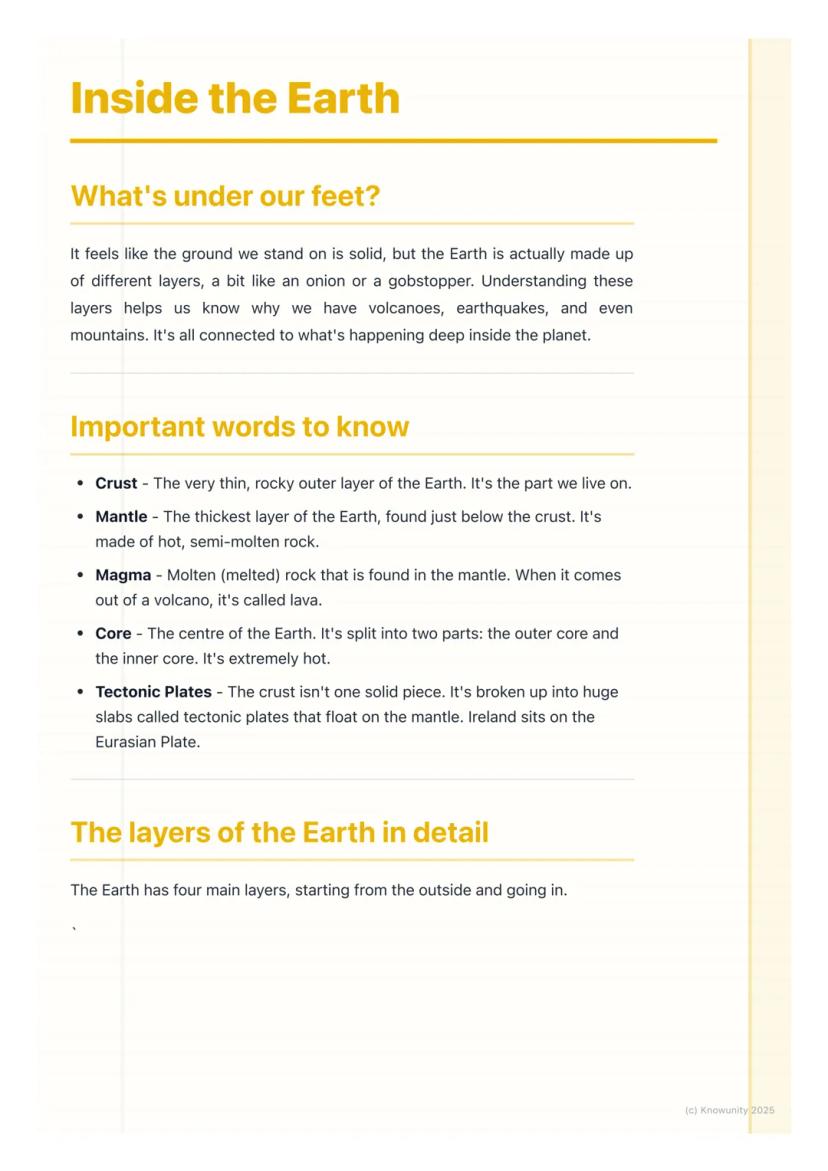
Think of the Earth like a giant jawbreaker sweet - it has different layers that get more intense as you go deeper. The ground feels solid, but there's actually a lot of action happening beneath us that affects our daily lives.
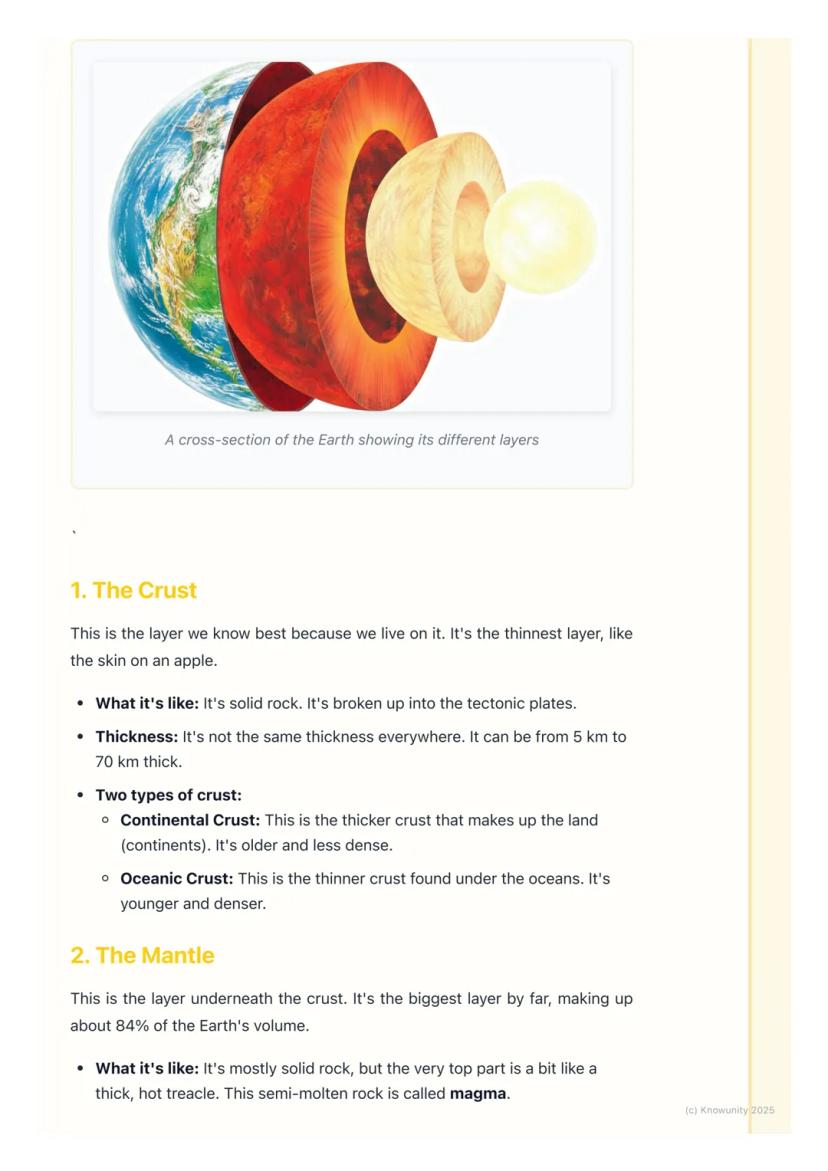
The Earth's structure is made up of four main layers: the crust, mantle, outer core, and inner core. Each layer has different temperatures, pressures, and materials. What's really cool is that Ireland sits on something called the Eurasian Plate, which is basically a massive piece of the Earth's outer shell.
Understanding these layers isn't just academic stuff - it explains why we have the Giant's Causeway in Northern Ireland and why earthquakes happen around the world.
Quick Tip: Remember the layers from outside to inside as "Crust Meets Outer Inner" - this simple phrase will help you ace any test question about Earth's structure!
2
of 5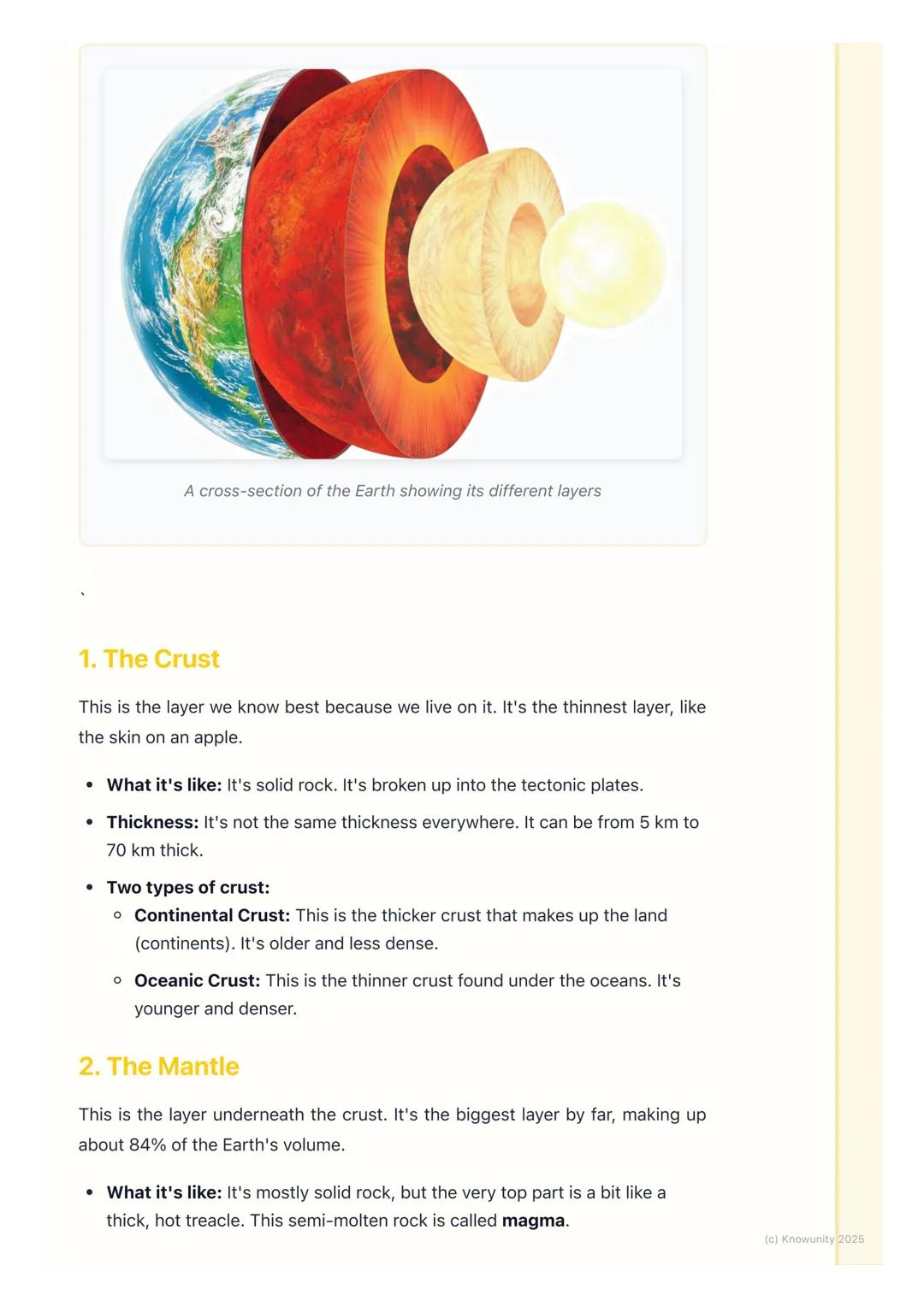
The Crust - Our Home Layer
The crust is literally the ground beneath your feet, and it's surprisingly thin compared to the other layers. Imagine the Earth as an apple - the crust would be thinner than the apple's skin!
This rocky outer layer varies in thickness from just 5km under the oceans to 70km under mountain ranges. There are two types: continental crust (the thicker stuff that makes up Ireland and other landmasses) and oceanic crust (the thinner layer under the sea).
Here's what makes the crust special - it's not one solid piece. It's broken up into huge slabs called tectonic plates that float around on the layer beneath. These plates are constantly moving, which is why we get earthquakes and volcanoes.
Did You Know? Ireland sits on the Eurasian Plate, which is slowly drifting eastward at about 2cm per year - roughly the same speed your fingernails grow!
3
of 5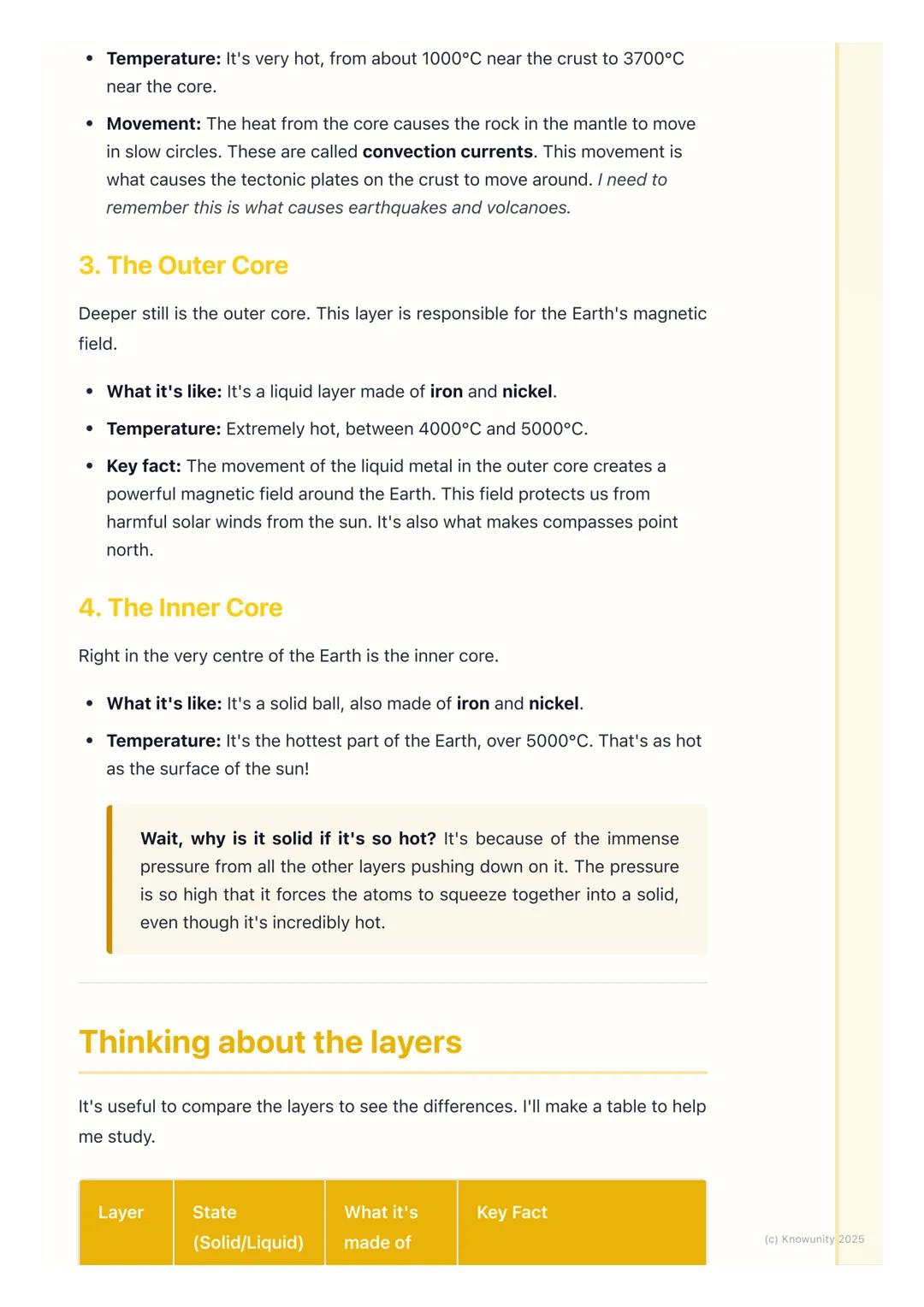
The Mantle - The Engine Room
The mantle is absolutely massive - it makes up about 84% of Earth's total volume. Think of it as the engine that powers everything happening on the surface.
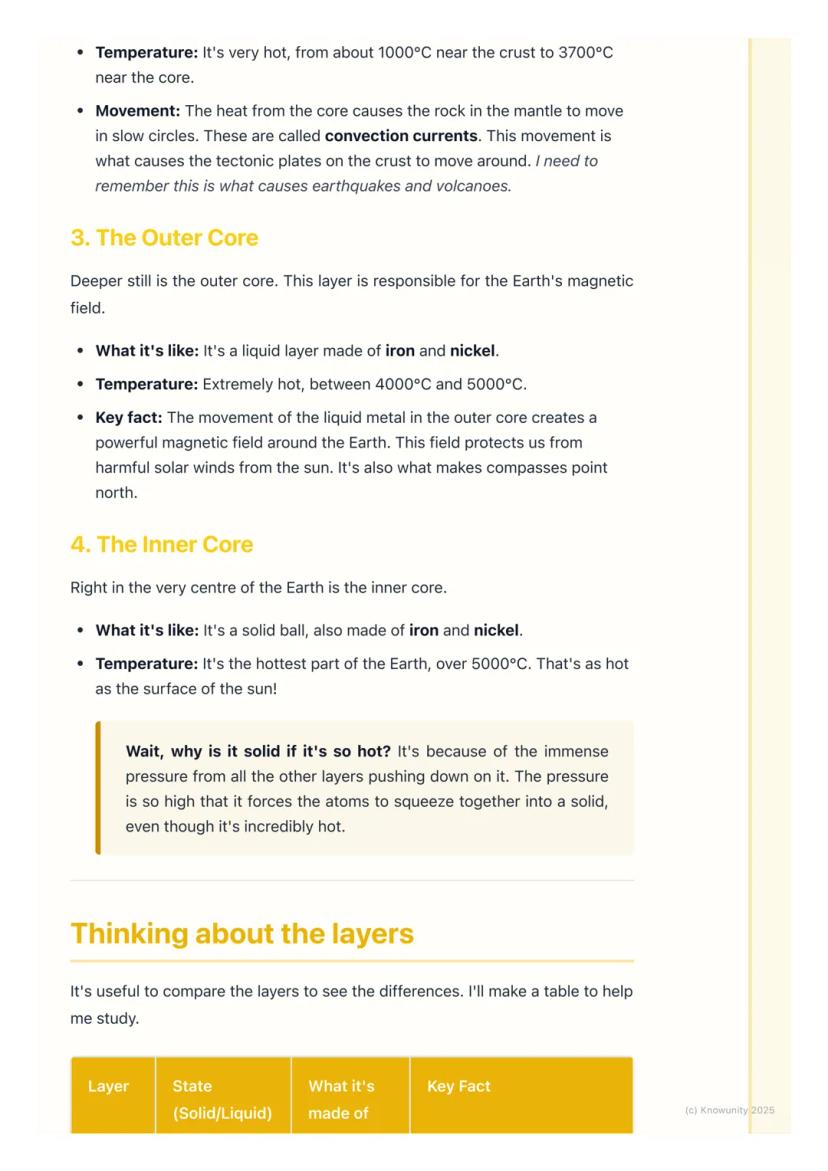
This layer is mostly solid rock, but the extreme heat (between 1000°C and 3700°C) makes parts of it behave like thick, hot treacle. This semi-molten rock is called magma, and it's constantly moving in slow circles called convection currents.
These convection currents are crucial because they're what moves the tectonic plates around on the surface. When the mantle moves, it drags the crust along with it, causing earthquakes, mountain formation, and volcanic activity.
Key Point: The mantle's movement is the reason we have volcanoes in places like Iceland and earthquakes around the world - it's all connected to this underground circulation system!
4
of 5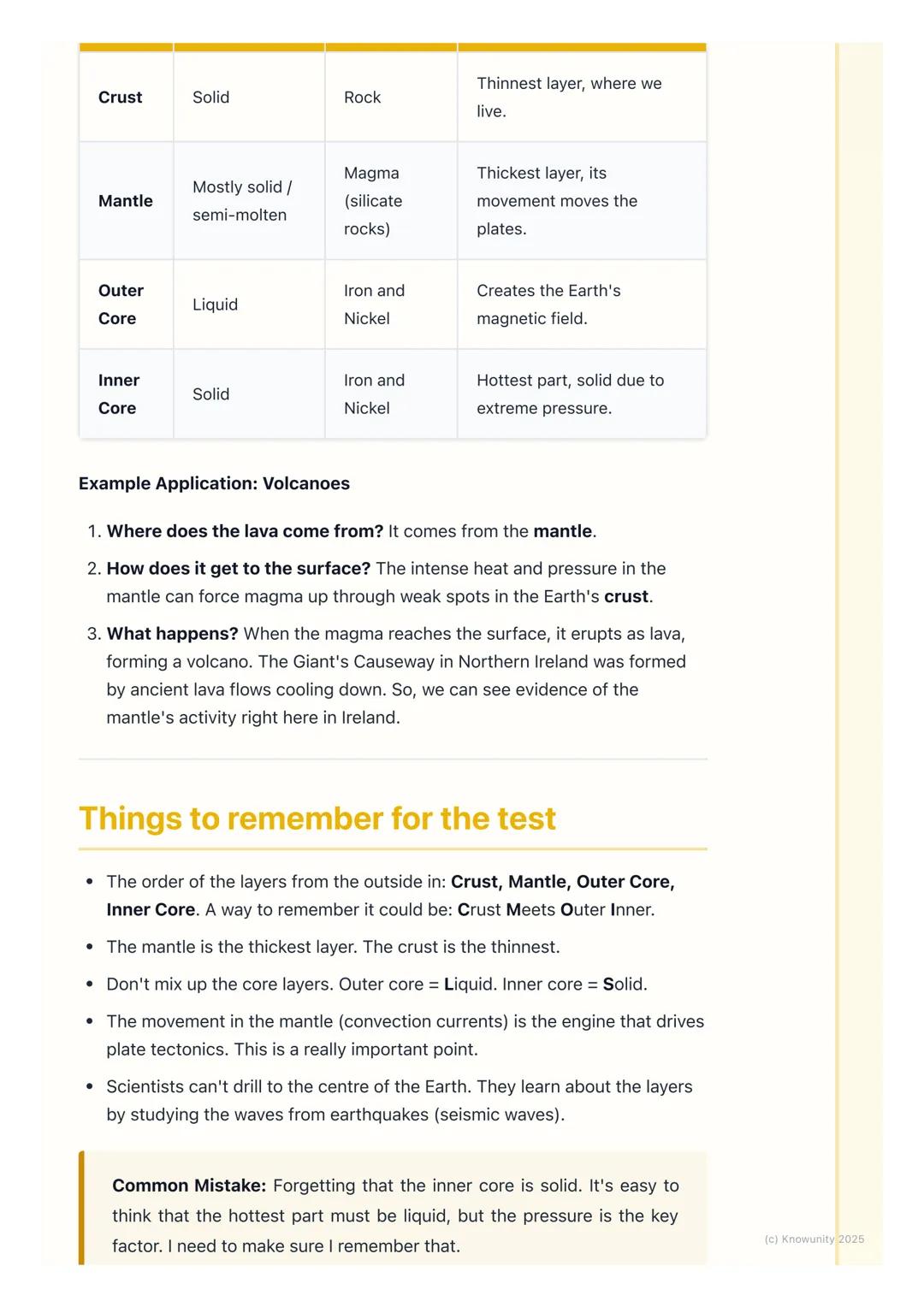
The Core - Earth's Powerhouse
The Earth's core is split into two parts, and both are incredibly important for life on our planet. The outer core is a liquid layer made of iron and nickel, spinning around at temperatures between 4000°C and 5000°C.
This liquid metal movement creates Earth's magnetic field, which acts like an invisible shield protecting us from harmful solar radiation. Without it, compasses wouldn't work and life on Earth would be impossible.
The inner core is even more extreme - it's over 5000°C (as hot as the sun's surface!) but it's actually solid. This seems impossible, but the immense pressure from all the layers above squeezes the atoms so tightly that they can't move around as a liquid.
Mind-Blowing Fact: Scientists can't drill to the Earth's centre, so they study earthquake waves to learn about these deep layers - it's like using the Earth as a giant X-ray machine!
5
of 5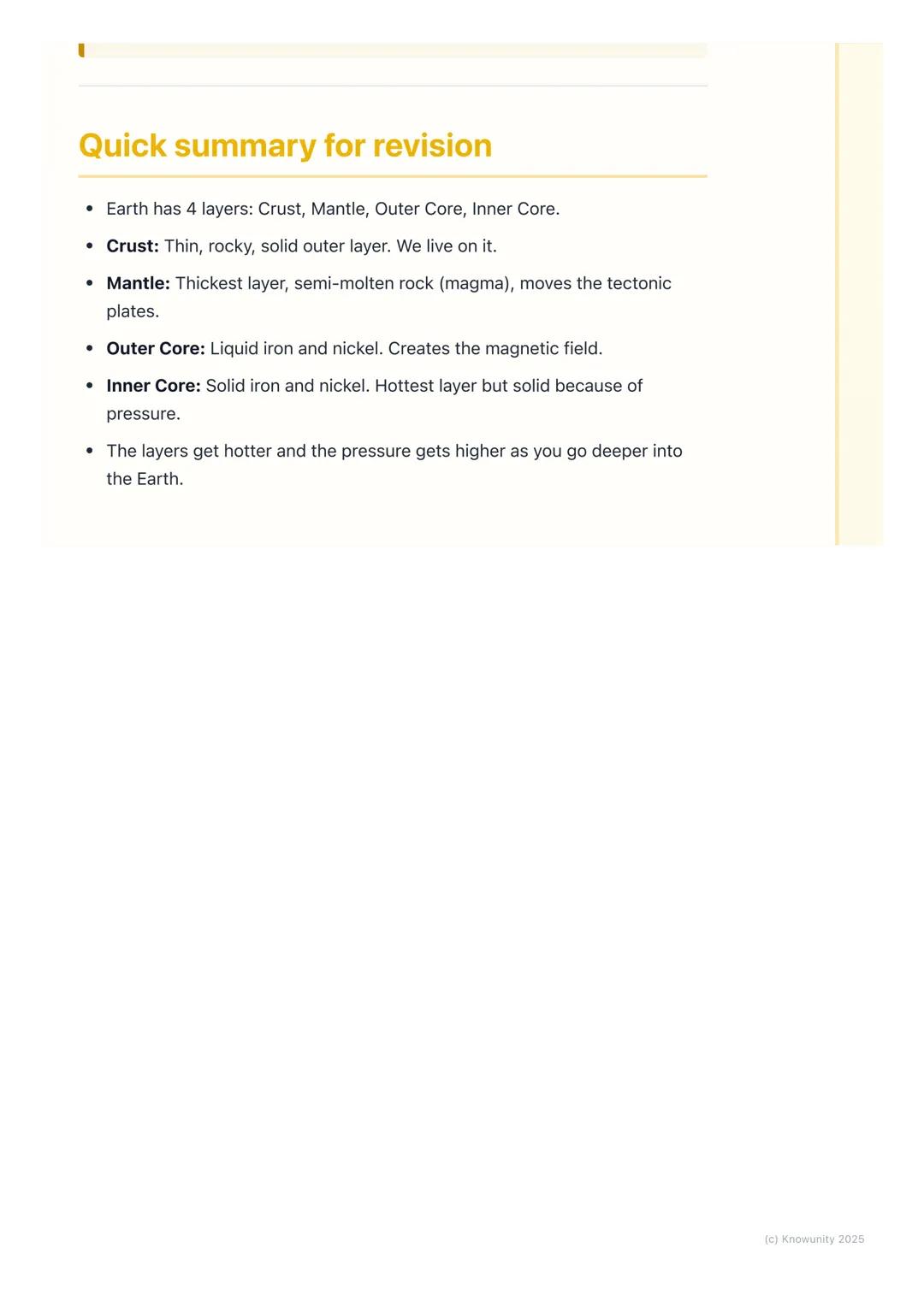
Putting It All Together
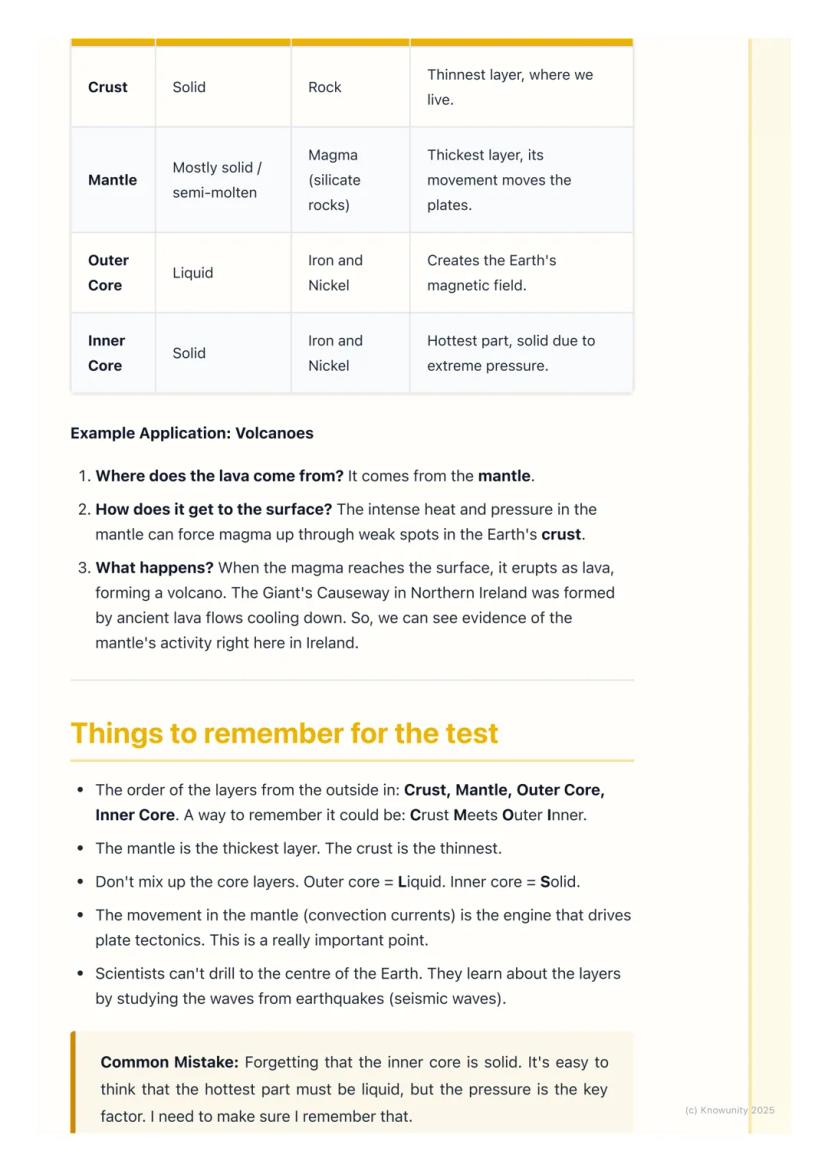
Now you can see how everything connects! When magma from the mantle finds weak spots in the crust, it erupts as lava, creating volcanoes. The Giant's Causeway in Northern Ireland was formed exactly this way from ancient lava flows.
The key things to remember: crust (thin and rocky), mantle (thick and moving), outer core (liquid and magnetic), inner core (solid despite extreme heat). Each layer gets hotter and more pressurised as you go deeper.
Understanding Earth's layers helps explain so many things around us - from why Ireland doesn't have active volcanoes (we're in a stable part of a tectonic plate) to why we can navigate using compasses (thanks to that magnetic outer core).
Test Success Tip: Remember that pressure increases with depth - that's why the hottest layer (inner core) is solid while the slightly cooler outer core is liquid. Get this concept right and you'll nail the tricky questions!
Hiç sormayacaksın sanmıştık...
Knowunity yapay zeka arkadaşı nedir?
Yapay zeka arkadaşımız öğrencilerin ihtiyaçlarına göre özel olarak tasarlanmıştır. Platformda bulunan milyonlarca içeriğe dayanarak öğrencilere gerçekten anlamlı ve ilgili yanıtlar verebiliyoruz. Ancak mesele sadece cevaplar değil, refakatçi aynı zamanda kişiselleştirilmiş öğrenme planları, sınavlar veya sohbet içerikleri ve öğrencilerin becerilerine ve gelişimlerine dayalı %100 kişiselleştirme ile öğrencilere günlük öğrenme zorluklarında rehberlik ediyor.
Knowunity uygulamasını nereden indirebilirim?
Uygulamayı Google Play Store ve Apple App Store'dan indirebilirsiniz.
Knowunity ücretsiz mi?
Knowunity uygulaması ücretsiz! Uygulamamız çok yakında indirmeye hazır olacak, bekle bizi. 💙
Geography dersinin en popüler içerikleri
9En popüler içerikler
9Aradığını bulamıyor musun? Diğer derslere göz at.
Kullanıcılarımızdan yorumlar. Onlar her şeyi çok beğendi — sen de beğeneceksin.
4.6/5App Store
4.7/5Google Play
Uygulama çok kolay kullanılıyor ve güzel tasarlanmış. Şu ana kadar aradığım her şeyi buldum ve sunumlardan çok şey öğrendim! Kesinlikle ödevlerim için hep kullanacağım!
A.S.iOS kullanıcısı
Uygulama çok iyi. Çok fazla ders notu ve yardımlaşma var. Örneğin benim problem yaşadığım bir ders Geometriydi ve ANINDA yardım ettiler beraber hem sorularımı çözdük hem konu anlatımı buldum. Herkese tavsiye ederim.
S.L.Android kullanıcısı
BEN ŞOK. Reklamını sık sık gördüğüm için uygulamayı denedim ve gerçekten hayran kaldım. Bu uygulama okul için tam ihtiyacım olan şey. Anında ödev yardımı, konu anlatımı, örnek sınavlar, flaşkartlar hepsi hepsi var, şiddetle tavsiye ederim ✅
A.iOS kullanıcısı
Geography5 görüntüleme·Güncellendi May 29, 2026·5 sayfaThe Earth's Layers Explained
Ever wondered what's actually beneath your feet? The Earth isn't just solid rock all the way down - it's made up of four distinct layers, each with its own unique properties. Understanding these layers helps explain everything from why volcanoes... Daha fazla göster
1
of 5Ders notlarını görmek için kaydol. Ücretsiz!
- Tüm belgeleri görebilirsin
- Notlarını Yükselt
- Milyonlarca öğrenciye katıl
What's Under Our Feet?
Think of the Earth like a giant jawbreaker sweet - it has different layers that get more intense as you go deeper. The ground feels solid, but there's actually a lot of action happening beneath us that affects our daily lives.
The Earth's structure is made up of four main layers: the crust, mantle, outer core, and inner core. Each layer has different temperatures, pressures, and materials. What's really cool is that Ireland sits on something called the Eurasian Plate, which is basically a massive piece of the Earth's outer shell.
Understanding these layers isn't just academic stuff - it explains why we have the Giant's Causeway in Northern Ireland and why earthquakes happen around the world.
Quick Tip: Remember the layers from outside to inside as "Crust Meets Outer Inner" - this simple phrase will help you ace any test question about Earth's structure!
2
of 5Ders notlarını görmek için kaydol. Ücretsiz!
- Tüm belgeleri görebilirsin
- Notlarını Yükselt
- Milyonlarca öğrenciye katıl
The Crust - Our Home Layer
The crust is literally the ground beneath your feet, and it's surprisingly thin compared to the other layers. Imagine the Earth as an apple - the crust would be thinner than the apple's skin!
This rocky outer layer varies in thickness from just 5km under the oceans to 70km under mountain ranges. There are two types: continental crust (the thicker stuff that makes up Ireland and other landmasses) and oceanic crust (the thinner layer under the sea).
Here's what makes the crust special - it's not one solid piece. It's broken up into huge slabs called tectonic plates that float around on the layer beneath. These plates are constantly moving, which is why we get earthquakes and volcanoes.
Did You Know? Ireland sits on the Eurasian Plate, which is slowly drifting eastward at about 2cm per year - roughly the same speed your fingernails grow!
3
of 5Ders notlarını görmek için kaydol. Ücretsiz!
- Tüm belgeleri görebilirsin
- Notlarını Yükselt
- Milyonlarca öğrenciye katıl
The Mantle - The Engine Room
The mantle is absolutely massive - it makes up about 84% of Earth's total volume. Think of it as the engine that powers everything happening on the surface.
This layer is mostly solid rock, but the extreme heat (between 1000°C and 3700°C) makes parts of it behave like thick, hot treacle. This semi-molten rock is called magma, and it's constantly moving in slow circles called convection currents.
These convection currents are crucial because they're what moves the tectonic plates around on the surface. When the mantle moves, it drags the crust along with it, causing earthquakes, mountain formation, and volcanic activity.
Key Point: The mantle's movement is the reason we have volcanoes in places like Iceland and earthquakes around the world - it's all connected to this underground circulation system!
4
of 5Ders notlarını görmek için kaydol. Ücretsiz!
- Tüm belgeleri görebilirsin
- Notlarını Yükselt
- Milyonlarca öğrenciye katıl
The Core - Earth's Powerhouse
The Earth's core is split into two parts, and both are incredibly important for life on our planet. The outer core is a liquid layer made of iron and nickel, spinning around at temperatures between 4000°C and 5000°C.
This liquid metal movement creates Earth's magnetic field, which acts like an invisible shield protecting us from harmful solar radiation. Without it, compasses wouldn't work and life on Earth would be impossible.
The inner core is even more extreme - it's over 5000°C (as hot as the sun's surface!) but it's actually solid. This seems impossible, but the immense pressure from all the layers above squeezes the atoms so tightly that they can't move around as a liquid.
Mind-Blowing Fact: Scientists can't drill to the Earth's centre, so they study earthquake waves to learn about these deep layers - it's like using the Earth as a giant X-ray machine!
5
of 5Ders notlarını görmek için kaydol. Ücretsiz!
- Tüm belgeleri görebilirsin
- Notlarını Yükselt
- Milyonlarca öğrenciye katıl
Putting It All Together
Now you can see how everything connects! When magma from the mantle finds weak spots in the crust, it erupts as lava, creating volcanoes. The Giant's Causeway in Northern Ireland was formed exactly this way from ancient lava flows.
The key things to remember: crust (thin and rocky), mantle (thick and moving), outer core (liquid and magnetic), inner core (solid despite extreme heat). Each layer gets hotter and more pressurised as you go deeper.
Understanding Earth's layers helps explain so many things around us - from why Ireland doesn't have active volcanoes (we're in a stable part of a tectonic plate) to why we can navigate using compasses (thanks to that magnetic outer core).
Test Success Tip: Remember that pressure increases with depth - that's why the hottest layer (inner core) is solid while the slightly cooler outer core is liquid. Get this concept right and you'll nail the tricky questions!
Hiç sormayacaksın sanmıştık...
Knowunity yapay zeka arkadaşı nedir?
Yapay zeka arkadaşımız öğrencilerin ihtiyaçlarına göre özel olarak tasarlanmıştır. Platformda bulunan milyonlarca içeriğe dayanarak öğrencilere gerçekten anlamlı ve ilgili yanıtlar verebiliyoruz. Ancak mesele sadece cevaplar değil, refakatçi aynı zamanda kişiselleştirilmiş öğrenme planları, sınavlar veya sohbet içerikleri ve öğrencilerin becerilerine ve gelişimlerine dayalı %100 kişiselleştirme ile öğrencilere günlük öğrenme zorluklarında rehberlik ediyor.
Knowunity uygulamasını nereden indirebilirim?
Uygulamayı Google Play Store ve Apple App Store'dan indirebilirsiniz.
Knowunity ücretsiz mi?
Knowunity uygulaması ücretsiz! Uygulamamız çok yakında indirmeye hazır olacak, bekle bizi. 💙
Geography dersinin en popüler içerikleri
9En popüler içerikler
9Aradığını bulamıyor musun? Diğer derslere göz at.
Kullanıcılarımızdan yorumlar. Onlar her şeyi çok beğendi — sen de beğeneceksin.
4.6/5App Store
4.7/5Google Play
Uygulama çok kolay kullanılıyor ve güzel tasarlanmış. Şu ana kadar aradığım her şeyi buldum ve sunumlardan çok şey öğrendim! Kesinlikle ödevlerim için hep kullanacağım!
A.S.iOS kullanıcısı
Uygulama çok iyi. Çok fazla ders notu ve yardımlaşma var. Örneğin benim problem yaşadığım bir ders Geometriydi ve ANINDA yardım ettiler beraber hem sorularımı çözdük hem konu anlatımı buldum. Herkese tavsiye ederim.
S.L.Android kullanıcısı
BEN ŞOK. Reklamını sık sık gördüğüm için uygulamayı denedim ve gerçekten hayran kaldım. Bu uygulama okul için tam ihtiyacım olan şey. Anında ödev yardımı, konu anlatımı, örnek sınavlar, flaşkartlar hepsi hepsi var, şiddetle tavsiye ederim ✅
A.iOS kullanıcısı