
Ever wondered what makes plants so different from animals? It... Daha fazla göster
 Biology8 görüntüleme·Güncellendi Jun 3, 2026·6 sayfa
Understanding Plant Cells: Key Structures and Differences
1 / 6
1
of 6
Introduction to Plant Cells
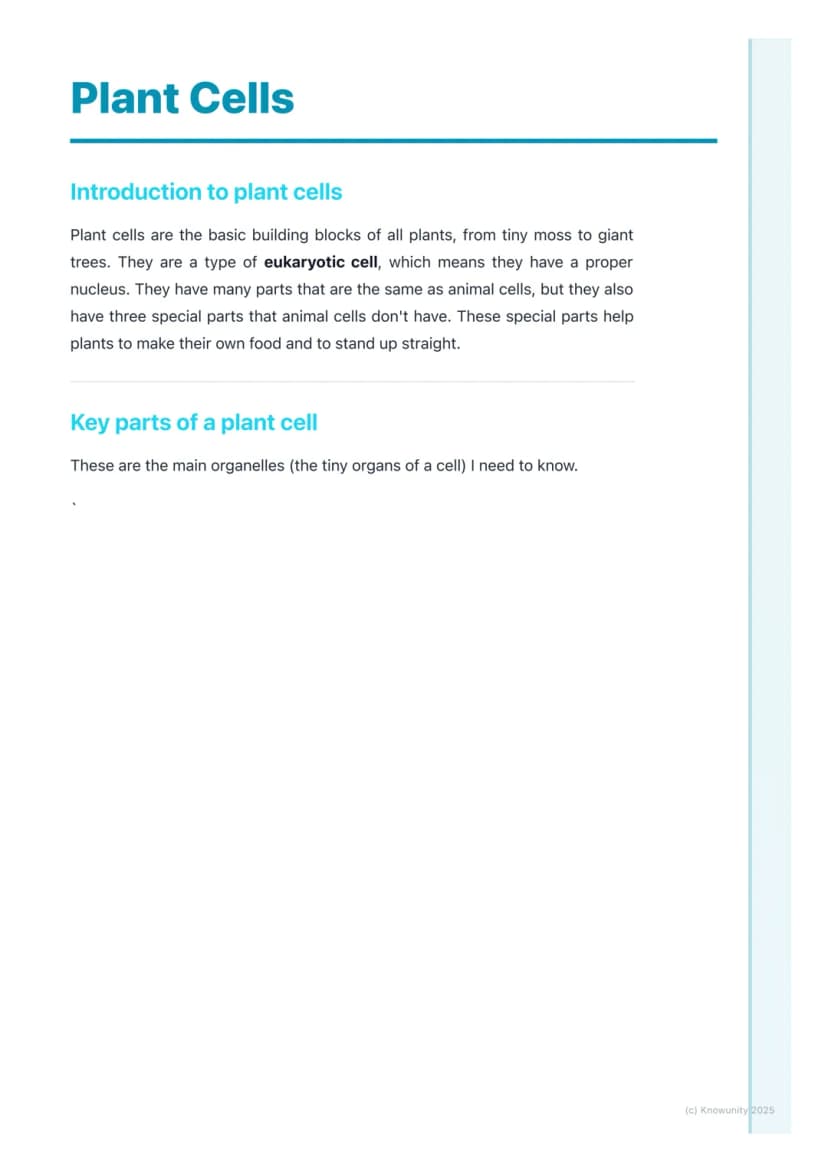
Plant cells are eukaryotic cells, which simply means they have a proper control centre called a nucleus. What makes them special is that they've got three unique parts that animal cells don't have.
These three special features are what allow plants to create their own food and stay upright without needing a skeleton. Think of them as the plant's superpowers!
Quick Tip: Remember the 3 C's for plant cells - Cell wall, Chloroplasts, and Central vacuole (the large one)!
2
of 6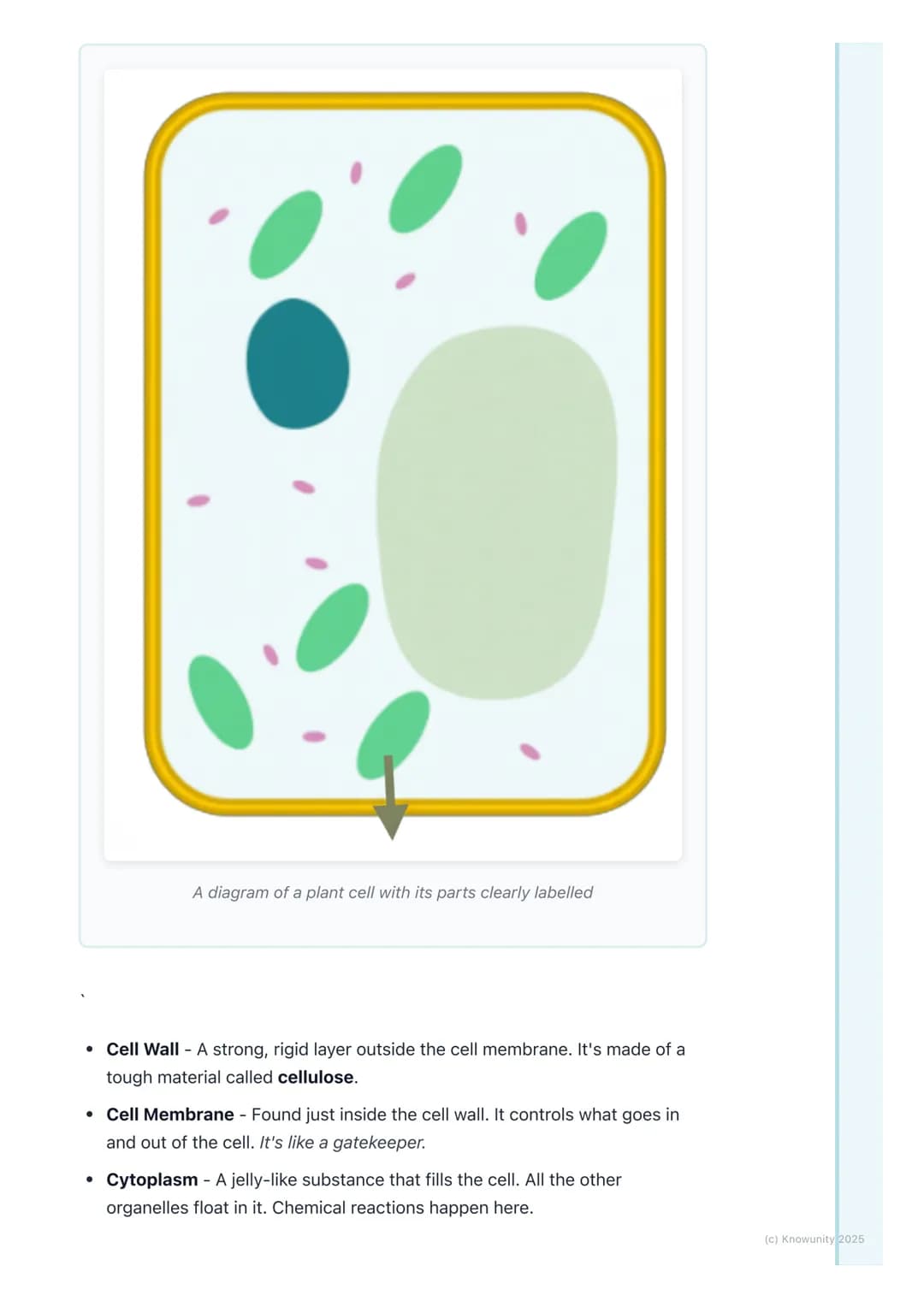
Key Parts of a Plant Cell
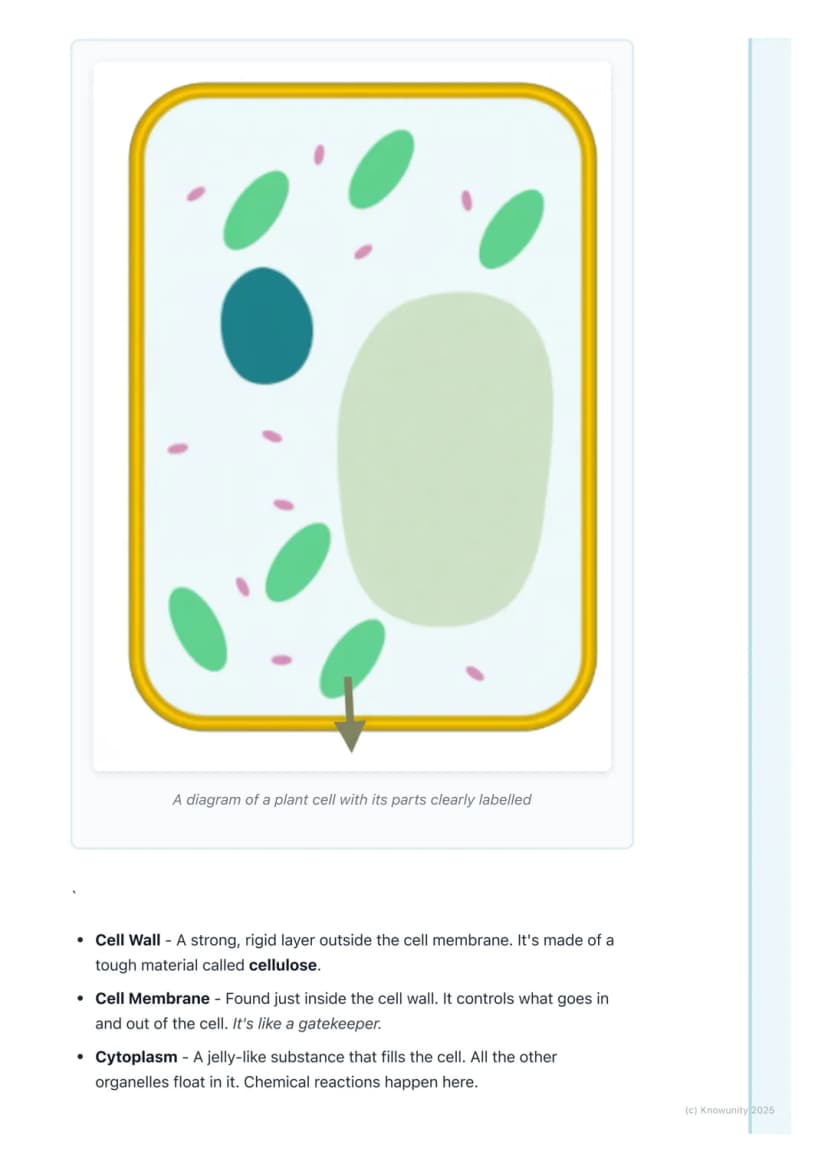
The cell wall is like a tough outer shell made of cellulose that sits outside the cell membrane. It's the plant's armour, providing structure and protection.
Inside, you'll find the cell membrane acting like a bouncer at a club - it decides what gets in and out of the cell. The cytoplasm is the jelly-like substance where all the cell's chemical reactions happen.
The nucleus is the boss of the cell, containing DNA with all the instructions. This is exactly the same job it does in your own cells!
Remember: Don't mix up the cell wall and cell membrane - the wall is on the very outside for structure, the membrane is inside for control!
3
of 6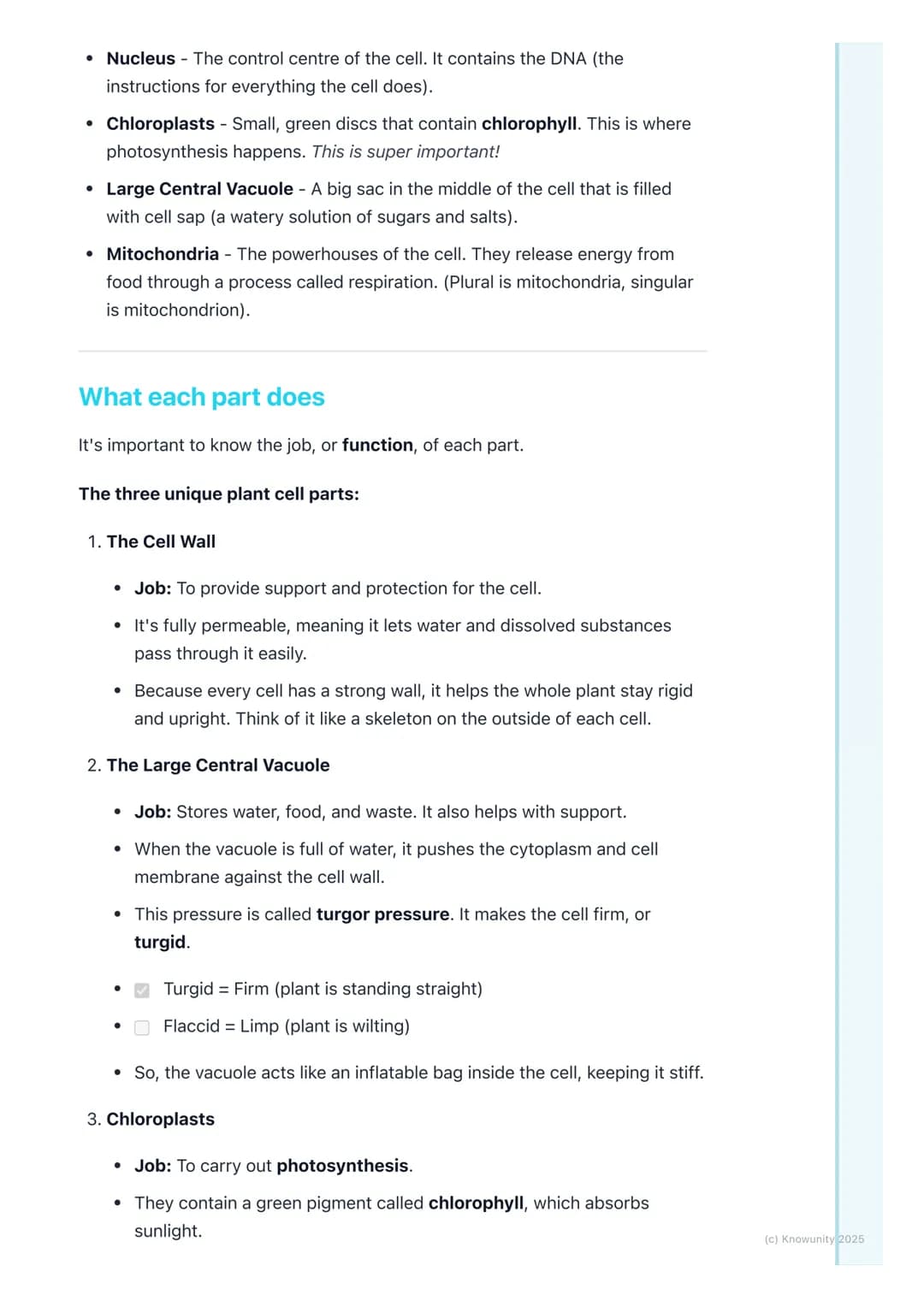
The Three Special Plant Parts
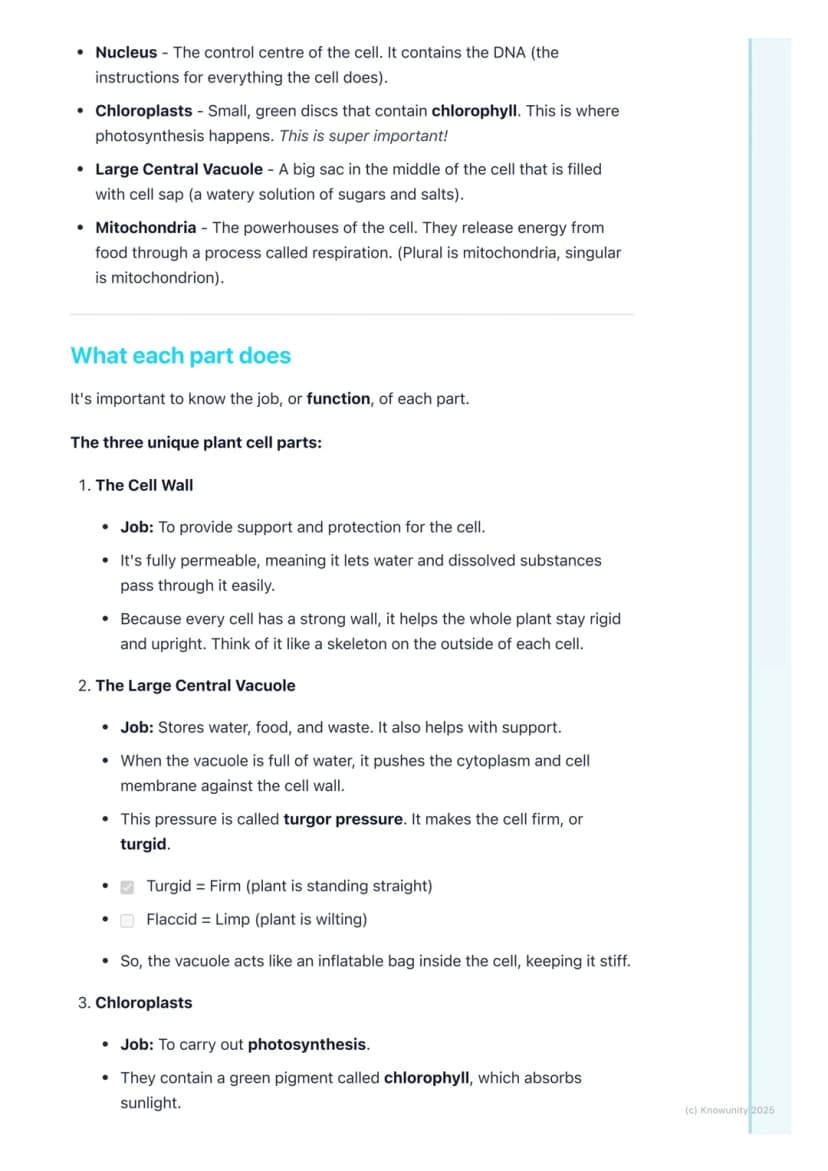
Chloroplasts are tiny green discs packed with chlorophyll that capture sunlight for photosynthesis. This is why plants are green and why they're called 'producers' in food chains.
The large central vacuole is like a water balloon inside the cell. When it's full, it creates turgor pressure that pushes against the cell wall, keeping the plant firm and upright.
Mitochondria are the powerhouses that release energy from food through respiration - just like in animal cells. Plants need energy too, even though they make their own food!
Key Concept: When plants wilt, it's because their vacuoles lose water and can't maintain turgor pressure anymore!
4
of 6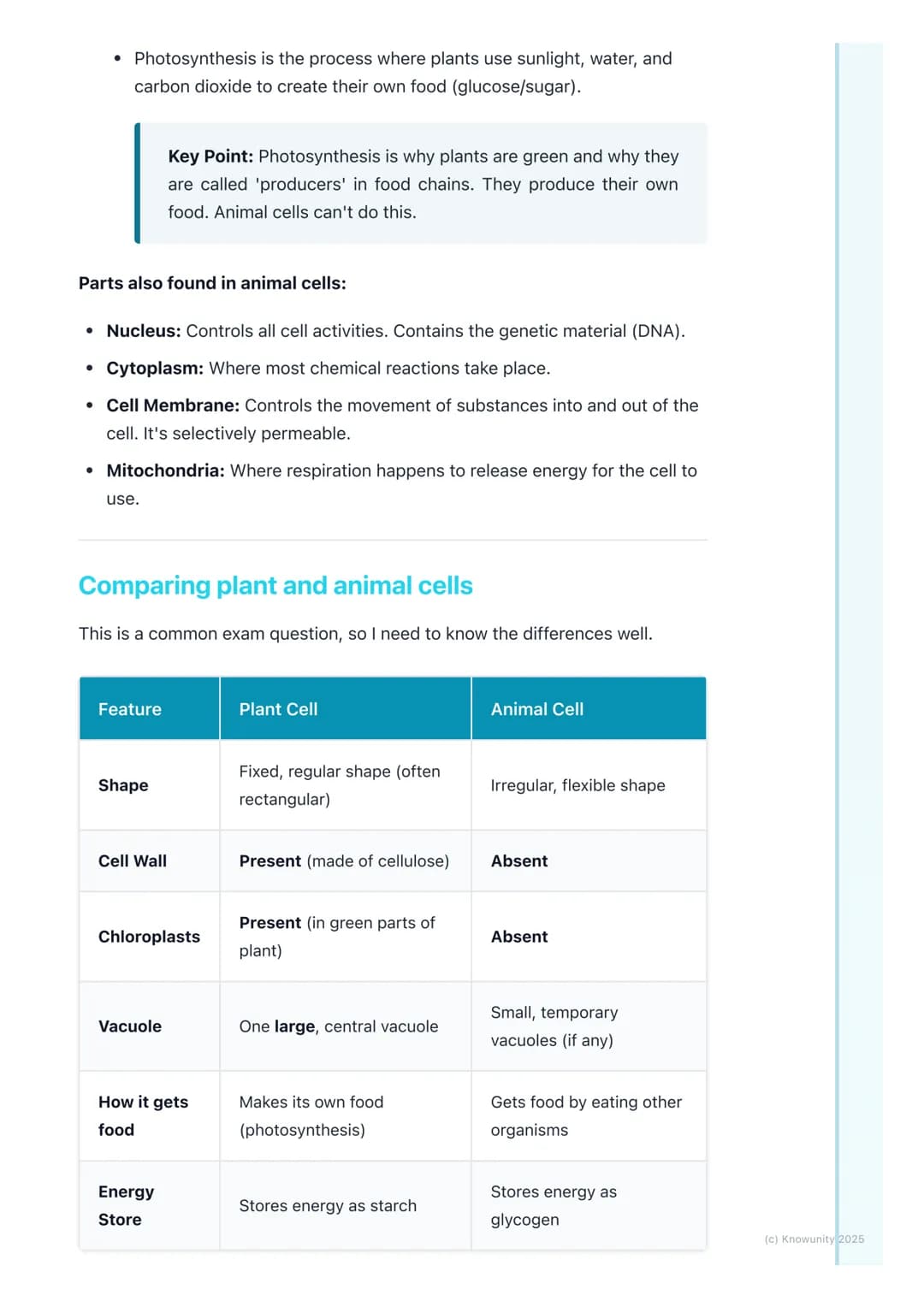
Comparing Plant and Animal Cells
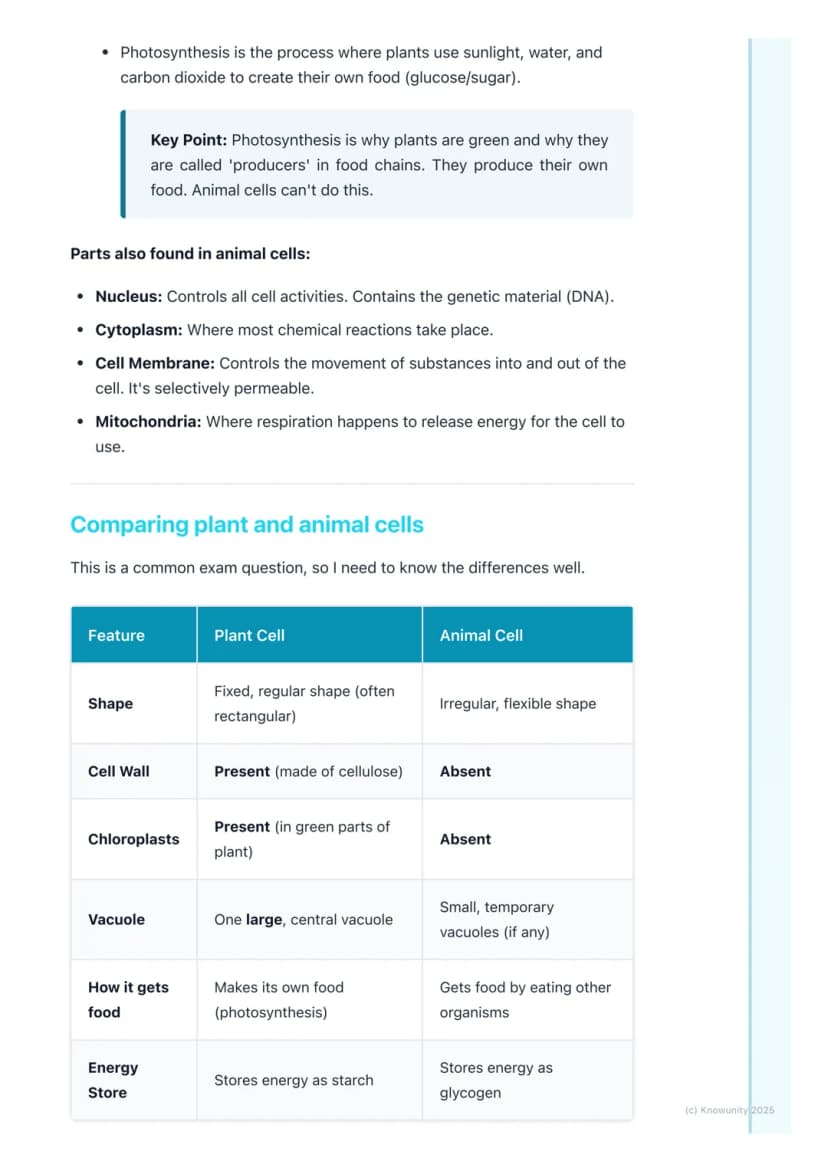
Plant cells have a fixed, rectangular shape thanks to their rigid cell wall, while animal cells are blobby and flexible. This structural difference is huge!
The biggest difference is how they get food. Plants perform photosynthesis in their chloroplasts to make glucose, whilst animals (like us) have to eat other organisms for energy.
Plants store energy as starch, but animals store it as glycogen. Plant cells also have one massive vacuole, whilst animal cells might have tiny temporary ones or none at all.
Exam Tip: A leaf cell will be packed with chloroplasts for maximum sunlight capture, but root cells won't have any since they're underground!
5
of 6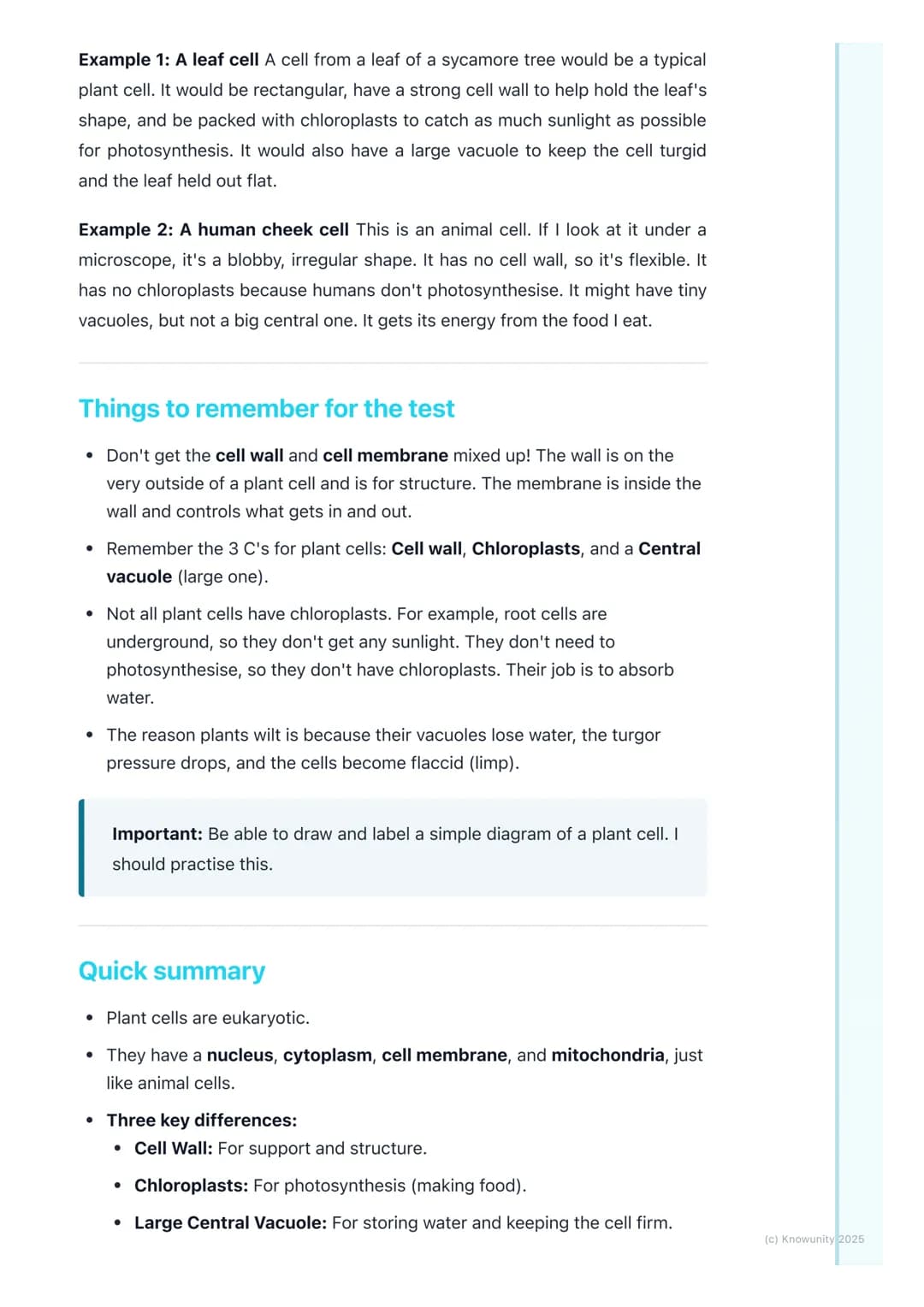
Functions and Examples
A leaf cell from a tree is the perfect example - rectangular, strong cell wall, loads of chloroplasts, and a big vacuole to keep the leaf flat and rigid for catching sunlight.
Compare this to a human cheek cell - irregular shape, no cell wall (so it's flexible), no chloroplasts (we can't photosynthesise!), and it gets energy from the food we eat.
The three unique plant features work together brilliantly: the cell wall provides structure, chloroplasts make food from sunlight, and the central vacuole maintains turgor pressure to prevent wilting.
Practice Point: Make sure you can draw and label a simple plant cell diagram - this often comes up in tests!
6
of 6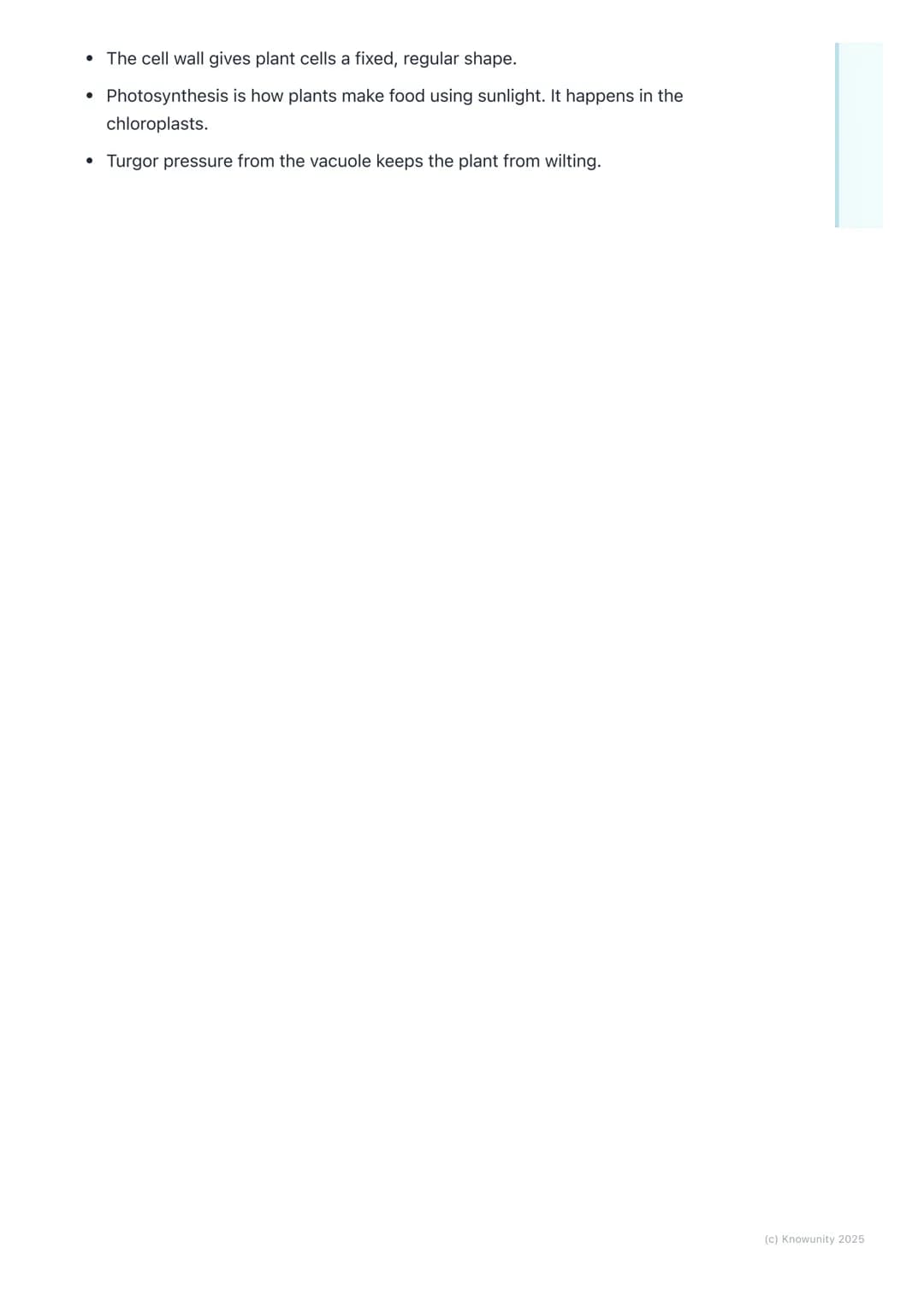
Quick Summary
Plant cells are eukaryotic with the same basic parts as animal cells - nucleus, cytoplasm, cell membrane, and mitochondria. The three key differences make all the difference though!
Cell walls give plants their fixed shape and structural support. Chloroplasts allow photosynthesis to happen, making plants the producers of ecosystems. The large central vacuole stores water and maintains turgor pressure.
When you see a plant standing tall and green, you're seeing these cellular superpowers in action. No wonder plants have been so successful on Earth!
Final Reminder: Not all plant cells have chloroplasts - root cells don't need them since they're underground and can't photosynthesise!
Hiç sormayacaksın sanmıştık...
Knowunity yapay zeka arkadaşı nedir?
Yapay zeka arkadaşımız öğrencilerin ihtiyaçlarına göre özel olarak tasarlanmıştır. Platformda bulunan milyonlarca içeriğe dayanarak öğrencilere gerçekten anlamlı ve ilgili yanıtlar verebiliyoruz. Ancak mesele sadece cevaplar değil, refakatçi aynı zamanda kişiselleştirilmiş öğrenme planları, sınavlar veya sohbet içerikleri ve öğrencilerin becerilerine ve gelişimlerine dayalı %100 kişiselleştirme ile öğrencilere günlük öğrenme zorluklarında rehberlik ediyor.
Knowunity uygulamasını nereden indirebilirim?
Uygulamayı Google Play Store ve Apple App Store'dan indirebilirsiniz.
Knowunity ücretsiz mi?
Knowunity uygulaması ücretsiz! Uygulamamız çok yakında indirmeye hazır olacak, bekle bizi. 💙
Biology dersinin en popüler içerikleri
7En popüler içerikler
9Aradığını bulamıyor musun? Diğer derslere göz at.
Kullanıcılarımızdan yorumlar. Onlar her şeyi çok beğendi — sen de beğeneceksin.
4.6/5App Store
4.7/5Google Play
Uygulama çok kolay kullanılıyor ve güzel tasarlanmış. Şu ana kadar aradığım her şeyi buldum ve sunumlardan çok şey öğrendim! Kesinlikle ödevlerim için hep kullanacağım!
A.S.iOS kullanıcısı
Uygulama çok iyi. Çok fazla ders notu ve yardımlaşma var. Örneğin benim problem yaşadığım bir ders Geometriydi ve ANINDA yardım ettiler beraber hem sorularımı çözdük hem konu anlatımı buldum. Herkese tavsiye ederim.
S.L.Android kullanıcısı
BEN ŞOK. Reklamını sık sık gördüğüm için uygulamayı denedim ve gerçekten hayran kaldım. Bu uygulama okul için tam ihtiyacım olan şey. Anında ödev yardımı, konu anlatımı, örnek sınavlar, flaşkartlar hepsi hepsi var, şiddetle tavsiye ederim ✅
A.iOS kullanıcısı
Biology8 görüntüleme·Güncellendi Jun 3, 2026·6 sayfaUnderstanding Plant Cells: Key Structures and Differences
Ever wondered what makes plants so different from animals? It all comes down to their cells! Plant cells are the tiny building blocks that help plants make their own food and stand tall without bones.
1
of 6Ders notlarını görmek için kaydol. Ücretsiz!
- Tüm belgeleri görebilirsin
- Notlarını Yükselt
- Milyonlarca öğrenciye katıl
Introduction to Plant Cells
Plant cells are eukaryotic cells, which simply means they have a proper control centre called a nucleus. What makes them special is that they've got three unique parts that animal cells don't have.
These three special features are what allow plants to create their own food and stay upright without needing a skeleton. Think of them as the plant's superpowers!
Quick Tip: Remember the 3 C's for plant cells - Cell wall, Chloroplasts, and Central vacuole (the large one)!
2
of 6Ders notlarını görmek için kaydol. Ücretsiz!
- Tüm belgeleri görebilirsin
- Notlarını Yükselt
- Milyonlarca öğrenciye katıl
Key Parts of a Plant Cell
The cell wall is like a tough outer shell made of cellulose that sits outside the cell membrane. It's the plant's armour, providing structure and protection.
Inside, you'll find the cell membrane acting like a bouncer at a club - it decides what gets in and out of the cell. The cytoplasm is the jelly-like substance where all the cell's chemical reactions happen.
The nucleus is the boss of the cell, containing DNA with all the instructions. This is exactly the same job it does in your own cells!
Remember: Don't mix up the cell wall and cell membrane - the wall is on the very outside for structure, the membrane is inside for control!
3
of 6Ders notlarını görmek için kaydol. Ücretsiz!
- Tüm belgeleri görebilirsin
- Notlarını Yükselt
- Milyonlarca öğrenciye katıl
The Three Special Plant Parts
Chloroplasts are tiny green discs packed with chlorophyll that capture sunlight for photosynthesis. This is why plants are green and why they're called 'producers' in food chains.
The large central vacuole is like a water balloon inside the cell. When it's full, it creates turgor pressure that pushes against the cell wall, keeping the plant firm and upright.
Mitochondria are the powerhouses that release energy from food through respiration - just like in animal cells. Plants need energy too, even though they make their own food!
Key Concept: When plants wilt, it's because their vacuoles lose water and can't maintain turgor pressure anymore!
4
of 6Ders notlarını görmek için kaydol. Ücretsiz!
- Tüm belgeleri görebilirsin
- Notlarını Yükselt
- Milyonlarca öğrenciye katıl
Comparing Plant and Animal Cells
Plant cells have a fixed, rectangular shape thanks to their rigid cell wall, while animal cells are blobby and flexible. This structural difference is huge!
The biggest difference is how they get food. Plants perform photosynthesis in their chloroplasts to make glucose, whilst animals (like us) have to eat other organisms for energy.
Plants store energy as starch, but animals store it as glycogen. Plant cells also have one massive vacuole, whilst animal cells might have tiny temporary ones or none at all.
Exam Tip: A leaf cell will be packed with chloroplasts for maximum sunlight capture, but root cells won't have any since they're underground!
5
of 6Ders notlarını görmek için kaydol. Ücretsiz!
- Tüm belgeleri görebilirsin
- Notlarını Yükselt
- Milyonlarca öğrenciye katıl
Functions and Examples
A leaf cell from a tree is the perfect example - rectangular, strong cell wall, loads of chloroplasts, and a big vacuole to keep the leaf flat and rigid for catching sunlight.
Compare this to a human cheek cell - irregular shape, no cell wall (so it's flexible), no chloroplasts (we can't photosynthesise!), and it gets energy from the food we eat.
The three unique plant features work together brilliantly: the cell wall provides structure, chloroplasts make food from sunlight, and the central vacuole maintains turgor pressure to prevent wilting.
Practice Point: Make sure you can draw and label a simple plant cell diagram - this often comes up in tests!
6
of 6Ders notlarını görmek için kaydol. Ücretsiz!
- Tüm belgeleri görebilirsin
- Notlarını Yükselt
- Milyonlarca öğrenciye katıl
Quick Summary
Plant cells are eukaryotic with the same basic parts as animal cells - nucleus, cytoplasm, cell membrane, and mitochondria. The three key differences make all the difference though!
Cell walls give plants their fixed shape and structural support. Chloroplasts allow photosynthesis to happen, making plants the producers of ecosystems. The large central vacuole stores water and maintains turgor pressure.
When you see a plant standing tall and green, you're seeing these cellular superpowers in action. No wonder plants have been so successful on Earth!
Final Reminder: Not all plant cells have chloroplasts - root cells don't need them since they're underground and can't photosynthesise!
Hiç sormayacaksın sanmıştık...
Knowunity yapay zeka arkadaşı nedir?
Yapay zeka arkadaşımız öğrencilerin ihtiyaçlarına göre özel olarak tasarlanmıştır. Platformda bulunan milyonlarca içeriğe dayanarak öğrencilere gerçekten anlamlı ve ilgili yanıtlar verebiliyoruz. Ancak mesele sadece cevaplar değil, refakatçi aynı zamanda kişiselleştirilmiş öğrenme planları, sınavlar veya sohbet içerikleri ve öğrencilerin becerilerine ve gelişimlerine dayalı %100 kişiselleştirme ile öğrencilere günlük öğrenme zorluklarında rehberlik ediyor.
Knowunity uygulamasını nereden indirebilirim?
Uygulamayı Google Play Store ve Apple App Store'dan indirebilirsiniz.
Knowunity ücretsiz mi?
Knowunity uygulaması ücretsiz! Uygulamamız çok yakında indirmeye hazır olacak, bekle bizi. 💙
Biology dersinin en popüler içerikleri
7En popüler içerikler
9Aradığını bulamıyor musun? Diğer derslere göz at.
Kullanıcılarımızdan yorumlar. Onlar her şeyi çok beğendi — sen de beğeneceksin.
4.6/5App Store
4.7/5Google Play
Uygulama çok kolay kullanılıyor ve güzel tasarlanmış. Şu ana kadar aradığım her şeyi buldum ve sunumlardan çok şey öğrendim! Kesinlikle ödevlerim için hep kullanacağım!
A.S.iOS kullanıcısı
Uygulama çok iyi. Çok fazla ders notu ve yardımlaşma var. Örneğin benim problem yaşadığım bir ders Geometriydi ve ANINDA yardım ettiler beraber hem sorularımı çözdük hem konu anlatımı buldum. Herkese tavsiye ederim.
S.L.Android kullanıcısı
BEN ŞOK. Reklamını sık sık gördüğüm için uygulamayı denedim ve gerçekten hayran kaldım. Bu uygulama okul için tam ihtiyacım olan şey. Anında ödev yardımı, konu anlatımı, örnek sınavlar, flaşkartlar hepsi hepsi var, şiddetle tavsiye ederim ✅
A.iOS kullanıcısı